National Park Service Warns Trump's Planned 250-Foot Arch Could Damage Historic Washington Landmarks
Key Takeaways
- •The National Park Service determined that the proposed 250-foot arch at Memorial Circle would disrupt sightlines between the Lincoln Memorial and Arlington National Cemetery and alter prominent views across the capital region.
- •The arch is slated for construction within the George Washington Memorial Parkway, a federally designated historic landmark corridor near Arlington National Cemetery.
- •Under Section 106 of the National Historic Preservation Act, the required consultation process is advisory in nature and does not legally obligate agencies to abandon or significantly alter projects.
- •Virginia's State Historic Preservation Officer asserted that the arch's adverse effects are intentional, stating the structure is designed to dominate the surrounding landscape.
- •Despite the Park Service findings, the project is expected to proceed largely unchanged because President Trump has not indicated willingness to scale down or relocate it.
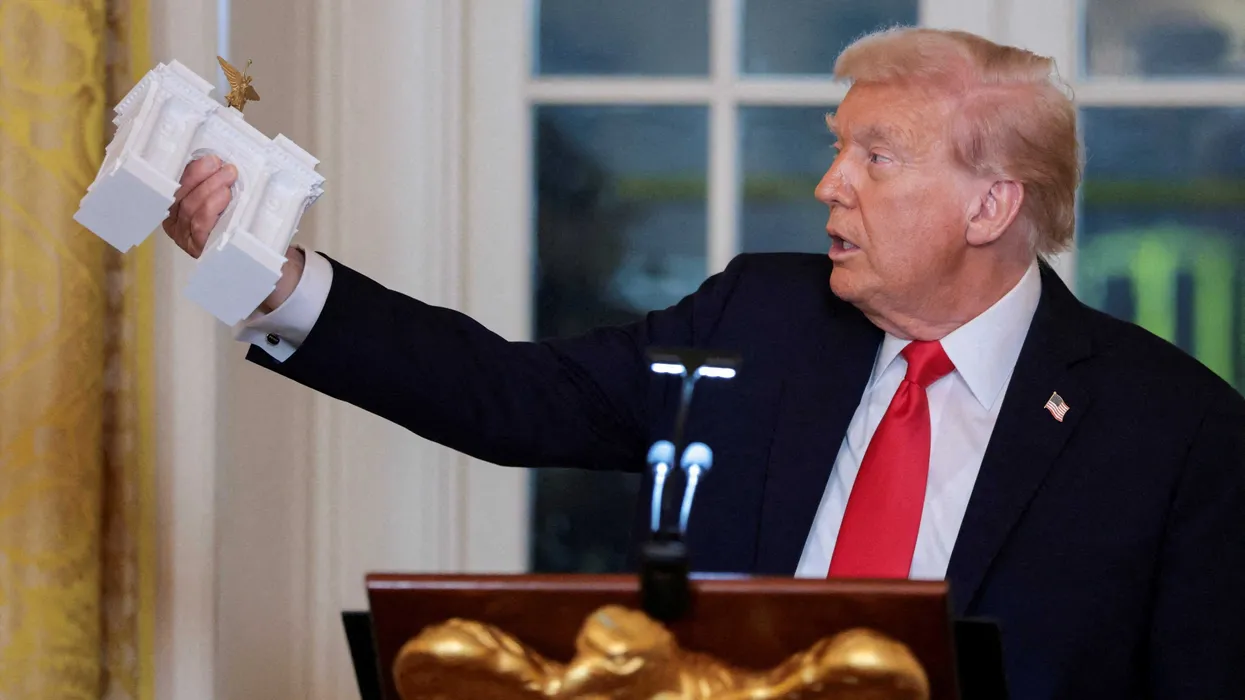
The U.S. National Park Service has issued a stark warning that a massive triumphal arch championed by President Donald Trump could cause significant harm to historic landmarks and iconic vistas across the Washington, D.C. area, concluding that the structure would disrupt cherished sightlines and landscapes in and around the nation's capital.
The 250-foot arch, inspired by Paris's Arc de Triomphe, is slated for construction at Memorial Circle — a traffic circle across the Potomac River from the Lincoln Memorial and adjacent to Arlington National Cemetery. Memorial Circle sits within the George Washington Memorial Parkway, a federally designated historic landmark corridor whose vistas and landscapes were deliberately engineered to frame memorials and reinforce the visual connections between the capital and Arlington. The project is one of several Trump has advanced as part of a broader effort to reshape the capital's built environment.
According to a New York Times report published Monday, the Park Service determined that the arch "would disrupt the symbolic relationship between the Lincoln Memorial and Arlington National Cemetery, obstruct sightlines from the Kennedy Gravesite and Robert E. Lee's home, and alter what official documents call 'one of the most magnificent' views in Washington at the National Cathedral four miles away."
Under Section 106 of the National Historic Preservation Act, federal agencies are required to seek ways to reduce such "adverse effects" on historic sites through a formal consultation process with preservation offices and other stakeholders. The process, however, is advisory in nature — agencies must consider mitigation measures but are not legally obligated to abandon or significantly alter projects they are committed to pursuing. Critics of the arch have pointed to this structural limitation as evidence that the review may function more as a formal record of harm than a mechanism to stop it.
The Times noted that the arch is expected to proceed largely unchanged, as Trump has shown no willingness to pursue the most straightforward remedies — scaling down the project or selecting an alternative location.
The New Republic, reporting on the Park Service assessment, characterized the agency's findings by stating the arch could "ruin just about everything near it."
Ed Stierli, vice president for government affairs at the National Parks Conservation Association, told the Times that the term "adverse effects" carries a precise and serious meaning. "You're building something that will irreversibly harm the experience in these other locations," he said.
In a letter submitted to the Park Service in June, Roger W. Kirchen, Virginia's State Historic Preservation Officer, went further, asserting that the disruption is by design rather than incidental.
"These adverse effects are intentional and inherent in the design of the arch," Kirchen wrote. "It is intended to dominate the surrounding landscape."

