Oath Keeper Edward Vallejo Fights Judge’s Remarks in New Filing
Key Takeaways
- •Edward Vallejo, who oversaw a 'Quick Reaction Force' armed with weapons at a Virginia hotel during the January 6 events, received clemency under President Trump's blanket pardon covering more than 1,500 charged Capitol breach defendants.
- •U.S. District Judge Amit P. Mehta dismissed the seditious conspiracy charges but used his ruling to criticize the government's intervention, stating the legal basis for the convictions remained valid and calling the pardons 'unearned grace.'
- •Vallejo's legal team filed a motion requesting that Judge Mehta's critical commentary be removed from the court record, arguing the statements were unconstitutional and violated the Fifth Amendment presumption of innocence.
- •The defense filing additionally alleges that Vallejo's original trial was compromised by serious prejudicial errors, including problems with jury selection and the admission of inadmissible hearsay evidence.
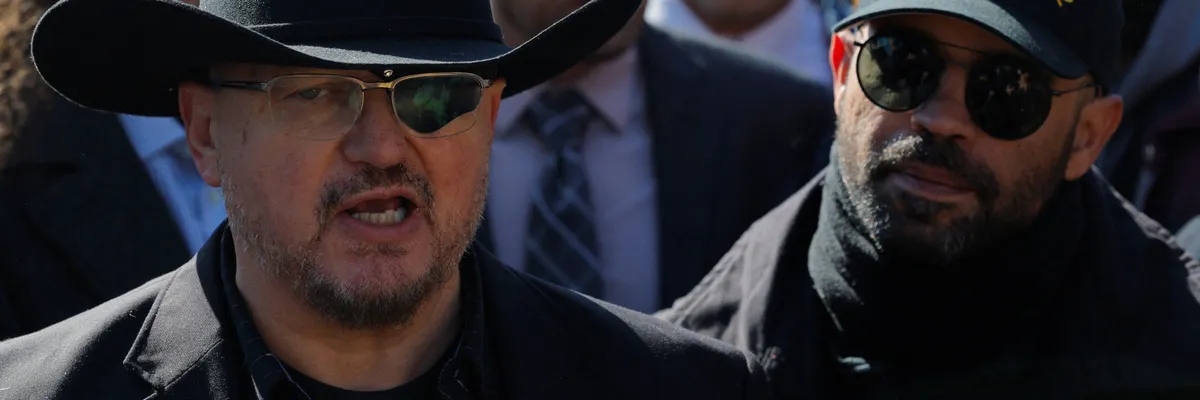
A pardoned Oath Keeper is seeking more relief after his conviction was lifted, filing a new court motion that attacks the judge's "reluctant" dismissal and accuses him of "unconstitutional" conduct.
Edward Vallejo, a Phoenix, Arizona resident, was involved in the Oath Keepers' planning around the January 6, 2021, riots at the U.S. Capitol, which were aimed at disrupting the certification of Donald Trump's election loss. The Oath Keepers, founded in 2009 by Stewart Rhodes, are a far-right anti-government group whose members include self-described militia enthusiasts and, historically, some current and former law enforcement and military personnel. According to a report from Arizona's Family, authorities said Vallejo "oversaw a 'Quick Reaction Force' at a Virginia hotel that was prepared to deploy an arsenal of weapons into Washington if needed." The Washington Post reported that, despite the cache of weapons, he "was not called into action."
After Trump issued a blanket pardon to all January 6 defendants — more than 1,500 individuals who had been charged in connection with the Capitol breach — at the start of his second term, U.S. District Judge Amit P. Mehta agreed to lift the seditious conspiracy charges against Vallejo and the other Oath Keeper defendants. Seditious conspiracy, a Civil War-era statute rarely used before the January 6 prosecutions, carries a maximum penalty of 20 years in prison. The Washington Post described that step as "the last step in the legal process to wipe out penalties from the Jan. 6 riot, cementing President Donald Trump's bid to unravel the largest federal investigation in U.S. history."
In his Tuesday ruling, however, Mehta criticized the government's efforts to intervene in the case and said the legal basis for the convictions remained sound. He wrote that the Oath Keeper defendants received "unearned grace by wiping their records clean" after juries found them guilty of "crimes against the United States itself."
"The government does not say that the charges were legally deficient or that the evidence presented is insufficient to sustain Defendants' convictions," Mehta wrote. "It confesses to no prosecutorial misconduct, nor does it assert any denial or compromise of a defendant's rights."
He added: "This is the last of the prosecutions seeking to hold accountable those responsible for the events of January 6. That book is now closed," Mehta wrote. "Today's epilogue diminishes the gravity of that day, denigrates the work of the prosecutors and law enforcement officers who secured these convictions, and excuses criminal acts that caused a centuries-long pillar of our democracy — the peaceful transfer of presidential power — to buckle[.] The court cannot write a different ending."
In response, Vallejo's legal team filed a new motion on Wednesday asking that Mehta's comments be removed from the record, calling them "unconstitutional." The filing also said Vallejo's original trial was "marred by serious prejudicial errors," including "errors in jury selection and use of inadmissible hearsay."
"Ed Vallejo was innocent before trial and he is innocent now," the filing read. "The Court's dismissal of the indictment with prejudice based on deference to prosecutorial discretion does not open the door for judicial opinion regarding disputed elements of an offense never finally adjudicated. The Fifth Amendment's presumption of innocence further counsels against advisory statements regarding culpability based on the trial prosecutor's version of the fact [sic] that have not been finally established to a jury beyond a reasonable doubt and affirmed on appeal."
The filing continued: "The Court correctly granted the motion to dismiss with prejudice based on the government's exercise of discretion but incorrectly injected advisory opinions that are contrary to the presumption of innocence and unfair to an innocent man. The Court's commentary adopted wholesale the government's theory of the case while ignoring the substantial defense case for innocence."
