Nevada's election official corrects DHS on the pronunciation of the state's name in a dispute over non-citizens on voter rolls
Najważniejsze informacje
- •Deputy secretary of state of Nevada for elections Mark Wlaschin interrupted the DHS phone call to correct a federal official's pronunciation of the state's name — a longstanding reason for local pride.
- •DHS Secretary Markwayne Mullin claims that nearly 16,000 non-citizens are registered to vote in Nevada, as part of a broader claim of more than 250,000 people across four states.
- •DHS officials, through manual review, „confirmed” only 185 potential non-citizens, and more than 14,000 other flagged names have not yet been examined.
- •The National Voter Registration Act of 1993 requires states to follow prescribed procedures, including notifying affected voters, before canceling registrations, and database matches alone can generate false positives.
- •Nevada Secretary of State Francisco Aguilar and election experts called the DHS threats to prosecute election officials and withhold federal funding groundless.
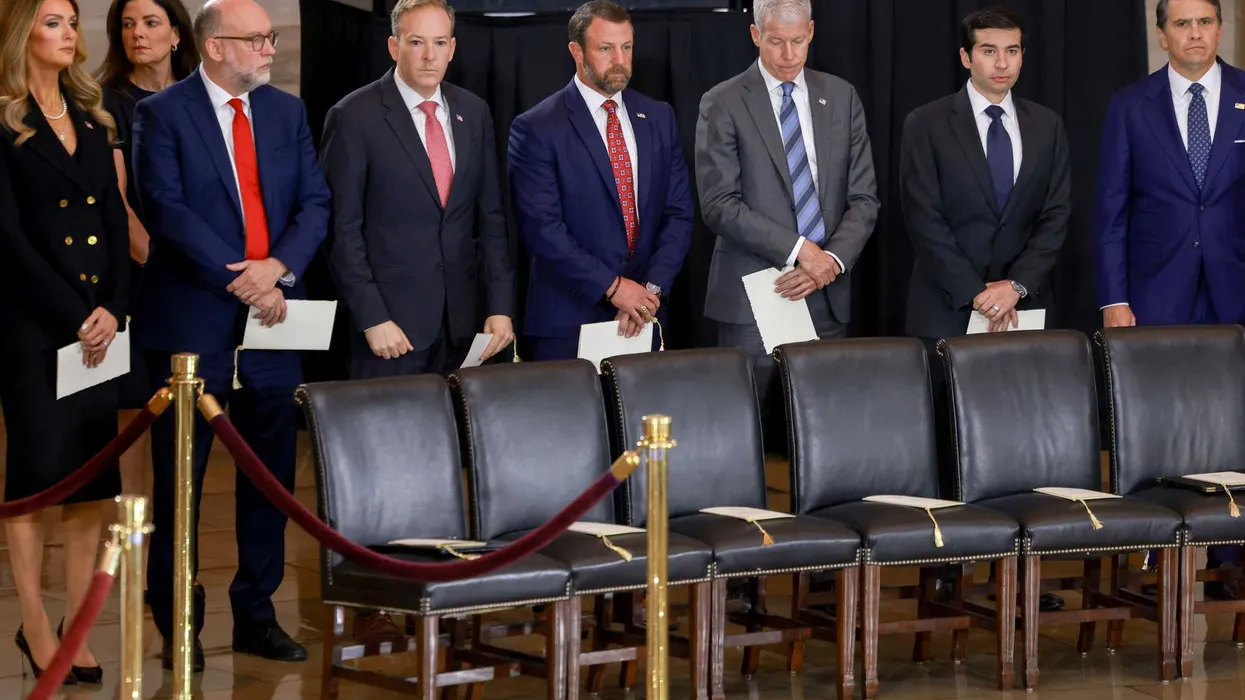
A phone call between Department of Homeland Security officials and Nevada election officials regarding the Trump administration's claims about the presence of non-citizens on the state's voter rolls brought an unplanned correction from Nevada's deputy chief election official — regarding the pronunciation of the name of his state.
When a DHS official was speaking, deputy secretary of state of Nevada for elections Mark Wlaschin interrupted him.
„Sorry, super quick. I would be at fault, and every Nevada resident would lose their mind, if I didn't correct you. It's pronounced Nevada, not Nevahda” — he said, as Sam Levine of the Guardian reported based on a recording (post on X). „I grew up on the East Coast, I'm sure I got it wrong at first, but Nevada, if you don't mind.”
This distinction is a longstanding reason for pride in the „Silver State”: residents pronounce the middle syllable with a short „a”, while the broader „Nev-AH-da”, common among East Coast speakers, is widely seen locally as a mark of an outsider. In Nevada, elections are administered by the office of the Secretary of State — a department headed by Secretary of State Francisco Aguilar as the state's chief election official.
However, this exchange framed a much more significant disagreement. Nevada officials have been pressing DHS for weeks to substantiate Secretary Markwayne Mullin's claim that nearly 16,000 non-citizens are registered to vote in the state — part of a sweeping assertion of more than 250,000 non-citizens across four states, which Mullin presented as proof of widespread fraud (Raw Story investigation).
So far, the numbers fall short of the claims. In records released by Nevada and in recordings obtained by CNN and MS NOW, DHS officials admitted that through manual review they „confirmed” only 185 potential non-citizens, and more than 14,000 other flagged names have not yet been examined (CNN report).
The gap between flagged and confirmed names has legal significance. Under the National Voter Registration Act of 1993, states must follow prescribed procedures — including notifying affected voters — before canceling registrations, and election administrators have long pointed out that database matches alone can generate false positives due to shared names, outdated records and data-entry errors. Registration is also a different matter from casting a vote, which for non-citizens in federal elections is itself a federal crime; the figures at issue in Nevada concern the voter rolls.
These discrepancies come at a time when DHS — a federal agency at the cabinet level, whose responsibilities include immigration enforcement — has threatened election officials with prosecution and withholding federal funds from states that do not hand over voter data. Nevada Secretary of State Francisco Aguilar and election experts have called this pressure groundless. The open questions are currently of a procedural nature: whether DHS will complete its review of the more than 14,000 remaining flagged names, whether it will provide the substantiation requested by Nevada, and whether its threats of prosecution and funding cuts will be carried out.
— I cannot take something made up out of thin air and try to justify it — Aguilar said in an interview with CNN.
