Naver Expects AI Factory Revenue by 2027 as Nvidia Partnership Advances
Key Takeaways
- •Naver and Nvidia's AI factory venture is projected to begin generating revenue in the first half of 2027, with capacity scaling from an initial 55 megawatts to 200 MW by 2028 and a long-term target of gigawatt levels.
- •Nvidia will make a $1 billion direct investment in Naver as part of the partnership, which Naver expects will help secure access to advanced AI chips amid intense global competition for computing hardware.
- •CFO Kim Hee-cheol indicated that operating margins for the AI factory subsidiary are expected to eventually exceed 20 percent as the business matures, despite starting at relatively low levels.
- •Naver achieved record quarterly revenue of 3.39 trillion won in the second quarter, up 16.2 percent year-on-year, while operating profit declined 0.2 percent to 520.3 billion won due to increased AI-related spending.
- •AI-driven enhancements in advertising placement and targeting contributed to more than 60 percent of Naver's advertising revenue growth during the quarter, with platform revenue reaching 1.9 trillion won.
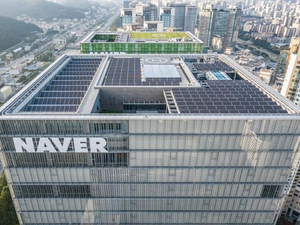
Naver announced during its second-quarter earnings call on Friday that its artificial intelligence factory venture with Nvidia is projected to begin generating revenue in the first half of 2027, marking South Korea's most significant entry into the large-scale AI infrastructure market now dominated by U.S. hyperscalers such as Amazon Web Services, Google Cloud, and Microsoft Azure.
Chief Executive Officer Choi Soo-yeon said the facility—designed to deliver large-scale computing capacity for AI workloads—will initially launch with 55 megawatts of capacity in 2027. That figure is scheduled to rise to 100 MW by the end of the same year and reach 200 MW in 2028, with the company's long-term goal being to scale the infrastructure to gigawatt levels. For context, individual hyperscale data centers operated by major U.S. cloud providers typically range from tens to hundreds of megawatts, placing Naver's initial footprint in a comparable tier while underscoring the scale of its longer-term ambitions.
"This is not a one-off business opportunity, but an investment in a structurally growing market," Choi stated. "With the spread of generative AI, AI transformation across industries and the expansion of inference and AI agents, global demand for AI computing will continue to grow over the mid- to long term."
Addressing concerns that the development of cheaper and more efficient AI models could eventually reduce computing demand, Choi pushed back against that view.
"There are concerns that lower-cost, more efficient models could lead to less computing usage," she acknowledged. "But we believe that as the cost per unit of computing falls, the use of AI, inference and agents will expand, driving overall computing demand."
Choi's argument mirrors a broader industry debate that intensified after Chinese startup DeepSeek released a cost-efficient model in early 2025, prompting discussion across the sector about whether efficiency gains would suppress or expand total compute demand—a dynamic analogous to the Jevons paradox in energy economics.
Choi emphasized that constructing new AI infrastructure requires substantial power, land, equipment, skilled personnel, and local support—factors that make it difficult to bring new supply online quickly. Power availability has emerged as a defining constraint on AI infrastructure buildouts globally, with grid limitations and energy sourcing cited repeatedly by data center operators and chipmakers as a primary bottleneck on expansion timelines.
"Alongside our technological collaboration with Nvidia, Naver already has power and sites in place, capital partners and the capability to operate the full AI stack," she added.
Chief Financial Officer Kim Hee-cheol indicated that Naver is aiming for progressively higher long-term profitability from the AI factory operating entity. "Margins may start at a relatively low level in the early stage, but as the business matures, we expect them to reach double digits and, over the longer term, exceed 20 percent," Kim said.
Under the partnership agreement, Nvidia will make a direct $1 billion investment in Naver. Nvidia has pursued strategic investments and partnerships with multiple cloud and infrastructure providers worldwide as it works to expand the footprint of its GPU-based computing ecosystem beyond its largest customers.
The Korean tech giant will operate the factory through a wholly owned subsidiary responsible for recording computing revenue, associated costs, and resulting profit. Naver intends to sustain high utilization rates by combining external customer demand with its own internal computing requirements.
The company also expects its Nvidia partnership to mitigate risks tied to securing advanced AI chips at a time of fierce competition for computing hardware. To manage financing exposure, Naver plans to offer customer contracts of varying durations, with longer-term agreements spanning five to six years.
The AI infrastructure initiative comes as Naver continues to expand its core advertising and commerce operations, even though elevated AI-related investment pressured profitability in the most recent quarter—a pattern visible across the global technology sector, where major platforms are directing growing capital expenditure toward AI compute and model development.
For the April-to-June period, Naver posted record quarterly revenue of 3.39 trillion won ($2.39 billion), representing a 16.2 percent year-on-year increase. Operating profit, however, slipped 0.2 percent to 520.3 billion won.
Platform revenue climbed 12.3 percent year-on-year to 1.9 trillion won, with advertising performance bolstered by AI-driven enhancements in ad placement and targeting. Naver reported that AI contributed to more than 60 percent of its advertising revenue growth during the quarter.
Service revenue surged 31.3 percent from a year earlier, supported by sustained expansion across its commerce ecosystem. Financial platform revenue rose 16 percent to 470.7 billion won, while payment volume through Naver Pay—Naver's mobile payment and digital wallet service—grew 21 percent year-on-year to 25.2 trillion won in the second quarter.
Naver's global businesses generated 1.02 trillion won in revenue, up 24.4 percent from the prior-year period. The increase was driven largely by a 74.9 percent jump in consumer-to-consumer revenue, as transaction volumes and sales continued climbing across the company's international resale platforms, including Wallapop, Poshmark, and Soda.
Content revenue edged up 0.5 percent, while enterprise revenue advanced 21.3 percent on the back of stronger business-to-business sales tied to AI and digital twin technologies.
