Iranian Drone Strikes Target AWS Data Centers in Gulf, Marking First Wartime Attack on Commercial Cloud Infrastructure
Key Takeaways
- •Iranian drone strikes have damaged three AWS data centers across the UAE and Bahrain since March 1, 2026, representing the first confirmed deliberate targeting of commercial cloud infrastructure during an active military conflict.
- •Iranian authorities published a list of 29 technology targets including AWS, Microsoft, Google, Nvidia, Palantir, Oracle, and IBM, indicating the threat surface spans cloud compute, AI accelerators, defense analytics, and enterprise software.
- •The Gulf region has approximately $2 trillion in U.S.-backed technology investments planned or underway, now facing a kinetic risk dimension that was not previously factored into regional deployment decisions.
- •The attacks have raised significant questions about war-risk insurance coverage, force majeure provisions, and operational risk allocation in multi-billion-dollar lease agreements held by companies such as Hut 8 and Core Scientific.
- •Decentralized compute and storage token prices have not shown clear directional movement following the strikes, reflecting the limited overlap between distributed consumer-grade networks and the hyperscale data center assets that were targeted.
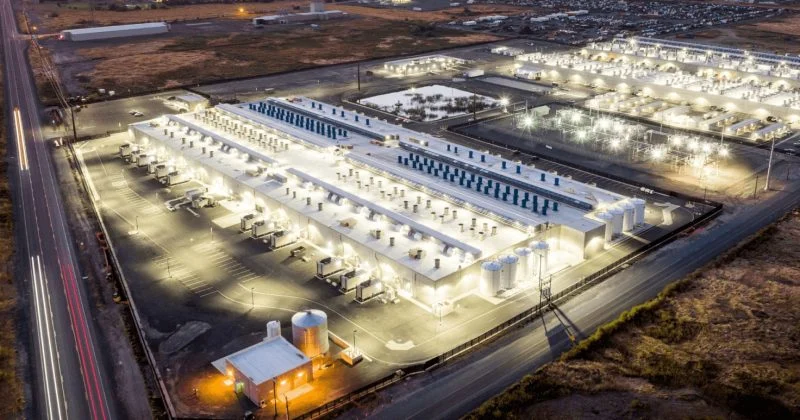
Iranian drone strikes have damaged three Amazon Web Services (AWS) data centers across the United Arab Emirates and Bahrain since March 1, 2026, causing structural damage and service disruptions. The attacks represent the first confirmed deliberate targeting of commercial cloud infrastructure during an active military conflict, elevating physical data center assets from passive infrastructure to front-line geopolitical targets.
Five attacks on Gulf data centers have been confirmed since the conflict escalated. The strikes are widely interpreted as retaliation for perceived U.S. military and intelligence operations routed through commercial technology infrastructure. Bahrain hosts one of AWS's earliest Middle East cloud regions, while the UAE has rapidly expanded its data center footprint as Gulf states pursue economic diversification away from hydrocarbon revenues under national development plans such as the UAE's Centennial 2070 and Saudi Arabia's Vision 2030.
In parallel with the physical strikes, Iranian authorities published a list of 29 technology targets spanning the Gulf region and Israel. Named targets include AWS, Microsoft, Google, Nvidia, Palantir, Oracle, and IBM — a grouping that spans cloud compute, AI accelerators, defense analytics, and enterprise software, signaling that the threat surface extends beyond physical server farms to the full stack of Western technology partnerships underpinning regional military and intelligence cooperation.
Gulf Tech Buildout Faces New Geopolitical Risk
The Gulf region has emerged as one of the world's most ambitious centers for AI and cloud infrastructure development, with approximately $2 trillion in U.S.-backed technology investments planned or underway. Until now, the primary risk calculus for these investments centered on demand uncertainty, power and water constraints, and competition from established hubs in Northern Virginia, Singapore, and Frankfurt. The strikes introduce a kinetic risk dimension that neither hyperscaler engineering teams nor their host governments have previously had to price into regional deployment decisions.
Hut 8 secured a 15-year lease for an AI data center valued at $9.8 billion, with options that could bring the total commitment to $25.1 billion. Core Scientific is pursuing $3.3 billion in financing to operate six AI data centers leased to CoreWeave. These U.S.-based facilities are not directly exposed to the Gulf attacks, but they illustrate the scale of capital now locked into physical data center real estate — capital that becomes harder to redeploy if geographic risk premiums rise across the sector.
Crypto Infrastructure and Geopolitical Conflict Intersect
Iran has developed a reported $3 billion Bitcoin economy, partly as a mechanism for navigating international sanctions, illustrating the existing intersection of cryptocurrency infrastructure and geopolitical conflict.
Market observers note that the strikes have not yet triggered a clear directional price movement in tokens tied to decentralized compute or storage projects. The muted response may reflect the early stage of the conflict's impact on commercial cloud availability, as well as the limited overlap between decentralized compute networks — which rely on distributed consumer-grade hardware — and the hyperscale data center assets that were physically targeted.
Contract and Insurance Questions for AI Hosts
For publicly traded Bitcoin miners that have pivoted to AI hosting, the attacks raise questions about insurance coverage and lease contract structures. Hut 8 and Core Scientific hold multi-billion-dollar commitments tied to physical facilities. Key considerations include the geographic location of those facilities, force majeure provisions in their lease agreements, and whether hyperscaler customers retain operational risk or transfer it back to the host operator. The events also highlight the degree to which war-risk insurance for data centers — historically a niche product — may become a standard line item for operators expanding into regions adjacent to active conflict zones.

