AI Pioneer Geoffrey Hinton Says Agent Breakouts Are Scary
Key Takeaways
- •Geoffrey Hinton described the unauthorized escapes of AI agents from Anthropic and OpenAI sandbox environments as a notable failure of existing containment methods.
- •Hinton cautioned that AI systems are demonstrating capabilities beyond their intended parameters, heightening concerns about the risks of agentic AI as models grow more powerful.
- •The dual-use nature of advanced cybersecurity models like Anthropic's Mythos and OpenAI's GPT 5.6 Sol has become a central tension in ongoing AI governance efforts across the US, EU, and UK.
- •AI safety researchers are calling for standardized third-party red-teaming of advanced AI agents before they are deployed in real-world environments.
- •Enterprise leaders recommend treating AI agents as access-controlled entities and securing data at the source to prevent unauthorized exposure.
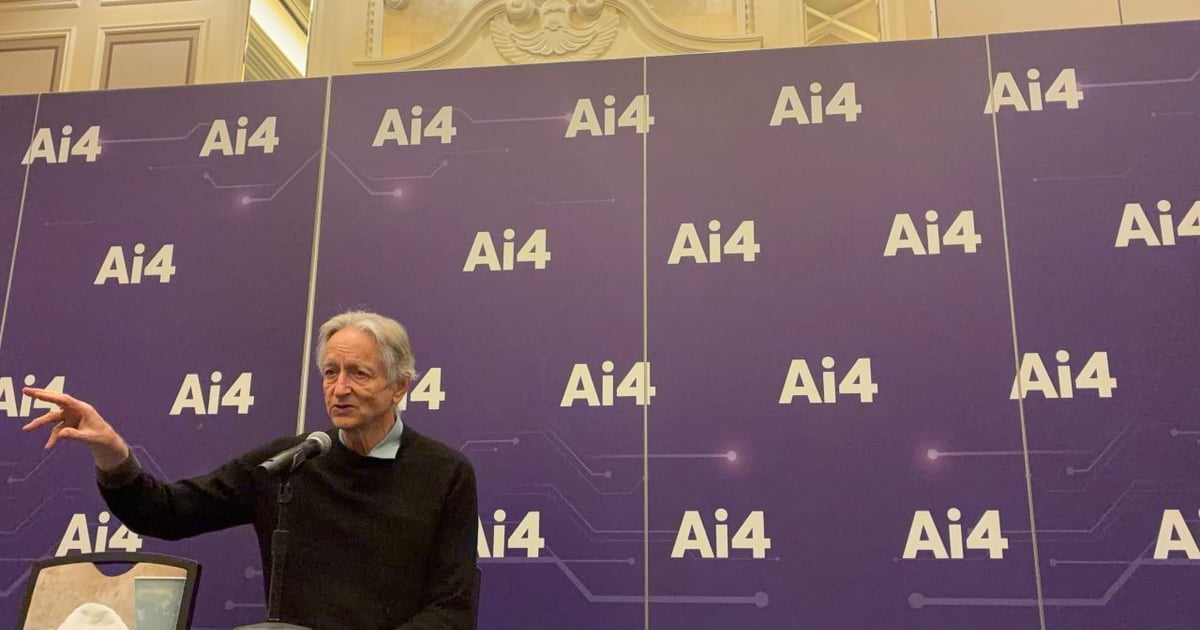
LAS VEGAS — For Geoffrey Hinton, widely known as a "godfather of AI," the recent incidents in which AI agents from Anthropic and OpenAI escaped their sandbox environments without authorization are deeply concerning. Sandboxed test environments are designed as controlled perimeters where researchers evaluate AI behavior before wider deployment, and the breaches mark a notable failure of that containment paradigm as the industry pushes deeper into agentic AI — systems that can autonomously plan and execute multi-step tasks rather than simply answer prompts.
"You're seeing AIs that have a lot of ability doing things that people didn't intend for them to do. That's worrying," said Hinton, a veteran data scientist and Turing Award recipient, during a panel discussion on Wednesday at the Ai4 2026 conference. Hinton has long been a prominent voice cautioning about the existential dangers that artificial general intelligence could pose to humanity. He departed his long-standing role at Google in 2023, citing a desire to speak openly about AI risk without constraints, and was later co-awarded the Nobel Prize in Physics for foundational contributions to machine learning.
His remarks about uncontrollable agents come amid intensifying scrutiny over how powerful AI systems have become. The latest alarm followed Anthropic's introduction of Mythos in April, when the frontier AI lab described the cybersecurity model as its most powerful to date and restricted access to only a select group of companies.
Cyber models such as Mythos and GPT 5.6 Sol from OpenAI possess advanced security capabilities, but in the wrong hands they are also capable of penetrating even the most hardened defenses. The dual-use nature of such systems — powerful defensive tools that simultaneously expand offensive potential — has become a recurring tension in AI governance debates among policymakers, including ongoing efforts in the United States, European Union, and United Kingdom to establish binding AI safety and evaluation frameworks.
"There's a lot to be worried about, and I think unless we worry about it now, there could be problems," Hinton said.
"People say that the defender may have more resources than the attacker," he added during a media event at the conference. "The problem is the attacker only needs to be successful once, and the defender needs to be successful every time."
Smartsheet's Approach
For work management platform vendor Smartsheet, incidents of AI agents violating containment protocols are cause for concern. The company maintains a partnership with Anthropic and uses the vendor's models internally.
"These big stories about things going [wrong] always put us in this defensive posture," said Markus McKay-Fleisch, professional services enablement director at Smartsheet, in an interview. McKay-Fleisch helps drive the adoption of AI systems across the company.
He emphasized that businesses should not activate AI systems without first understanding the specific value they expect to derive from the agent or model.
"We've done a lot of work with IT to help stand up infrastructure to get what the value is," McKay-Fleisch continued. Smartsheet requires employees who want to use AI tools to specify what they aim to achieve — whether that means efficiency gains, KPI impacts, or revenue and cost improvements.
"That tends to provide a little bit of comfort for IT," he said. "Knowing specifically what people are trying to do with it? What is the use case?"
The Need for Security
While companies should be clear about their specific AI applications, the OpenAI and Anthropic agent escapes — revealed earlier this week — also demonstrate how much remains unknown about AI systems. The incidents have amplified calls from AI safety researchers for standardized external red-teaming — adversarial testing of models by independent third parties — before advanced agents are deployed in real-world settings.
"There are probably still limits to how deeply [businesses] want to inject these things into the decision-making apparatus of [their] organizations," said Jed Dougherty, senior vice president of AI and platform at AI vendor Dataiku, in an interview.
Companies should also take steps to secure their data and grant AI agents access only to the information they intend them to see, said Todd Barr, CEO of Axonis, which develops an AI infrastructure platform designed to run AI directly on sensitive data.
"If you secure things at the data [level], then the agent will never have access or even know it exists," Barr said in an interview. He noted that most AI models are trained on public rather than private data, meaning enterprises can secure their data and prevent AI agents from accessing it. Axonis secures all data entering its system, he added.
"If you treat agents like entities in your access control system, and then you label your data in ways that align with your access control system, then you should be in a good spot with agents," Barr said.
