Fed Governor Lisa Cook Warns Rate Hikes Could Resume If Inflation Fails to Cool
Key Takeaways
- •Fed Governor Lisa Cook indicated she would back further rate increases if incoming data does not show inflation moving sustainably toward the central bank's 2% goal.
- •The Federal Reserve held its benchmark interest rate unchanged at 3.5% to 3.75%, but three officials reportedly dissented by advocating for an immediate rate hike.
- •Cook cautioned that policymakers have limited time to wait for natural disinflation and must prevent inflation expectations from becoming permanently embedded in the economy.
- •U.S. economic resilience, including sustained consumer spending and strong employment conditions, has made it more difficult for the Fed to tame inflation.
- •Services inflation, housing-related costs, and wage pressures remain particular areas of concern as the central bank works to return inflation to its target level.
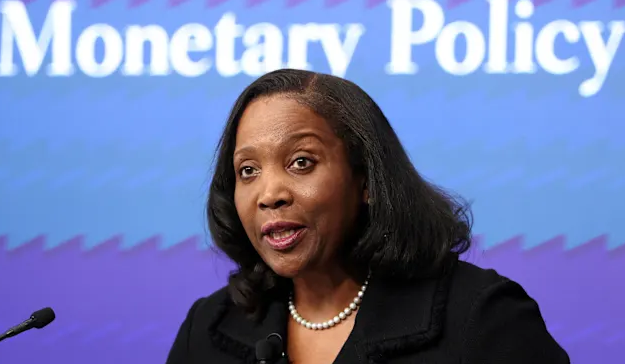
Federal Reserve Governor Lisa Cook has cautioned that the central bank may need to raise interest rates again if inflation fails to continue its downward trajectory, signaling that policymakers remain concerned about persistent price pressures across the U.S. economy.
Cook, one of the newer members of the Fed's Board of Governors confirmed in 2022, stated she is prepared to support additional rate increases should incoming economic data show inflation is not moving sustainably toward the Federal Reserve's 2% target. Her remarks underscore the difficult position the central bank faces after several years of above-target inflation.
The comments were surfaced through financial market discussions, including a post by the X account Coin Bureau, as investors closely track signals from Federal Reserve officials about the future direction of monetary policy.
Rate Decision and Internal Dissent
The Federal Reserve recently voted to keep its benchmark interest rate unchanged at a range of 3.5% to 3.75%, maintaining a cautious stance while policymakers evaluate whether inflation continues to moderate. The decision, however, was not unanimous. Three Federal Reserve officials reportedly supported an immediate rate increase, reflecting growing concern among some policymakers that inflation risks remain significant.
Cook voted in favor of holding rates steady at the latest meeting, but her subsequent comments indicate she remains open to tighter monetary policy if inflation data does not improve.
The Fed's Balancing Act
Over the past several years, the Federal Reserve has worked to balance two competing risks: allowing inflation to remain elevated for too long, or tightening monetary policy so aggressively that economic growth is undermined. This tension reflects the Fed's dual mandate from Congress to achieve both price stability and maximum employment. After inflation surged to its highest levels in decades following the COVID-19 pandemic, the central bank embarked on one of the most aggressive rate-hiking campaigns in modern history, raising borrowing costs to slow demand and bring prices closer to its long-term target.
Although inflation has declined substantially from its peak, certain price pressures have proven more persistent than anticipated. Cook's warning reflects concerns that the Federal Reserve's flexibility could be limited if inflation begins to accelerate again. She emphasized that policymakers cannot assume they have unlimited time to wait for inflation to fall naturally, and must carefully assess whether current policy settings are restrictive enough to prevent renewed price increases.
Data-Dependent Approach
The Federal Reserve's decision to hold rates steady reflects a desire to gather more information before acting further. Central bankers typically rely on indicators including consumer prices, employment conditions, wage growth, business activity, and consumer spending when setting policy.
If inflation continues to decline, the Fed could maintain its current stance or consider eventual rate cuts. However, if inflation remains stubbornly high or reverses course, officials may face pressure to raise rates further. Cook's comments suggest policymakers are prepared for either scenario, consistent with the Fed's repeated statements that decisions will depend on economic conditions rather than a predetermined course.
Economic Resilience Complicates Policy
The central bank's challenge has grown more complex because the U.S. economy has remained relatively resilient despite elevated borrowing costs. Consumer spending has held up, businesses have sustained investment activity, and employment conditions remain strong by historical standards.
While such economic strength is generally positive, it can also make inflation harder to tame. Robust demand can enable companies to maintain higher prices, particularly when supply constraints or cost pressures persist. This creates a delicate balancing act: if the Fed keeps rates too low for too long, inflation could become more entrenched; if rates stay too high for an extended period, economic growth could slow more than necessary.
Cook's warning that the Fed is "running out of room" reflects concerns that policymakers must prevent inflation expectations from becoming permanently elevated. These expectations matter because they influence consumer behavior, wage negotiations, and business pricing decisions. If households and companies come to expect persistently higher prices, inflation can become more deeply embedded in the economy.
Post-Pandemic Inflation Dynamics
The Federal Reserve's experience over the past five years has shown how rapidly inflation dynamics can shift. In the wake of the pandemic, supply chain disruptions, labor shortages, and strong consumer demand combined to drive inflation sharply higher. While many of those pressures have since eased, certain sectors continue to experience elevated costs. Services inflation, housing-related expenses, and wage pressures remain particular areas of focus for policymakers.
The Federal Reserve has indicated that returning inflation to its 2% target may require continued caution. The challenge echoes historical episodes such as the 1970s, when premature easing allowed inflation to rebound after initial declines, a lesson current policymakers have frequently cited.
Market and Household Implications
Financial markets have been closely scrutinizing every statement from Fed officials, as interest rate expectations influence stocks, bonds, currencies, and other assets. The possibility of additional rate hikes could affect investor sentiment by raising borrowing costs and altering expectations for corporate earnings. Higher interest rates typically pressure companies that depend heavily on financing, while potentially benefiting assets such as government bonds that gain from higher yields. The U.S. dollar can also respond to shifts in rate expectations, as higher rates may attract international capital.
For households, future Fed decisions will affect mortgage rates, credit costs, auto loans, and other borrowing expenses. Businesses similarly monitor monetary policy, as financing conditions influence expansion plans, hiring decisions, and investment strategies.
Internal Debate and Credibility Concerns
Cook's remarks reinforce that inflation remains the central issue guiding Federal Reserve policy. Although price pressures have eased from previous highs, officials are not yet convinced that full price stability has been achieved. The central bank must continue evaluating whether current interest rates are sufficiently restrictive to sustain progress.
The disagreement among Fed officials also highlights the uncertainty surrounding the economic outlook. Different policymakers may interpret the same data differently depending on their assessment of inflation risks, labor market conditions, and growth prospects. Some officials prioritize preventing a resurgence of inflation, while others place greater emphasis on avoiding unnecessary economic weakness. Such differences are common within central banks and reflect the inherent complexity of monetary policymaking.
The recent dissent by officials who supported an immediate rate increase signals that some policymakers believe inflation risks are serious enough to warrant stronger action. Those favoring a hold appear more comfortable awaiting additional data.
The Federal Reserve's credibility is also a critical consideration. Central banks rely on public confidence in their ability to maintain price stability over the long term. Allowing inflation to remain elevated for too long could undermine that credibility and make future inflation control more difficult. Cook's comments demonstrate that Federal Reserve officials remain committed to averting that outcome.
Looking Ahead
While the central bank has made substantial progress since inflation peaked, policymakers recognize that the final stage of returning to target can be especially challenging. The path forward will require careful analysis and flexibility, as the Fed responds to evolving conditions while seeking to avoid unnecessary disruption to growth and employment.
For investors, businesses, and consumers, the message from Cook is clear: interest rate decisions remain contingent on inflation progress, and the possibility of future rate increases stays on the table if price pressures fail to continue improving. As the Federal Reserve navigates this complex environment, every inflation report and policy statement will remain closely watched, with the central bank's decisions continuing to shape financial markets and the broader U.S. economic outlook.
Source: X post by Coin Bureau
