DryDel Shipping Secures Five-Year K Line Charters for Four Capesize Newbuilds
Key Takeaways
- •DryDel Shipping has fixed all four of its capesize newbuildings to K Line on five-year time charters, with deliveries scheduled for 2028 and 2029.
- •The charters mark DryDel's first move into the capesize dry bulk segment, the largest class of vessels typically used in iron ore and coal trades.
- •The hybrid charter arrangements provide DryDel with a guaranteed earnings floor while retaining upside potential from capesize freight rate movements.
- •The scrubber-fitted vessels are being built to Tier III NOx emissions standards and EEDI Phase 3 energy efficiency requirements at Namura Shipbuilding in Japan.
- •DryDel has invested more than $1 billion in newbuildings since 2019 and currently has 13 dry bulk vessels under construction across multiple Japanese shipyards.
Greek shipowner DryDel Shipping has locked in long-term employment for all four of its capesize newbuildings, fixing the vessels to Japan's K Line (Kawasaki Kisen Kaisha) — one of the country's largest shipping companies and a major operator in the dry bulk trades — well ahead of their scheduled delivery dates.
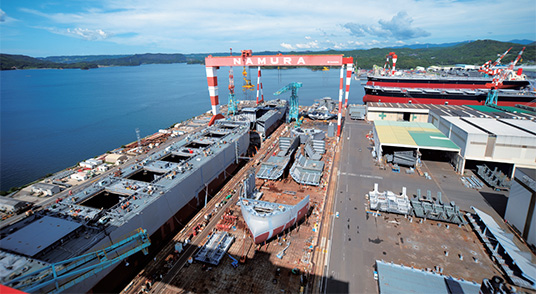
The quartet of 182,000 deadweight ton (dwt) vessels, currently under construction at Namura Shipbuilding in Japan, will enter five-year time charters with the Japanese shipping group upon delivery. Two of the ships are slated to join DryDel's fleet in 2028, with the remaining pair following in 2029.
These contracts mark DryDel's entry into the capesize segment — the largest class of dry bulk carriers, typically deployed in the iron ore and coal trades — and come less than a year after the company expanded its order at Namura from two vessels to four.
DryDel stated that the vessels have been fixed on hybrid charter structures that combine a guaranteed earnings floor with direct exposure to the capesize market. This arrangement allows the owner to retain upside potential if freight rates strengthen while providing long-term revenue visibility — a notable advantage given that capesize earnings have historically been among the most volatile in commercial shipping, driven by concentrated exposure to iron ore and coal cargo flows.
The scrubber-fitted ships are being built to Tier III nitrogen oxide (NOx) emissions standards under IMO MARPOL Annex VI and EEDI Phase 3 energy efficiency requirements, reflecting current international maritime environmental regulations. Exhaust gas cleaning systems, or scrubbers, permit vessels to burn lower-cost high-sulphur fuel oil while remaining compliant with the IMO's 0.5% global sulphur cap introduced in 2020. The newbuilds are part of DryDel's broader strategy of investing exclusively in Japanese-built tonnage, a preference shared by numerous dry bulk owners who cite Japanese yards' build quality and historically strong resale values for Japanese-constructed vessels.
The Athens-based owner currently has 13 dry bulk vessels under construction at Japanese yards, having invested more than $1 billion in newbuildings since 2019. As reported by Splash last December, DryDel doubled its capesize orderbook by returning to Namura for a fourth vessel, continuing a rapid fleet expansion programme centred on Japanese shipbuilders. The company has since placed additional kamsarmax and ultramax orders at Shin Kurushima, Nihon Shipyard, and Oshima, extending its orderbook through 2030.
Source: Splash247

