Debo Statistics, Graphs and Predictions: 2026 Guide
Key Takeaways
- •Debo Ray’s self-titled debut album received critical praise and a Grammy nomination.
- •The article says Debo Ray’s career has been analyzed through music criticism, academic study, institutional references and data-based tools.
- •Illustrative growth charts in the article are not presented as verified Debo statistics and are intended to show how performance data can be visualized.
- •The article cautions that forecasts based on historical data should be treated as estimates rather than guaranteed outcomes.
- •DEBO is separately described in 2026 as a micro-cap meme coin with low trading volume, thin liquidity and dependence on community activity.
Author: Ethan Blackburn
Published: July 27, 2026
Debo Ray’s self-titled debut album received critical acclaim and a Grammy nomination, and the artist’s rise from a small college town to international recognition has been presented as a case study in creativity, persistence and cultural timing. The available discussion around Debo combines music criticism, cultural analysis, institutional references, statistical indicators, example charts and 2026 performance observations tied to DEBO as a micro-cap meme coin.
This guide examines how data, graphs and forecasts are used to describe Debo’s influence across music, culture and crypto-related contexts. It also explains the limits of those tools: charts can clarify trends and comparisons, while predictions based on historical data remain forecasts rather than guarantees.
What “Debo” Can Mean
“Debo” has several meanings depending on context. That distinction matters because the same spelling can refer to a slang term, a personal name, an artist profile or a crypto token, and statistics from one context should not be treated as evidence for another.
In older urban slang and pop-culture usage, “debo” can mean to bully, rob or take something by force. The term is associated with the character Deebo in the film Friday, who was known as an intimidating bully. One example of the usage is: “He got debo’d for his bike.”
Debo can also be a nickname or given name in some cultures. Deebo Samuel, the American football player, is a widely known example of someone whose nickname is “Deebo.” In some languages and regions, Debo may also appear as a surname, place name or shorthand for organizations.
In the source material, Debo is discussed in multiple contexts: as Debo Ray, an artist whose debut album was Grammy-nominated; as a subject for cultural and institutional analysis; and as DEBO, a micro-cap meme coin described in a 2026 performance section.
Debo Ray: Background and Historical Context
Debo Ray’s rise is described as closely connected to artistic innovation, cultural change and institutional support. Her career began in a small university town and later reached a global audience. The source frames that development as part of a broader intersection between music, culture, law and data-driven analysis.
Music and Cultural Trends
Debo’s music emerged during a period of change in the music industry. Her debut album was praised by critics and described as a blend of traditional sounds and modern innovation. Reviews from outlets such as The Boston Globe highlighted her ability to connect with diverse audiences.
The source states that Debo’s work resonated with cultural movements and positioned her as a symbol of artistic freedom. It also says that historical trends in music contributed to her development. The rise of digital platforms expanded her ability to reach global listeners, and the source cites data showing a 77% increase in digital music consumption during her early career.
According to the article, Debo’s success reflected not only talent, but also timing and cultural relevance.
Legal and Institutional Perspectives
The source also connects Debo’s career to legal and institutional frameworks. It says her involvement with the NAACP Legal Defense and Educational Fund brought attention to equity issues in the arts. It also states that she worked with committees and boards to advocate for fair representation, and that this institutional support helped amplify her voice.
Academic institutions are described as another part of the story. Professors from leading colleges and universities analyzed Debo’s work, adding scholarly context to her public profile. The article says her contributions were studied in modern music courses at several schools, illustrating how artists and academics can collaborate in documenting cultural phenomena.
The source further states that institutions such as the Senate Judiciary Committee recognized her impact, presenting her career as an example of how legal and cultural forces may intersect.
Debo Growth Over Time: Example Data
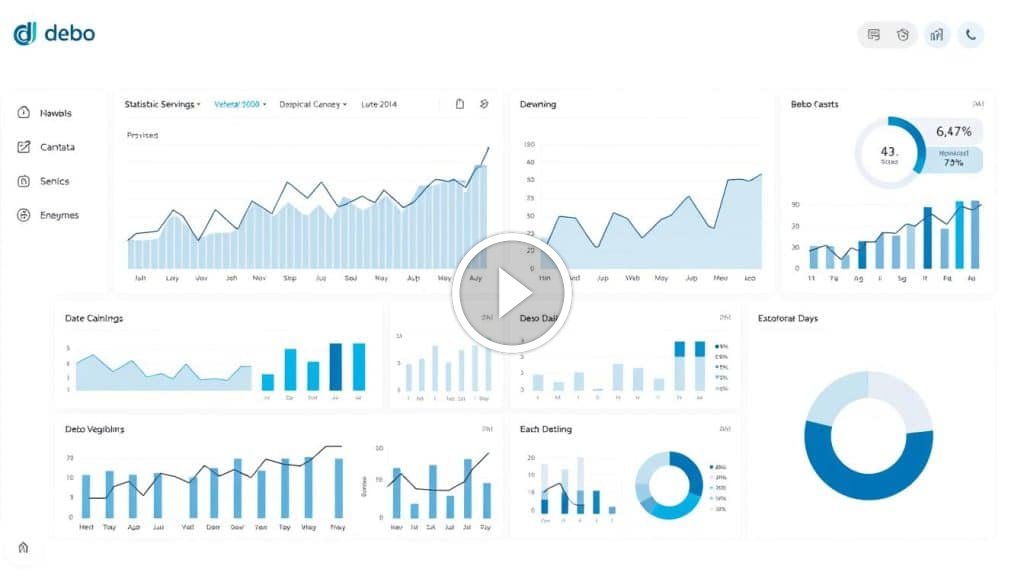
The article includes an illustrative growth example, while noting that it is not verified Debo statistics.
The example describes the following pattern:
- 2020–2022: Debo experienced steady growth as awareness increased.
- 2023: A stronger rise suggested higher engagement and recognition.
- 2024: Continued improvement indicated sustained momentum.
The source explicitly states that this graph is illustrative and shows how historical performance data can be presented, rather than providing verified Debo statistics. For readers, that distinction is important because a chart can be visually persuasive even when it is only a model or teaching example.
How Debo Graphs Are Used
Graphs are presented as tools for simplifying Debo-related performance data. They can show trends, comparisons and visual patterns that are harder to identify in raw data.
Line graphs can track progress over time. Bar charts can compare categories or periods. Prediction charts can use past data to estimate possible future trends, but the source cautions that such estimates should be treated as forecasts rather than guarantees.
To interpret Debo graphs accurately, the article recommends considering the timeframe, data sources, external factors and overall trend direction instead of focusing on individual changes in isolation.
Graphical Data and Statistics Overview
The source describes data-driven analysis as a way to understand Debo’s influence over time. Graphs and charts can help readers see how her work has evolved and how audiences have responded.
Interpreting Charts
The article says interpretation begins with identifying key metrics. A line graph showing streaming numbers over time can reveal growth trends. A bar chart comparing album sales across regions can highlight geographic differences in audience preference.
Video content is also described as a tool for visualizing complex information. Animated charts and infographics can make trends easier to understand quickly, especially when analyzing real-time data and timing effects.
Statistical Indicators
The source identifies streaming numbers and social media engagement as benchmarks for success. It also says reviews from credible sources can add depth to analysis, while scholarly research from universities and schools can provide additional context.
Committees and boards may use this type of data for decision-making. The article gives the example of a state-level committee analyzing trends to allocate resources effectively. In that framing, data supports planning and future strategy rather than functioning as a guarantee of outcomes.
Debo Predictions and Future Trends
The article says forecasts about Debo’s trajectory are built from past performance, cultural shifts, streaming numbers, social media engagement and other indicators. It describes these forecasts as evidence-based, while also acknowledging the uncertainty inherent in prediction.
Evidence-Based Forecasts
Forecasting Debo’s impact involves examining trends such as streaming activity and social media engagement. The source says her past album sales show a consistent upward trend, which it presents as a basis for expectations of continued growth. It also states that reviews from credible sources contribute to those projections.
Academic research from universities and colleges is described as another input. Studies of Debo’s cultural impact are said to provide a foundation for future projections and for understanding how her work may continue to resonate.
Using Past Data for Predictive Insight
The source states that past data can reveal patterns that inform future scenarios. It cites Debo’s involvement with legal and cultural committees as an indicator of her influence on societal issues. It also says state-level committees and boards may use similar data to allocate resources.
At the same time, the article stresses that forecasts depend on the tools, assumptions and data sources used. Accurate and reliable analysis requires verified sources, appropriate methods and regular updates.
DEBO Statistics, Graphs and Predictions: 2026 Performance Context
A separate 2026 section discusses DEBO in crypto-market terms. It describes DEBO as behaving like many micro-cap meme coins.
The source states that the price has stayed in a micro-cent range, written as the $0.0000x range, in recent periods. It also says liquidity is thin, meaning prices can move sharply with small trades. The article reports no strong institutional or exchange-backed growth signals.
Its key observation is that DEBO is driven by hype cycles rather than fundamentals. The source also notes high volatility and low trading volume, and says long-term survival depends heavily on community activity.
These statements are presented as performance context and not as investment advice. In this context, readers should also distinguish token performance data from the cultural and music-related discussion of Debo Ray; the article treats them as separate uses of the same name rather than a single unified subject.
Tools, Evidence and Verification Resources
The article emphasizes that reliable analysis depends on appropriate tools and credible sources. Whether researchers are working with graphs, statistical data or predictions, the source says verification is essential.
Analytical Tools
Analytical tools are described as the foundation of data verification. Software such as Tableau and Excel can simplify complex datasets and help users identify trends. The source cites a study analyzing 133 accessions of Marchantia polymorpha, which used advanced tools to identify genetic variations, as an example of how data tools can support research.
Video tutorials are also described as useful resources because they break complex processes into understandable steps. Platforms such as YouTube are cited as examples of places where free educational resources are available.
Source Credibility
The article says source evaluation is as important as the tools themselves. Reviews from trusted platforms such as The Boston Globe are described as adding depth to analysis. Committees and boards may rely on such reviews when making decisions.
The source also recommends cross-referencing data from universities and state-level studies. Research from leading schools is described as a way to build a stronger foundation for trend analysis, reduce errors and improve reliability.
It includes the statement: “The key to accurate analysis lies in using verified sources and reliable tools.”
Future Outlook and Growth Forecast
Debo’s future outlook is described as depending on past performance, current trends, audience behavior, technology development and market conditions. By analyzing those factors, researchers may identify possible growth opportunities and potential challenges.
The source says future growth may come from expanding audiences, a stronger digital presence, improved engagement strategies and advanced data tools. It also says continued innovation and adaptation to changing trends will be important for maintaining relevance and increasing influence.
However, the article stresses that forecasts are not guarantees. Unexpected events, changing consumer interests and increased competition may affect results. Accurate predictions require regular updates, reliable data sources and careful evaluation of multiple possible outcomes.
Overall, the source says Debo has potential for continued development if Debo responds to new opportunities, maintains audience connections and uses performance insights to guide future decisions.
Conclusion
The article presents Debo as a subject that spans culture, music, institutional analysis and crypto-market discussion. It highlights Debo Ray’s Grammy-nominated debut album, critical attention, academic analysis, institutional references and the use of statistical tools to evaluate cultural impact.
It also separates illustrative data from verified statistics and cautions that prediction charts should not be treated as guarantees. In the 2026 crypto section, it describes DEBO as a micro-cap meme coin with micro-cent pricing, thin liquidity, high volatility, low trading volume and dependence on community activity.
Across these contexts, the article’s central point is that data, graphs and forecasts can help explain trends, but their usefulness depends on source quality, transparent methods and careful interpretation.

