The Cold War Origins of Colombia's Right-Wing Paramilitary Death Squads
Key Takeaways
- •Colombia's right-wing paramilitary groups predate the cocaine boom of the 1980s, originating instead from Cold War counterinsurgency strategies and the country's long history of partisan violence.
- •US-led survey teams dispatched in 1959 and 1962 recommended the creation of government-trained civilian militias to gather intelligence and conduct anti-guerrilla operations, drawing directly on American counterinsurgency doctrine developed in South Vietnam.
- •Colombian President Guillermo León Valencia legally formalized civilian paramilitary militias through Decree 3398 in 1965, and President Carlos Lleras Restrepo made the framework permanent through Law 48 in 1968.
- •The AUC, formally established in 1997 as an umbrella organization unifying regional paramilitary blocs, was later designated a terrorist organization by the United States, the European Union, and Colombia.
- •According to Colombia's Truth Commission, paramilitary structures were responsible for 45 percent of all homicides committed in the country between 1985 and 2018, making them the conflict's most prolific killers.
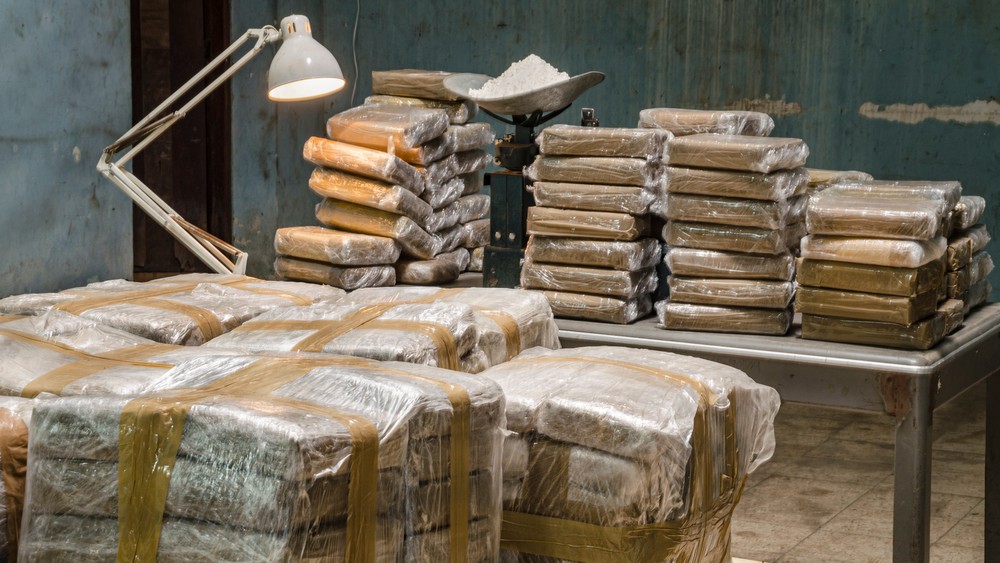
The rise of Colombia's notoriously violent right-wing paramilitary death squads is frequently attributed to the emergence of powerful, vertically integrated cocaine cartels in the early 1980s. This interpretation, however, obscures the deeper historical forces that shaped their development in a country defined by decades of internal conflict and what is considered the world's longest-running multi-party low-intensity asymmetric war. Colombia's right-wing death squads — responsible for the majority of victims in the modern conflict — predate Pablo Escobar, the Medellín Cartel, and the cocaine boom. Their origins trace back to earlier struggles over political power and control of the country's vast natural resources.
A Legacy of Violence
Informal armed groups have driven much of the bloodshed that has plagued Colombia since its 1814 independence from Spain. Endless clashes fueled by political rivalry, class divisions, and competition over fertile agricultural land and mineral wealth sustained the violence. Colombia's two dominant ideological parties — the Liberals and the Conservatives — were locked in near-continuous conflict throughout the 19th and 20th centuries as they vied for control over the nation's resources.
According to conservative politician Jorge Holguín, as cited by Colombia's central bank, the period between 1830 and 1903 saw nine major general wars, 14 local conflicts, and two international wars. The most devastating of these was the Thousand-Day War, fought from October 17, 1899, to November 21, 1902. Colombia's Liberal Party initially fought the authoritarian National Party-led government, and later the Conservative Party after its leader, José Manuel Marroquín, overthrew authoritarian President Manuel Antonio Sanclemente on July 31, 1900.
The civil war, waged on both land and sea, proved catastrophic for Colombia. More than 100,000 people died, the economy was devastated, and critical infrastructure was destroyed. The scale of the destruction drove a sharp rise in poverty and effectively bankrupted the government. The conflict left the country deeply fractured politically and socially — between the Conservative Party, which favored a strong central government, and the Liberal Party, which advocated for social reforms and greater regional autonomy.
La Violencia
The unresolved wounds of the Thousand Days' War created the conditions that ignited into renewed partisan violence after World War II. The bloodshed began with the April 9, 1948, assassination of Jorge Eliécer Gaitán, a popular Liberal Party leader. His murder triggered a ten-hour wave of rioting, looting, and destruction in downtown Bogotá — an event known as El Bogotazo — that left the city center in ruins. Gaitán's assassination detonated Colombia's long-simmering tensions surrounding class, inequality, and political power, setting off a decade of brutal civil conflict from 1948 to 1958, known as La Violencia.
Extreme violence engulfed Colombia, particularly its impoverished rural regions, where deep social inequality, political exclusion, and weak state presence created fertile ground for armed conflict. The ruling Conservative Party established brutal militias — precursors to the paramilitary groups that would emerge later in the 20th century — that fought alongside the army and police to assert control over the countryside. These irregular armed formations operated as a savage shadow police force, killing and displacing Liberal supporters as the state fought to secure Colombia's agricultural heartland.
By 1953, the exhausted Conservative government had lost so much control that General Gustavo Rojas Pinilla seized power in a bloodless coup. After consolidating his position, Rojas Pinilla declared a general amnesty aimed at ending the bloodshed. The amnesty achieved only limited results, although many Liberal militias did disarm and demobilize. Violence in rural Colombia had acquired its own momentum, sustained by endless cycles of vendetta and retribution. Rather than disbanding, some armed groups reconstituted themselves as bandit gangs or peasant self-defense forces.
An Elusive Peace
After a period of sharply declining popularity and lacking the political base needed to sustain his rule, Rojas Pinilla was deposed by a five-member military junta in 1957. This set in motion the return to civilian government, which was formally restored in 1958. Colombia then entered a new political era as the Liberals and Conservatives negotiated a power-sharing agreement known as the National Front, or Frente Nacional. The country's traditional political elite believed this pact would finally bring an end to the violence.
The power-sharing arrangement took effect on August 7, 1958, with the inauguration of Liberal Party candidate Alberto Lleras Camargo as the National Front's first constitutional president. Upon taking office, Lleras Camargo moved quickly to address rural violence. He established a commission to investigate the civil war's multifaceted causes and sought ways to promote economic development in a country ravaged by prolonged conflict. Despite Lleras Camargo declaring an end to La Violencia in late 1958, pervasive violence and lawlessness persisted throughout rural areas.
The brutal and corrupt behavior of authorities during La Violencia, combined with the government's inability to restore order, generated deep distrust among Colombia's rural population. As a result, the Colombian Communist Party — known by its Spanish initials as the PCC — gained increasing support from the rural poor. The PCC's popularity continued to grow even after the party was declared illegal in 1956 under the Rojas Pinilla dictatorship. Following the dictatorship's collapse, the PCC regained its legal status.
In return, the PCC endorsed the December 1, 1957, plebiscite that formally established the National Front and adopted a strategy of peaceful mass political struggle, even while maintaining armed rural militias. These decisions further strengthened the party's appeal, particularly among the urban poor, at a time when it was also gaining traction among Colombia's peasants. Since the 1930s, the PCC had vigorously championed agrarian reform in a country where ownership of prime agricultural land was concentrated in the hands of the ruling elite.
The PCC intensified those efforts during La Violencia by forming peasant self-defense groups to protect subsistence farmers. These initiatives resonated deeply at a time when a large pool of potential recruits existed — many small landholders had been displaced by brutal Conservative Party-backed paramilitary-style groups. These developments enabled the PCC to cultivate a small but fiercely loyal agrarian base that continued to expand due to the government's persistent failure to end rural violence and instability.
Washington's Alarm
Colombia's chronic instability following the 1948 collapse of constitutional government raised significant concern in Washington. This instability, combined with extreme rural disorder and the PCC's rising popularity during the late 1950s — a period of intense Cold War confrontation — set off alarm bells in the Eisenhower White House. Colombia's strategic position, bridging Central and South America, made it imperative for the United States to maintain influence in Bogotá and prevent a hostile government from taking power.
Cold War tensions were at a flashpoint during this period. The Soviet Union was aggressively seeking to expand its influence across the developing world, particularly in Southeast Asia and Latin America. After Fidel Castro's January 1959 victory in Cuba, socialist movements gained significant traction throughout the region. It was just six years before Castro's triumph that US President Dwight D. Eisenhower — deeply troubled by the spread of communism — articulated the Domino Theory, arguing that if one nation fell to communism, neighboring states would follow in succession. This hypothesis, despite its flaws, profoundly shaped US Cold War foreign policy, driving a focus on strategic containment of the USSR and Maoist China, competition for influence in developing Africa, and the maintenance of American hegemony in Latin America.
Cuba's revolutionary government further heightened Washington's fears by intensifying subversive activities across the region, including the financing and training of socialist insurgents.
Economic Policy and Its Consequences
By the late 1950s, Colombia's president was determined to rebuild a severely war-damaged economy. Lleras Camargo introduced policies aimed at broader economic recovery, including fiscal austerity and agrarian land reform. A central element of his strategy for revitalizing a near-bankrupt economy was consolidating small rural landholdings into large, capital-intensive farms that could benefit from economies of scale while increasing agricultural output.
Lleras Camargo believed that industrial-scale agriculture would provide employment for the millions of Colombians displaced by La Violencia and substantially boost production and exports. This economic recovery, he reasoned, would also stabilize rural communities and diminish the appeal of revolutionary groups like the PCC that demanded radical reform. Because large-scale intensive farming was prohibitively expensive, the administration planned to engage foreign agricultural firms to manage these operations.
These policies are believed to have displaced approximately 40,000 families from their subsistence farms in a country already overwhelmed by millions of internally displaced people. Many dispossessed farmers migrated to overcrowded cities with minimal employment opportunities, where inadequate infrastructure and public services made life extremely harsh for the urban poor. This displacement further strengthened support for the PCC and generated a ready pool of recruits for peasant self-defense forces in rural Colombia — many of which consisted of Liberal militias that had refused to demobilize during the 1956 amnesty.
Washington viewed these developments with growing alarm. The Domino Theory and confrontation with the Soviet Union dominated the thinking of US policymakers. Cuba had fallen to communism in 1959; four years earlier, France had suffered a decisive defeat at the hands of the communist Viet Minh in Vietnam, leading to the partition of the former French colony into communist North Vietnam and US-backed South Vietnam. All of this unfolded after China's 1949 communist revolution and the collapse of the US-backed nationalist government.
By the late 1950s, rural Colombia was a tinderbox of violence and lawlessness that the government could not control. Persistent poverty and deep socioeconomic inequality allowed the PCC to substantially broaden its rural support base. The party's formation of peasant self-defense militias to combat endemic violence and banditry further enhanced its appeal. These efforts granted the PCC greater legitimacy among peasants, leading to the establishment of self-defense forces and eventual control over several autonomous rural enclaves in southern and central Colombia. These enclaves — including the community of Marquetalia — became the target of a US-backed Colombian military offensive in May 1964, an operation that directly catalyzed the founding of the Revolutionary Armed Forces of Colombia (FARC), which would become the country's largest and most powerful leftist insurgency and the principal adversary of the paramilitary blocs whose origins this history traces.
The situation was compounded by Colombia's ineffective, barracks-bound army, which for over a decade had repeatedly proven incapable of securing the countryside. A brutal and deeply corrupt police force, widely despised by the population, further complicated Lleras Camargo's efforts to pacify rural areas. The pervasive distrust, contempt, and hatred directed at Colombia's security forces seriously undermined government legitimacy and prevented the state from establishing a meaningful presence, while simultaneously bolstering the PCC's appeal.
The US Military Intervenes
In 1959, frustrated by the inability to end rural disorder, the shortcomings of Colombia's security forces, and the PCC's rising popularity, Lleras Camargo turned to the United States for security assistance. Alarmed by Colombia's instability and the rapid growth of leftist movements across Latin America — including the rise of communist parties in Venezuela and Colombia — Eisenhower responded by dispatching a special survey team to the Andean nation. The team operated under State Department supervision and was composed of irregular warfare experts.
The CIA-led team arrived in Colombia in October 1959. Over the course of two months, they traveled throughout the country, interviewing key politicians, labor leaders, bandit leaders, and captured Liberal guerrilla fighters. A preliminary report released in late January 1960 concluded that the prevailing extreme violence and disorder stemmed primarily from criminal behavior rather than organized insurrection. However, it warned of considerable potential for political agitators — particularly communists — to transform the violence into a genuine subversive insurgency.
The report identified that resolving chronic rural lawlessness was essential to stabilizing Colombia and preventing a true communist insurgency from taking hold. The cornerstone of the team's recommended strategy was restoring public confidence in Bogotá's ability to maintain order after more than a decade of violence. This centered on a broad "hearts and minds" approach designed to rebuild trust and reestablish nationwide government support, with a nationwide public works program, land reform, and expanded social services at its core.
The survey team's principal finding was that most rural violence was perpetrated by large marauding bands of criminals operating as quasi-guerrillas. These illegal armed groups possessed rudimentary intelligence networks that facilitated their raids on communities. Their violent activities were driven primarily by economic motives rather than ideological or political ones. The team concluded that these groups could be swiftly eliminated through effective counterinsurgency operations led by US advisers.
While improving basic healthcare, education, and sanitation — particularly in rural Colombia — was considered essential, there was also a significant military dimension. The survey team recommended that Colombia form a specialized, highly mobile army counterinsurgency unit called the Lanceros to combat illegal armed groups, including bandits and emerging quasi-guerrillas. It also advocated for the deployment of US military advisers to provide training in counterinsurgency operations, civic action, and covert psychological warfare.
Critically, the survey team recommended the creation of government-trained and armed irregular civilian detachments to gather intelligence, provide local security, and support anti-guerrilla operations. These militias — forerunners of the paramilitary blocs that would emerge in the 1980s — were to be trained and equipped by Colombia's armed forces. Some elements were designated to conduct, with National Police assistance, quasi-covert counterintelligence and civic-action anti-guerrilla operations.
The survey team's recommendations closely mirrored Washington's strategy in the Republic of Vietnam, where US military advisers and domestic troops were fighting an increasingly bloody war against a communist insurgency. The formation of irregular civil defense units and the relocation of Vietnamese peasants from remote villages into government-protected strategic hamlets were central to US counterinsurgency doctrine. Similar measures were subsequently implemented in Colombia based on the 1959 and 1962 survey team reports.
Sowing the Seeds of Paramilitarism
Colombia's irregular state-backed civilian militias were originally established to reduce rural violence by protecting communities from bandits and leftist guerrillas. Over time, however, they evolved into a brutal paramilitary apparatus. Historians now draw direct parallels between these formations and the ruthless militias recruited by Colombia's Conservative Party during La Violencia — some of which were established by the police — that terrorized the rural population.
By the early 1960s, the deployment of irregular civilian militias had become a central tactic employed alongside the army to suppress banditry and violence in rural Colombia. In February 1962, a second US survey team — led by Special Warfare Center commander General William P. Yarborough — visited the country. Yarborough's recommendations echoed those of the 1959 team: a dual strategy combining civic action programs to win hearts and minds with military operations to regain control of the countryside. He called for the establishment of state-backed civilian militias to operate alongside Colombia's military, and advocated for clandestine paramilitary operations by trained civilians targeting communist agitators.
These recommendations drew directly on US experience and strategy in South Vietnam, where American involvement was escalating with the Domino Theory as a guiding principle.
Lleras Camargo's successor, Conservative President Guillermo León Valencia — who took office on August 7, 1962 — legally recognized civilian paramilitary militias through Decree 3398 of 1965. This decree formalized the state's role in recruiting, training, and deploying irregular civilian self-defense groups alongside the military. The decree was issued as part of a broader temporary state of siege declaration in May 1965, prompted by violent student protests across major Colombian cities against US intervention in the Dominican Republic. Those students, like later protesters, were viewed by Colombia's ruling Conservative Party as communist agitators, reinforcing the state's determination to suppress any form of insurrection.
In 1968, Liberal Party President Carlos Lleras Restrepo made Decree 3398 permanent through Law 48, enacted on December 11, 1968. Colombia's Ministry of Defense and the armed forces — including the police — subsequently used Law 48 to justify providing assistance to paramilitary forces participating in the country's civil war.
These measures, firmly rooted in the Cold War politics and strategic thinking of the era, were explicitly designed to suppress the PCC and communist insurgents. They laid the groundwork for the emergence of Colombia's brutal far-right paramilitary groups and, ultimately, the United Self-Defense Forces of Colombia — known by its Spanish initials as the AUC — formally established in 1997 as an umbrella organization unifying regional paramilitary blocs. The AUC was later designated a terrorist organization by the United States, the European Union, and Colombia, even as individual commanders forged ties with drug traffickers, landowners, and segments of the political establishment. It committed horrific acts of violence against civilians while waging war against various leftist guerrilla factions.
A Dirty War Begins
Although official records remain scarce, sources indicate that military commanders actively encouraged the formation of state-backed civilian militias beginning in the early 1960s. While some units gathered intelligence and provided community security, others conducted covert operations against guerrillas and their civilian supporters, displacing subsistence farmers in the process. This shift represented a significant transformation in government strategy — a pivot toward a protracted "dirty war" against an emerging communist insurgency.
These developments established the foundation for decades of conflict in which paramilitary structures became the conflict's most prolific killers, responsible for 45% of all homicides committed between 1985 and 2018, according to Colombia's Truth Commission. The FARC itself was responsible for a significant share of the remaining violence, and the two forces — born from the same Cold War landscape — sustained a cycle of retaliatory brutality that defined the conflict's trajectory through the 2016 peace accord between the government and the FARC and beyond.
By Mathew Smith for Oilprice.com

