Britain Needs a New Richard Branson: Why UK Founders Say Tax and Storytelling Must Improve
Key Takeaways
- •Sir Richard Branson continues to rank as the UK's top business champion in a founder survey, ahead of all contemporary tech and fintech figures, despite launching his first venture nearly 60 years ago.
- •The UK has a record 80 unicorn companies with a combined valuation of £242.4 billion, placing it third globally behind the United States and China according to Hurun's 2026 index.
- •Tax rates rank as founders' top concern about the UK business environment, with 70 percent saying the country presents itself ineffectively as a place to do business.
- •Over half of London-based founders have considered relocating their company out of the capital in the past 12 months, driven primarily by high costs of living and operating overheads.
- •Manchester ranks as the leading domestic alternative to London for founders, ahead of Cambridge, while San Francisco and New York are seen as London's closest international rivals.
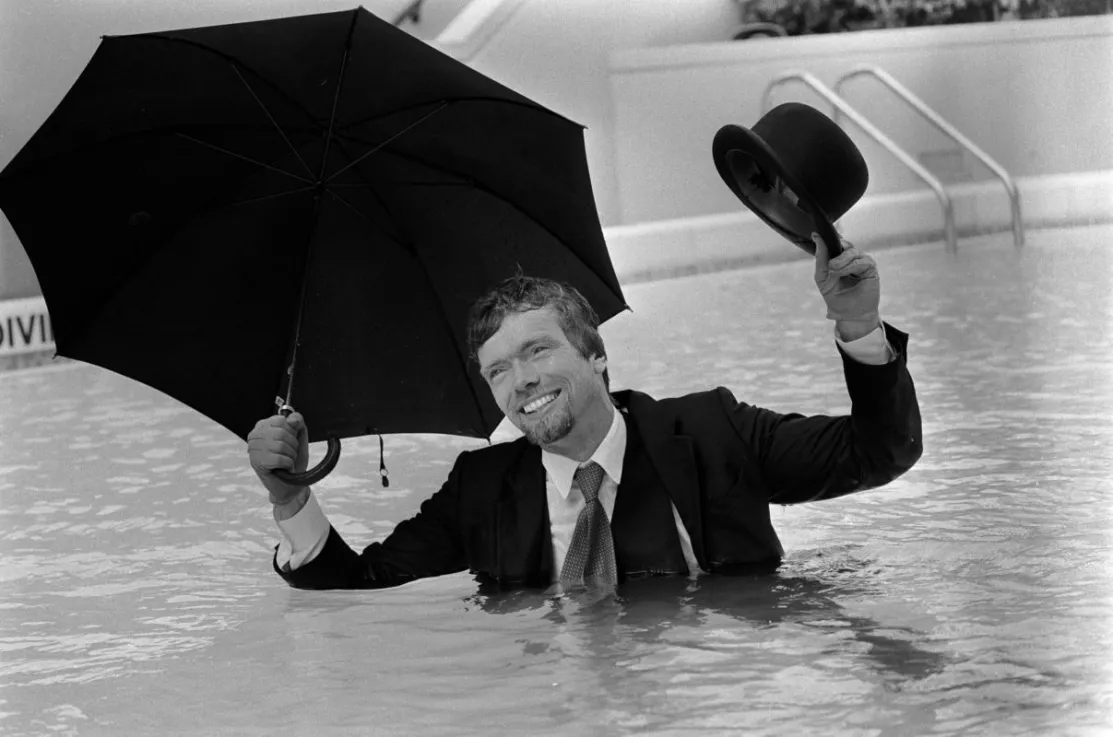
Sir Richard Branson remains the UK's most prominent business champion, even though he launched his first venture nearly six decades ago. While Branson's success with Virgin is undisputed, the country has yet to produce a successor who commands the same global visibility, writes Philip Salter, founder of The Entrepreneurs Network.
Branson began working on his first successful business — a magazine called Student — shortly after England won the 1966 World Cup, launching it two years later. When The Entrepreneurs Network surveyed its community of founders, in partnership with Public First, asking which entrepreneur best champions the UK as a place to do business, Sir Richard ranked first. His enduring top ranking — ahead of any contemporary tech or fintech figure — underscores a gap the UK has struggled to close despite the maturing of its startup ecosystem.
The UK's startup ecosystem has matured significantly since the Branson era. Hurun's 2026 index identifies a record 80 UK unicorns with a combined valuation of £242.4 billion, placing Britain third globally behind only the United States and China. Promising candidates for a new generation of business champions include Synthesia's Victor Riparbelli, Darktrace co-founder Poppy Gustafsson, and James Dacombe, whose two-year-old AI chip firm Olix was valued at £2.5 billion this week.
Yet the survey findings suggest that the new government faces a twin challenge: telling a more compelling story about British success on the world stage, and addressing fundamental policy issues that founders say hold the country back.
Although most respondents consider the UK a good place to start a business, 70 per cent of founders said the country presents itself ineffectively. When asked what shapes that judgment, founders ranked cultural factors such as language and lifestyle third, the pull of investor networks second, and tax rates first — a finding that cuts to the heart of any government's economic agenda. The UK's capital gains tax regime and the future of Entrepreneur's Relief, rebranded as Business Asset Disposal Relief, have been recurring points of tension between founders and policymakers in recent years.
Asked what they would highlight when selling the UK, founders pointed above all to the Enterprise Investment Schemes, which provide tax relief for investors, and the country's status as Europe's largest venture capital market, cited by 49 and 42 per cent of respondents respectively. The EIS and its seed-stage counterpart SEIS, introduced in 1994 and 2012, have collectively channelled billions of pounds into early-stage British companies and are widely credited with helping the UK attract more venture funding than France or Germany.
London's Ecosystem Advantage
Among London-based founders, the single most cited reason for being in the capital is the ecosystem rather than access to capital: 48 per cent pointed to the city's established industry network. Once established, founders view London as a clear net positive — a London base makes fundraising easier for 63 per cent, compared with just 8 per cent who say it is harder. The city also helps with credibility, partnerships, media relations, and government access. Hiring, however, remains a weak spot, with a significant minority of founders saying recruitment can be more difficult in London.
The Cost Factor
London's drawbacks are overwhelmingly cost-related. More than four in five founders (83 per cent) identified the cost of living — including rent, commuting, and daily expenses — as a top downside, while 73 per cent cited high operating overheads such as office space and salaries. Over half of London-based founders have considered relocating their company out of the capital in the past 12 months, and more than a quarter have seriously considered or actively planned to do so. By contrast, only 28 per cent of founders based outside London have considered moving in.
When asked which cities come closest to rivalling London, founders looked across the Atlantic. San Francisco and New York were named most frequently — by 48 and 44 per cent of those identifying a rival — followed by Singapore (21 per cent), Dubai (14 per cent), and Austin and Lisbon (11 per cent each). European hubs such as Berlin, Amsterdam, and Paris trailed well behind, suggesting that founders perceive London's real competition as transatlantic and global rather than continental.
If founders do leave, the same American cities top the list of destinations. Domestically, the new Prime Minister — who previously spent a decade running Greater Manchester — may note that Manchester ranks as the leading alternative to London, ahead of Cambridge.
Nearly 60 years after Student magazine first appeared, Britain has no shortage of billion-pound company founders. What it needs from the new government is not merely celebration of their achievements, but concrete reasons for them to stay.
Philip Salter is the founder of The Entrepreneurs Network. The full survey is available at The Entrepreneurs Network.

