U.S.-Saudi Nuclear Agreement Risks Undermining IAEA Safeguards and Nonproliferation Standards
Key Takeaways
- •The U.S.-Saudi nuclear cooperation agreement permits domestic uranium enrichment and does not require Saudi Arabia to accept the IAEA Additional Protocol, marking a departure from the 'gold standard' set by the 2009 U.S.-UAE agreement.
- •The agreement provides for a two-year joint study on the commercial viability of enrichment in Saudi Arabia, after which the kingdom could pursue enrichment independently or with other partners if the study finds it commercially unviable.
- •Saudi Arabia currently operates under the IAEA Small Quantities Protocol and has persistently refused to accept the Additional Protocol, which is the recognized safeguards standard accepted by over three-quarters of NPT parties.
- •Saudi Crown Prince Mohammed bin Salman stated in 2018 that Saudi Arabia would seek nuclear weapons if Iran acquired them, underscoring the potential for a regional proliferation chain reaction.
- •The author argues that concessions granted to Saudi Arabia could weaken incentives for Iran to accept more rigorous verification and urges universal adoption of the Additional Protocol across all regions.
U.S.-Saudi Nuclear Agreement Risks Undermining IAEA Safeguards and Nonproliferation Standards
By John Carlson — Published Aug 5, 2026, 12:40 pm KST
The recently announced United States–Saudi Arabia nuclear cooperation agreement — a so-called Section 123 agreement under the U.S. Atomic Energy Act, which governs civilian nuclear cooperation with foreign partners — has not yet been made public, but what is known so far gives serious grounds for concern. If the agreement proceeds as reported, it will undermine the U.S.'s own "gold standard" for nuclear cooperation agreements and weaken efforts to bolster International Atomic Energy Agency (IAEA) safeguards. Saudi Arabia has for years signaled its intention to build large-scale nuclear power capacity as part of its energy diversification plans, making the safeguards framework attached to any cooperation agreement especially consequential.
Why Safeguards Matter
Nuclear safeguards may seem like a highly technical subject, but the level of support governments give to IAEA verification has profound real-world consequences. Safeguards are applied by the IAEA to verify commitments to peaceful nuclear use under the Nuclear Non-Proliferation Treaty (NPT) and are a cornerstone of international efforts to prevent the spread of nuclear weapons. Equally important are controls on nuclear technologies that could be repurposed for weapons development.
Despite the critical importance of preventing proliferation, it is deeply troubling that safeguards do not receive the strongest possible backing from every government. This may stem partly from the technical complexity of safeguards, which can prevent political leaders from grasping the full implications of their decisions.
The U.S. "Gold Standard" and the Saudi Departure
The U.S. gold standard was established in its 2009 agreement with the United Arab Emirates (UAE). Under that arrangement, the UAE committed to forgo domestic uranium enrichment and to accept safeguards including the IAEA's Additional Protocol. That agreement was widely seen at the time as a model for the broader Middle East, crafted against the backdrop of escalating concern over Iran's nuclear program.
The U.S.-Saudi agreement, by contrast, permits enrichment and does not require the Additional Protocol.
On enrichment, the agreement reportedly provides for a two-year joint study into the commercial viability of enrichment in Saudi Arabia. If the study's conclusion is positive, a joint U.S.-Saudi enrichment program would be envisaged. If the conclusion is negative, Saudi Arabia would be free to pursue enrichment independently or with other partners after 10 years.
The Additional Protocol and Its Holdouts
Saudi Arabia has long refused to accept the Additional Protocol. Saudi Arabia currently operates under an IAEA Small Quantities Protocol, a simplified safeguards arrangement intended for states with minimal nuclear material, which provides far less verification coverage than a full safeguards agreement with an Additional Protocol. The Protocol was developed as part of efforts to strengthen IAEA safeguards following the discovery of Iraq's clandestine nuclear weapon program in the 1990s. It significantly expands the IAEA's ability to detect undeclared nuclear activities through wider access to nuclear-related information and locations.
Today, the Additional Protocol is the recognized NPT safeguards standard, having been accepted by over three-quarters of NPT parties, including 55 of the 65 non-nuclear-weapon states that possess nuclear facilities. South Korea concluded its Additional Protocol in 2004.
Current holdouts, in addition to Saudi Arabia, include Iran, Egypt, and Syria. Iran had applied the Protocol on a "provisional" basis but ceased doing so after U.S. President Donald Trump withdrew from the Iran Joint Comprehensive Plan of Action (JCPOA) in 2018.
Bilateral Safeguards: Unanswered Questions
In parallel with the nuclear cooperation agreement, the United States and Saudi Arabia reportedly have a bilateral safeguards arrangement — also not yet public — proposing "IAEA involvement" in "additional safeguards and verification measures (for) the most proliferation sensitive areas of potential nuclear cooperation."
Without seeing the details, this proposal is difficult to assess. However, Saudi Arabia's outright rejection of the Additional Protocol raises alarm bells. There is no legitimate reason for any country to decline the Additional Protocol; a demand for weaker safeguards suggests a desire to keep nuclear options open. It would be irresponsible for the United States or any other country to facilitate such an outcome.
Regional Implications
The ongoing U.S.-Iran conflict — together with other wars in the Middle East and Ukraine — demonstrates that complex political disputes cannot be settled by force alone. They require diplomacy and political agreement. Where nuclear programs are involved, robust technology controls and effective verification will be indispensable to any political solution.
The Iran nuclear issue cannot be resolved in isolation. It must be addressed through a regional approach, and what happens in Saudi Arabia will be decisive for any lasting settlement. In 2018, Saudi Crown Prince Mohammed bin Salman stated that Saudi Arabia would seek a nuclear weapon if Iran acquired one, underscoring the proliferation chain reaction that could follow from a permissive safeguards framework. The concessions granted to Saudi Arabia weaken the case for Iran to accept more rigorous verification. Furthermore, the prospect of enrichment on Saudi soil will likely motivate Iran to intensify its own enrichment activities.
The Case for Universalizing the Additional Protocol
Historically, the United States has held a strong stance against the spread of nuclear weapons. Washington played a pivotal role in concluding the NPT and building the IAEA safeguards system. The United States should now be making every effort to universalize the Additional Protocol, particularly in regions of tension and heightened proliferation risk.
Supporters of the nonproliferation regime should do everything possible to reinforce the IAEA safeguards system and advocate for universal adoption of the Additional Protocol. Several countries across the Asia-Pacific region — as well as in the Middle East, Africa, and Latin America — either lack an Additional Protocol or have signed one but not yet ratified it. Leading Protocol countries, including South Korea, should take practical steps to encourage and assist these nations in bringing an Additional Protocol into force without further delay. U.S. friends and allies, likewise, should urge Washington to champion the Protocol's universalization.
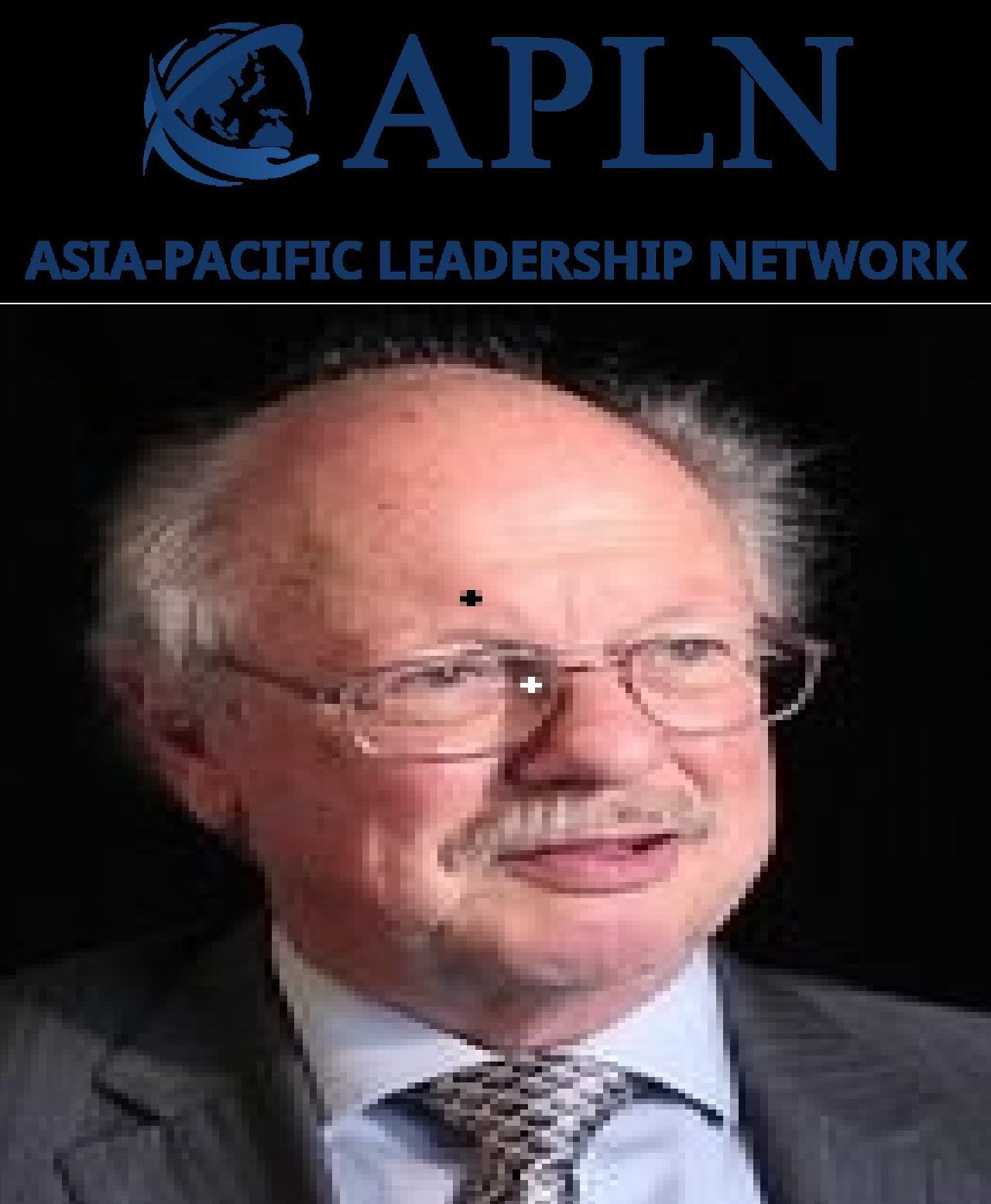
John Carlson is a member of the Asia-Pacific Leadership Network (APLN) and an APLN senior associate fellow. He is also a nonresident senior fellow at the Vienna Center for Disarmament and Non Proliferation and a member of the International Advisory Council to the International Luxembourg Forum. This essay is published in cooperation with the APLN (www.apln.network). The views expressed here are his own.

