Trump Targets Michigan Primary Results, Reviving Election Fraud Claims Ahead of November
Key Takeaways
- •Dr. Abdul El-Sayed, a progressive Democrat, defeated party-backed Representative Haley Stevens in Michigan's Democratic primary for the U.S. Senate seat.
- •Trump responded by baselessly claiming Wayne County is corrupt and warning of a rigged November election, while urging voters to support Republican Mike Rogers.
- •Columnist Jason Miciak argues Trump is broadening his election delegitimization claims to potentially shield himself from congressional investigations if Democrats take control of the legislature.
- •Anti-establishment sentiment is growing on both sides of the political spectrum, with voters challenging incumbents from both major parties in primary races.
- •Trump did not contest his own narrow 2024 victory in Michigan, raising no concerns about ballot processing at that time.
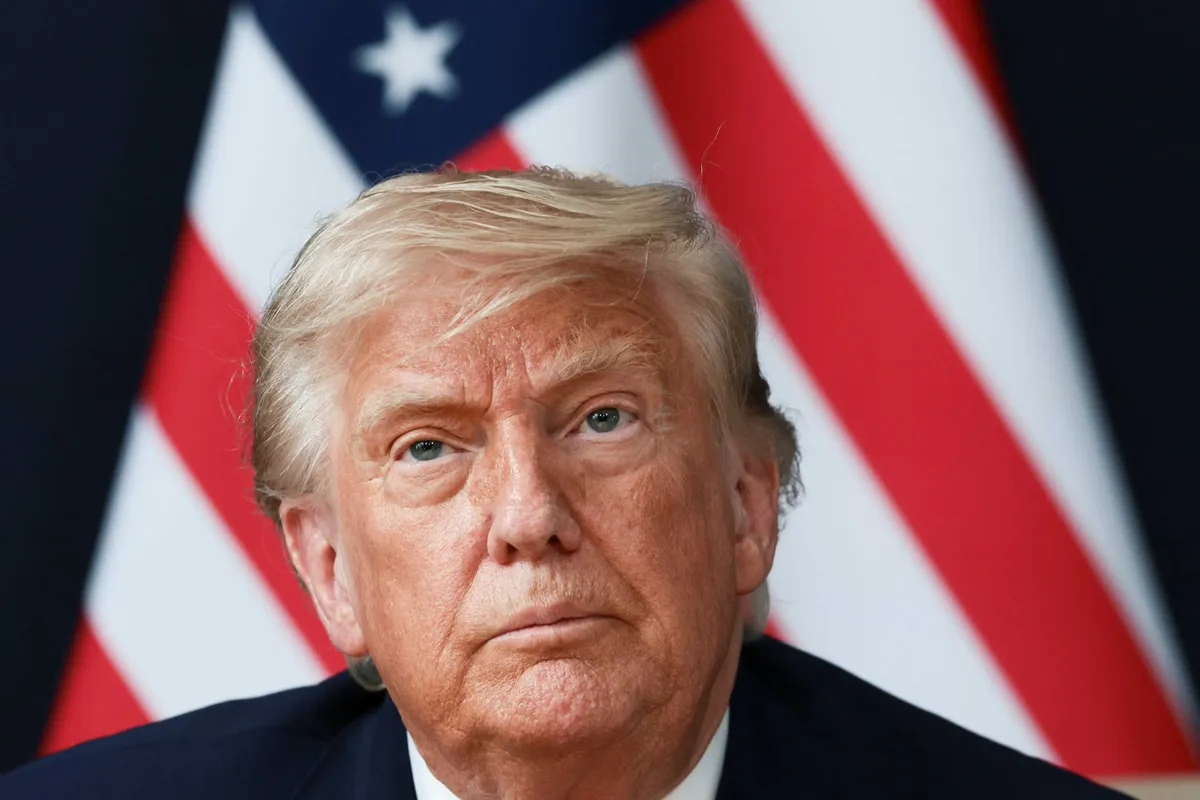
Donald Trump's response to the Michigan Democratic primary results follows an established pattern that has persisted for years and is expected to continue through the general election this fall. What was once theoretical rhetoric is now taking practical form, with Trump focusing considerable attention on Michigan and other battleground states ahead of November. Michigan, which carries 15 electoral votes and has decided the presidency in recent cycles by razor-thin margins, remains one of a handful of states likely to determine the next election's outcome.
Voters across the political spectrum have expressed deep frustration with the state of the nation. On the right, while many supporters refrain from directing their anger at Trump himself — whom critics hold responsible for inflation, foreign conflicts, and healthcare cuts — conservative voters have demonstrated a willingness to challenge their own incumbents, as seen in primary pressures on figures including Senator John Cornyn and Representative Thomas Massie.
A parallel wave of anti-establishment sentiment has surged on the left, driven by outsider candidates and Democratic Socialists. The latest example is Dr. Abdul El-Sayed of Michigan, who ran for governor in 2018 on a progressive platform and has now defeated Representative Haley Stevens, a party-backed candidate, in the Democratic primary for the U.S. Senate seat. (Related coverage)
Trump, who wants Republican candidate Mike Rogers to win Michigan's Senate seat, recognized that El-Sayed's victory disrupted what had been expected to be a predictable Rogers-versus-Stevens general election contest. The result also signaled the depth of voter discontent — a dynamic that could pose risks to Trump's own political standing.
Rather than accept the primary outcome as part of a normal democratic process, Trump moved to delegitimize the results. This is not unprecedented for the former president, who has previously challenged election outcomes, most prominently after the 2020 election. However, columnist Jason Miciak argues that Trump is now broadening his "rigged" claims beyond direct self-preservation to potentially shield himself from congressional investigations should Democrats take control of the legislature.
Following El-Sayed's win, Trump posted on social media:
"Wayne County (Detroit) in Michigan is one of the most corrupt voting areas in the United States, if not the World. It is strictly Third World!...
"The Radical Left Socialist has a real shot, and don't discount all of those fake mail-in ballots that will 'surprisingly' show up at the last moment."
Trump then added what Miciak identifies as his most consequential statement:
"Get ready for another Rigged Election. In November we must VOTE FOR MIKE ROGERS, and make Michigan TOO BIG TO RIG. God Bless America!"
The rhetoric drew immediate criticism. Observers noted that Trump has frequently reserved terms such as "third world" and "s---holes" for predominantly Black communities — language that has solidified his appeal among his MAGA base. Wayne County, home to Detroit, is approximately 37 percent Black, making it the most populous majority-Black county in Michigan. (Related coverage)
Trump's own 2024 victory in Michigan was narrow, yet he raised no objections to that result. At the time, he expressed no concerns about ballot processing or vote-counting systems, despite the involvement of technology linked to Elon Musk's satellite operations in election infrastructure discussions.
The Michigan response underscores Trump's broader focus on the SAVE Act — the Safeguard American Voter Eligibility Act — which would require individuals to provide documentary proof of U.S. citizenship when registering to vote in federal elections. Despite supporters' descriptions of it as a voter identification requirement, critics argue it would effectively federalize election administration by imposing a uniform national standard on a process historically run by states and localities. Miciak contends that even if states retain nominal control over election certification, Trump could seek to nullify unfavorable results through alternative mechanisms.
Among the scenarios Miciak raises are the possibility of military involvement in ballot recounts under the guise of ensuring fairness, refusal to recognize a newly seated Congress on claims that elections were rigged, unilateral executive lawmaking, blocking Cabinet officials from testifying before Democratic-controlled committees, or ignoring articles of impeachment. These remain speculative, and Miciak acknowledges as much.
Miciak argues that Trump has done more to undermine public confidence in the electoral process than any Republican predecessor. He also notes Trump's advocacy for nationalized gerrymandering to a degree that would alarm veteran Republican strategists.
Drawing a parallel to Senator Mitch McConnell's refusal to hold confirmation hearings for President Barack Obama's Supreme Court nominee, Merrick Garland, in 2016, Miciak suggests that Trump — potentially facing a Democratic-controlled House and Senate — could similarly refuse to engage with Congress, claiming the legislative body was illegitimately constituted.
The columnist further argues that Trump has spent his political career admiring leaders who operate without meaningful institutional checks, including Vladimir Putin, Mohammed bin Salman, and Xi Jinping. Miciak posits that Trump could attempt to govern without congressional cooperation, pursuing his own legislative agenda, budget priorities, and foreign agreements independently.
Regarding the Supreme Court as a potential check on such executive overreach, Miciak is skeptical. He suggests that a national emergency declaration could lead the Court to defer to the executive branch under the political question doctrine, effectively declining to intervene. The current Court's 6–3 conservative majority, which includes three justices appointed by Trump, has already expanded presidential immunity in a 2024 ruling.
The column also explores the potential for escalation beyond conventional political channels. Miciak warns that if institutional checks fail, the consequences could involve disruptions to critical infrastructure — communications networks, power grids, internet access, and transportation systems. He notes that modern conflict extends beyond firearms to encompass systemic disruption.
At the state level, Miciak suggests that some states might respond to federal non-recognition of elected officials by withholding tax revenue or refusing to acknowledge federal directives. He references informal discussions about Pacific states — Hawaii, California, Oregon, and Washington — potentially seeking a closer relationship with Canada in a European Union-style arrangement, though he acknowledges such a development would not occur in the near term.
Returning to Michigan, Miciak notes that the general election has not yet taken place. Republican candidates, including Rogers, have not lost. However, the success of anti-establishment candidates like El-Sayed is sending a signal that transcends traditional party dynamics — one that Trump appears determined to counter.
The era in which elections definitively settled political disputes may itself be in question, Miciak concludes. As the cycle progresses toward November, Trump has demonstrated no intention of adhering to conventional democratic norms.
Jason Miciak is a Raw Story columnist, former editor at Occupy Democrats, author, attorney, political consultant, and single parent. He can be followed on Bluesky and reached at jasonmiciak@gmail.com.
