Trump Threatens Prison for 'Leakers' After Washington Post Reports on Hegseth Clash Over Munitions Shortages
Key Takeaways
- •President Trump threatened lengthy prison sentences for leakers in response to a Washington Post report about a dispute with Defense Secretary Pete Hegseth over munitions shortages.
- •According to two anonymous sources, Trump confronted Hegseth at Camp David over what was described as an extreme munitions shortage that could limit military options against Iran.
- •One source indicated that shortages in long-range guided missiles and air-defense interceptors led Trump to withdraw from planned large-scale strikes on Iran.
- •Trump rejected the reporting on Truth Social, claiming the U.S. has massive munitions stockpiles, but provided no evidence to counter the Post's account.
- •The Washington Post reported that overlapping demand for interceptors and guided munitions across both Middle Eastern and European theaters has placed unprecedented strain on defense production capacity not designed for simultaneous large-scale conflicts.
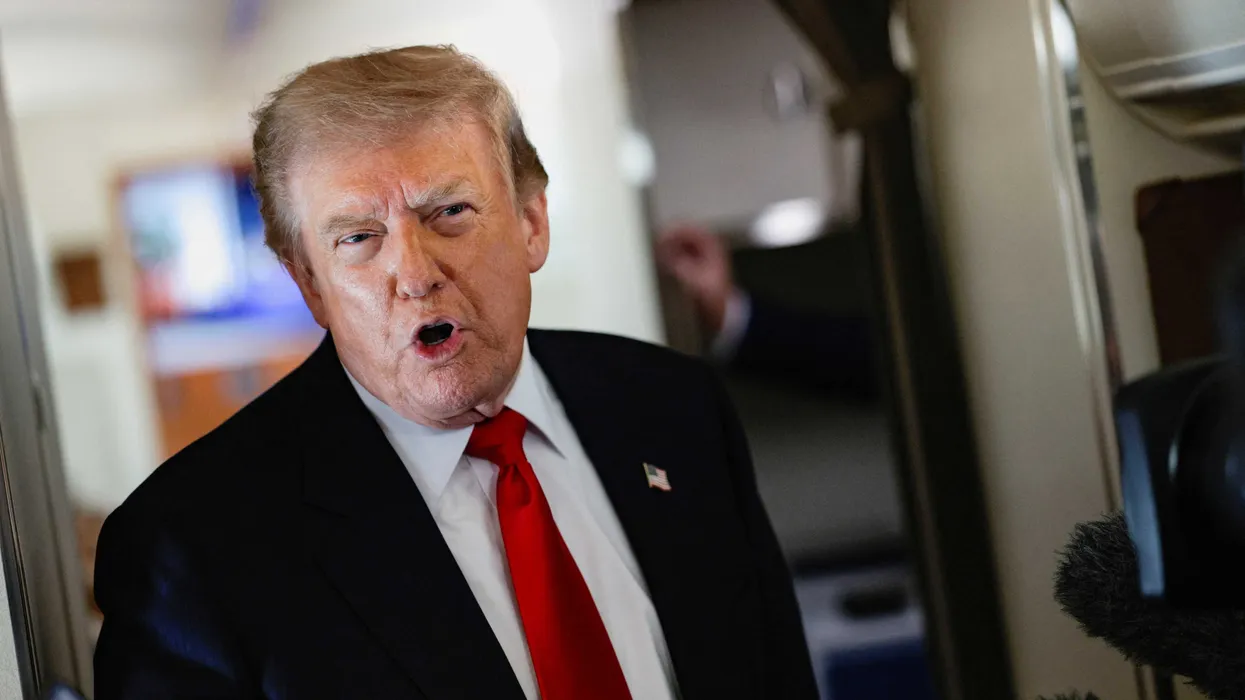
President Donald Trump issued threats of lengthy prison sentences against individuals he accused of leaking information, in a late-night Truth Social post responding to a Washington Post report detailing a dispute with Defense Secretary Pete Hegseth over U.S. munitions stockpiles amid the ongoing Iran war.
In a post on Truth Social, Trump wrote: "The 'leakers' of these treasonous statements are being hunted down. Long term jail sentences will be sought!"
The president's outburst followed a Washington Post report published on August 5, 2026, which cited two anonymous sources — both requesting anonymity due to fear of retaliation — describing tensions that erupted at Camp David last week. According to the Post, Trump accused Hegseth of misleading him regarding what was described as an "extreme" munitions shortage that could constrain military options against Iran. Camp David, the presidential retreat in Maryland, has long served as a secure venue for high-stakes national security deliberations, and a clash there between a commander in chief and a Pentagon chief over war-fighting readiness would mark an unusual breach in an already high-pressure wartime environment.
One of the two sources told the Post that shortages in long-range guided missiles and air-defense interceptors were the reason Trump recently pulled back from planned large-scale strikes on Iran. The U.S. defense industrial base has faced well-documented difficulties scaling production of precision-guided munitions and interceptor systems, with key components such as solid-rocket motors, advanced seekers, and specialized explosives representing persistent bottlenecks across multiple suppliers.
Trump firmly rejected the reporting but offered no evidence to substantiate his counterclaims. "The U.S. has massive amounts of 'munitions,' especially of certain types," he wrote on Truth Social. "Additionally, large amounts are being manufactured and shipped to the U.S. as needed."
The Washington Post addressed Trump's assertions directly in its report, which appears to have been updated around 3:30 a.m. "While the United States has announced new production agreements for some of the most critical munitions, such as Patriot air defense missiles, the munitions themselves can take as long as two years to produce, and there's no immediate relief in sight for the shortages," the newspaper reported.
The Post also noted that the scarcity of defensive munitions extends well beyond the Middle East. According to the report, Ukraine is exhausting its air defense supplies, and Western stockpiles offer few options for replenishment, leaving Ukrainian forces exposed to Russia's long-range attacks. The overlapping demand for interceptors and guided munitions across both the European and Middle Eastern theaters has placed what defense analysts have described as unprecedented strain on a production pipeline not designed for simultaneous large-scale conflicts.
