Trump's 'Golden Age' Economic Pledge Meets Reality as Growth Slows and Forecasts Draw Skepticism
Key Takeaways
- •U.S. GDP growth decelerated to 1.5 percent in the second quarter, down from 2.1 percent in the first quarter and below the long-run potential rate of approximately 1.8 to 2 percent.
- •The Federal Reserve voted to maintain its benchmark interest rate, resisting sustained pressure from President Trump and senior administration officials to lower rates.
- •Commerce Secretary Howard Lutnick's January projection that GDP growth could reach 5 to 6 percent failed to materialize, with actual growth falling significantly short.
- •Economists including Tufts professor Michael Klein and former Bessent advisor Joseph Lavorgna have publicly challenged the administration's growth forecasts as unrealistic given current economic dynamics.
- •The administration's 'A New Golden Age' report prioritizes American leadership in artificial intelligence and emerging technologies as a pillar of its economic vision.
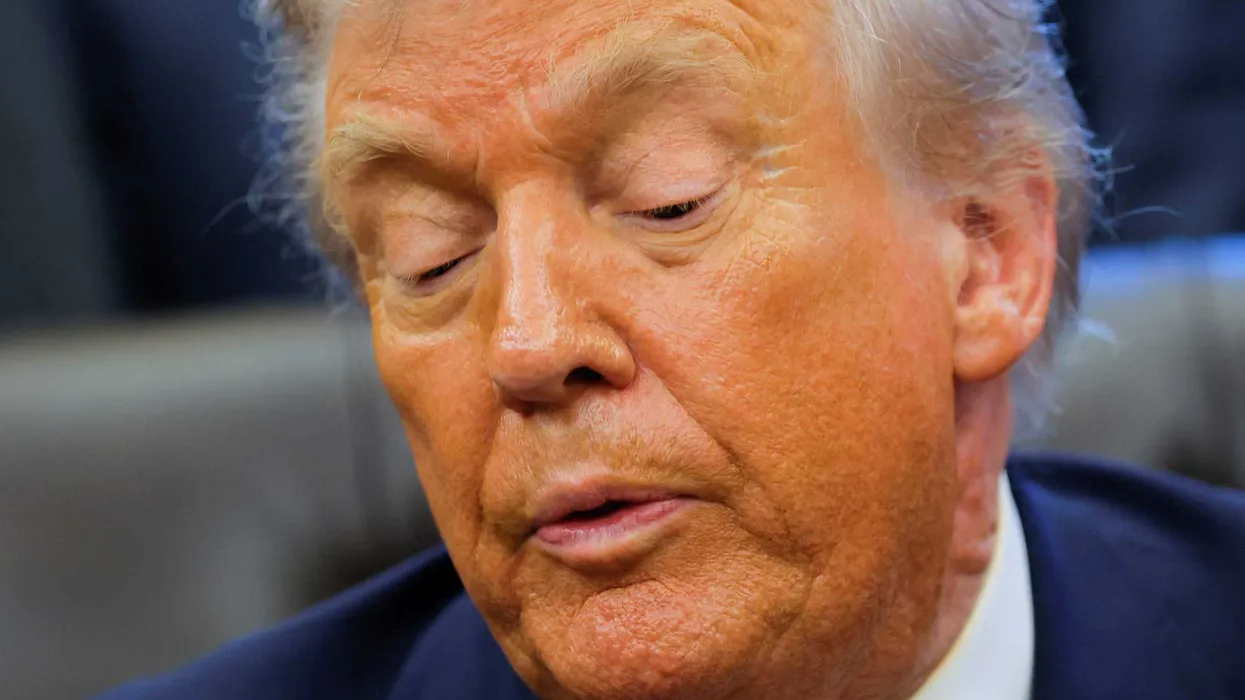
President Donald Trump is confronting a sharp "reality check" on his pledge to usher in a new "golden age" for the American economy, as a growing chorus of economists warns that the administration's optimistic projections may prove unattainable, Axios reports.
Last month, Michael Kratsios, assistant to the president for science and technology, outlined the administration's vision in a report titled "A New Golden Age." Writing directly to Trump, Kratsios envisioned a revitalization of "America's science and technology enterprise" and U.S. "dominance in critical and emerging technologies." The report placed particular emphasis on artificial intelligence, which Axios notes has "buoyed" U.S. financial markets despite what the outlet described as a "roller coaster" economy buffeted by "tariff uncertainty, stubborn inflation and his Iran war."
The result, according to Axios, is a "muddled economic picture" — and despite the president's promises, "many voters aren't buying it."
The economic data has underscored those concerns. The Wall Street Journal reported last month that U.S. GDP growth slowed in the second quarter, declining from 2.1 percent in the first quarter to 1.5 percent. The deceleration brought growth below the long-run potential rate of roughly 1.8 to 2 percent that nonpartisan analysts, including the Congressional Budget Office, have projected for the U.S. economy — a benchmark shaped by labor force demographics and productivity trends. On the same day the GDP figures were released, Federal Reserve officials voted to "hold the central bank's benchmark interest rate steady," the Journal noted. Fed Chairman Kevin Warsh defended the decision, arguing that "the economy is showing impressive resilience."
Still, the Fed faces sustained pressure from Trump and senior members of his administration to lower interest rates. The central bank operates under a dual congressional mandate — price stability and maximum employment — and has weighed those obligations against concerns that premature rate cuts could reignite inflationary pressures. Commerce Secretary Howard Lutnick said in January that first-quarter growth could have reached 6 percent had the Fed cut rates. Lutnick's more modest projection — that growth would still hit 5 percent absent Fed intervention — likewise failed to materialize. Treasury Secretary Scott Bessent's economic blueprint "targets sustained 3 percent annual growth," a threshold the U.S. economy has not maintained over a multi-year period since the late 1990s.
Economists have pushed back on those forecasts. Michael Klein, an economics professor at Tufts University's Fletcher School, told Axios that the administration's predictions are "just unrealistic." He added: "You don't see that in an economy like the United States."
Joseph Lavorgna, a former advisor to Bessent, offered a similar assessment. While he acknowledged that 3 percent growth is achievable, he told Axios he "can't get there on the arithmetic" for 4-to-5 percent growth. "The dynamics aren't going to allow us to grow at those growth rates, at least for the foreseeable future," Lavorgna said.
