Republican Senators Resist Trump's Push to Eliminate Filibuster, Warning of 'Guaranteed Death' for GOP Agenda
Key Takeaways
- •Trump is urging Republicans to eliminate the Senate filibuster to advance his voter ID bill.
- •Several Republican senators, including Lisa Murkowski and John Curtis, are publicly opposing any move to end or alter the rule.
- •Majority Leader John Thune says there are not enough votes in the GOP conference to change the filibuster rule.
- •The filibuster requires 60 votes and has already blocked some of Trump’s key legislative priorities, including the SAVE Act.
- •Lawmakers opposing the change warn that weakening the filibuster would let future majorities pass their own agenda with a simple majority.
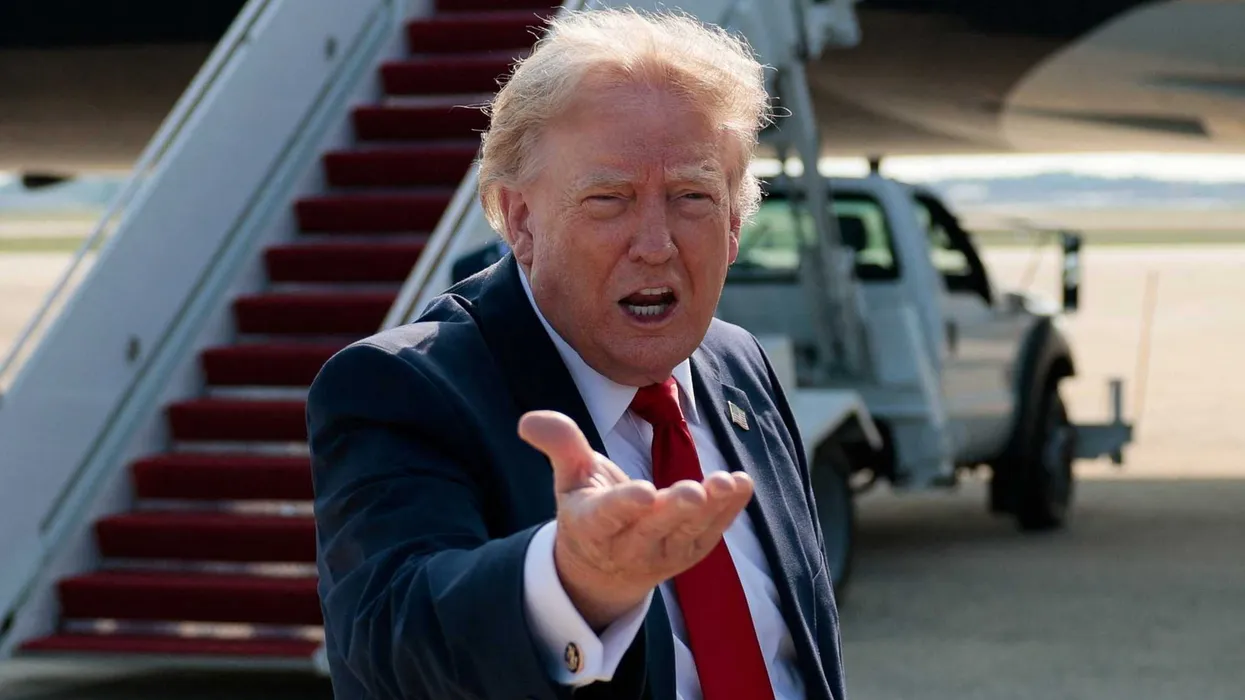
President Donald Trump has publicly urged his party to eliminate the Senate filibuster in order to pass his sweeping voter ID legislation, but a significant bloc of Republican senators is pushing back, warning that such a maneuver would spell "guaranteed death" for the GOP's legislative agenda. The push revives a fight Trump also waged during his first term, when he called for ending the legislative filibuster after key priorities stalled in the Senate.
According to political reporter Savannah Behrmann, writing in Roll Call, a "not-so-secret" group of Republican senators is openly advocating to preserve the filibuster despite pressure from the president.
"I'm going to make myself a T-shirt that says, 'No, I'm not interested in blowing up the filibuster,'" declared Senator Lisa Murkowski (R-AK).
Senator John Curtis (R-UT) struck an equally firm tone in an op-ed published in the Wall Street Journal: "Under no circumstance will I support any effort to end or alter the filibuster, as any party that does so wouldn't be guaranteed survival. Their agenda would be guaranteed death come the next majority."
Proponents of the filibuster consider it essential protection for whichever party finds itself in the minority. Overcoming a filibuster requires a 60-vote supermajority, a threshold that has blocked several of Trump's top legislative priorities, including his SAVE Act, which would impose wide-ranging changes to election procedures across the country. With Republicans holding a narrow Senate majority, finding the additional Democratic or independent votes needed to reach 60 has proven difficult on the most partisan items.
If Republicans were to "nuke" the filibuster through a procedural maneuver allowing bills to pass with a simple majority of 51, it would similarly empower Democrats to do the same upon retaking the majority. Republicans have acknowledged openly that insufficient numbers within their conference are willing to take that step.
As Behrmann explains, "For Majority Leader John Thune, the equation is not new: The math isn't mathing, and there has never been enough support in his conference to establish a new precedent and lower the 60-vote hurdle most bills must clear to advance to a simple majority threshold." According to her reporting, those numbers are widely known, but some senators are reluctant to publicly defy the president.
Senator Kevin Cramer (R-ND) told Politico this summer that more Republicans oppose the nuclear option than are willing to say so publicly. "I regret that the other 25 or 30 people who oppose blowing up the filibuster don't say it out loud like I do, because it leaves the impression that there are only four or five of us, just enough so that he doesn't have 51," Cramer said.
The debate over the filibuster is not unprecedented. Both parties have previously altered Senate rules to their advantage: Democrats under Majority Leader Harry Reid eliminated the 60-vote threshold for most presidential nominees in 2013, and Republicans did the same for Supreme Court nominees in 2017. However, the legislative filibuster has remained intact, leaving it as the last major procedural check that distinguishes the Senate from the House, where majority rule prevails.
In 2017, a bipartisan group of 61 senators, led in part by Senator Susan Collins of Maine, sent a letter urging then-Majority Leader Mitch McConnell to preserve it. "We are united in our determination to preserve the ability of Members to engage in extended debate when bills are on the Senate floor," they wrote. More than a dozen Republicans from that group are still serving in the Senate today, including Thune.
"That must be a different form of math," Thune said Wednesday, responding to Trump's insistence that the majority leader has the votes to pass the SAVE America Act.
Source: Alternet

