Trump Administration Enters Surreal New Phase as President Defies Courts, Allies, and Public Opinion
Key Takeaways
- •The Supreme Court ruled Trump's tariffs illegal, yet the president continues to publicly praise them as successful.
- •Trump's approval rating has remained below 50 percent since the tariff regime began on April 1, 2025, with major polls currently placing it between 33 and 38 percent.
- •US Attorney Jeanine Pirro dropped vandalism charges linked to the Reflecting Pool after a court filing attributed the damage to a botched contractor installation, prompting Trump to publicly criticize her despite the charges lacking factual basis.
- •President Trump has denied disaster relief to Democratic-led states, a departure from prior bipartisan practice that legal experts consider potentially unlawful.
- •Following an Iranian cyberattack on water systems across seven states, Trump blamed Minnesota for the incident rather than attributing it to Iran, a claim Minnesota officials rejected as unfounded.
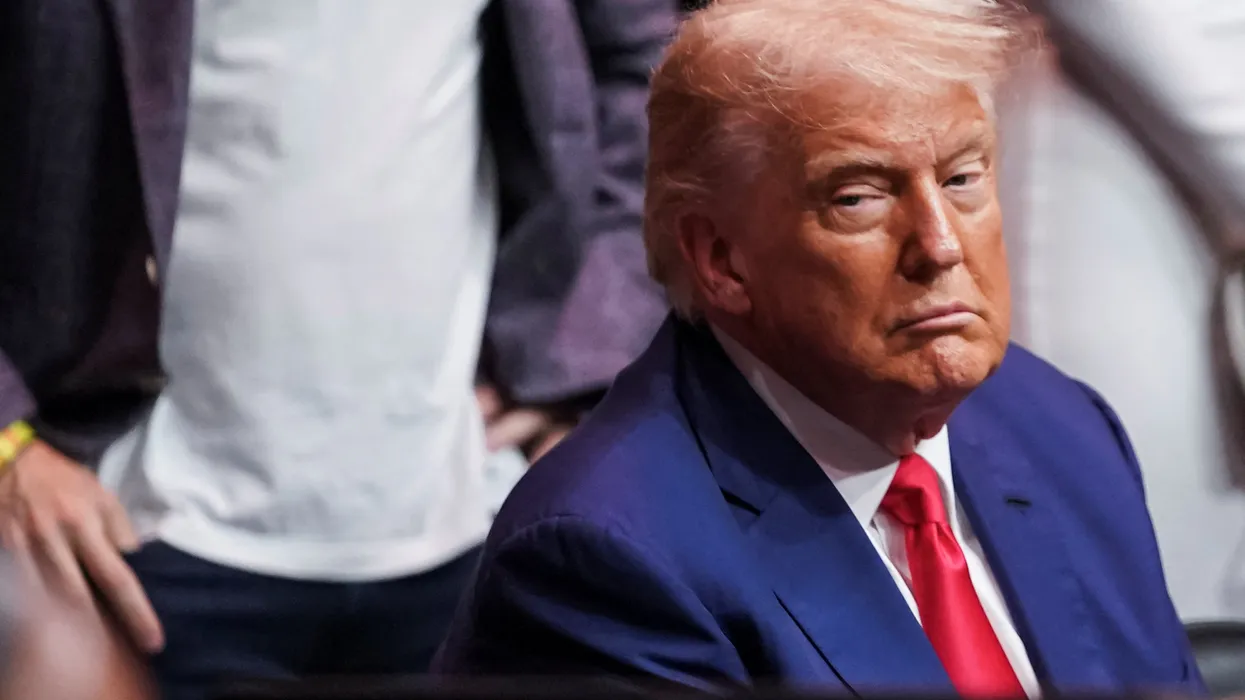
The Trump administration has entered what critics describe as a surreal new phase, defined by the president's refusal to acknowledge facts that contradict his preferences — even when those facts involve court rulings, approval ratings, or members of his own administration. The episodes below illustrate a widening gap between presidential assertions and established facts, raising questions about how the constitutional system of checks and balances functions when a president declines to defer to judicial authority.
Tariffs and Approval Ratings
Tariffs have been a significant source of controversy. The Supreme Court ruled them illegal, yet when asked about his economic message, Donald Trump has continued to insist: "Tariffs have been incredible."
Trump's approval rating last reached parity on March 11, 2025, according to The New York Times. Since April 1, 2025 — the day the tariff regime began — his approval has remained underwater. The Times currently places his approval at 38 percent, while the AP reports it at 33 percent. A majority of Americans who oppose the tariffs and the resulting higher prices are expected to act against his party in the coming midterms. The 2026 midterm elections, in which control of both chambers of Congress will be at stake, will serve as the first nationwide electoral test of the tariff policy and the broader direction of the administration.
The Reflecting Pool Incident
The consequences of the president's approach to reality have extended to his own appointees. Jeanine Pirro, the US Attorney for the District of Columbia, was tasked with finding a scapegoat for the administration's troubled renovation of the Lincoln Memorial's Reflecting Pool. She charged David Hearn, a former Olympian, with vandalism.
On Friday, Pirro dropped all charges. According to The Washington Post, a court filing stated that "the peeling of the liner was the result of a botched installation by a contractor rushing to finish the project ahead of celebrations to mark the nation's 250th anniversary." The semiquincentennial — marking 250 years since the Declaration of Independence on July 4, 1776 — has been a major driver of infrastructure and commemorative projects across Washington, D.C. Pirro blamed Interior Secretary Doug Burgum for misleading her. Burgum then publicly contradicted the court filing, insisting it was vandalism.
Trump subsequently criticized Pirro — a former Fox News personality — saying she "choked" and "folded like an umbrella," despite the charges against Hearn lacking factual basis. The president reinforced his authority with the statement: "I'm the president and you're not."
Disaster Relief and Partisan Governance
Trump has accused Democratic-led cities and states of being "really the threat to the country". He has also denied disaster relief to states run by Democrats, which legal experts have flagged as potentially unlawful. Federal disaster declarations are governed by the Robert T. Stafford Disaster Relief and Emergency Assistance Act, and presidents of both parties have historically approved them without regard to the affected state's political alignment, making the denials a sharp departure from prior practice.
Cyberattack Attribution
Iran reportedly launched a cyberattack on water systems in Minnesota and six other states, according to The New York Times. However, Trump did not blame Iran — a country the US is already engaged in conflict with. Instead, he blamed Minnesota, suggesting the state attacked itself.
"You know who's behind it?" Trump said. "Minnesota, because they're grossly incompetent." Minnesota officials, including Governor Tim Walz, rejected the claim as unfounded. Cyberattacks on critical infrastructure such as water systems have been a growing concern for federal security agencies, and accurate attribution of such incidents is considered essential for both deterrence and coordinated response.
Dietary Advice for the Powerful
The New York Times Magazine recently reported on Sean O'Mara, who provides dietary guidance to individuals described as "the most powerful men in America" and who follow a diet of "eating only steak and sauerkraut." O'Mara described the regimen as "eating healthy" and told reporter Willy Staley: "you don't need toilet paper." He also characterized his clients' digestive outcomes as "nearly orgasmic."
The portrait that emerges across these episodes — tariffs declared illegal yet praised, charges dropped yet criticized, a foreign cyberattack blamed on the victim state, and dietary habits promoted in elite publications — is one of an administration operating on its own terms, regardless of facts, legal rulings, or public opinion.
