Stablecoin Inflows to Crypto Exchanges Hit 18-Month Low, Signaling Weak Market Demand
Key Takeaways
- •CryptoQuant reported that stablecoin inflows to cryptocurrency exchanges have reached their lowest level in 18 months.
- •Exchange-bound stablecoin flows are tracked as a proxy for deployable buying power because USDT and USDC are often used before spot purchases or derivatives trading.
- •Lower inflows indicate muted demand and cautious investor behavior, but they do not confirm a specific market direction.
- •A sustained increase in exchange deposits would be a key signal that sidelined capital is returning to trading venues.
- •The slowdown comes as stablecoin issuance has eased after total supply surpassed $300 billion and the Crypto Fear and Greed Index registered extreme fear at 24.
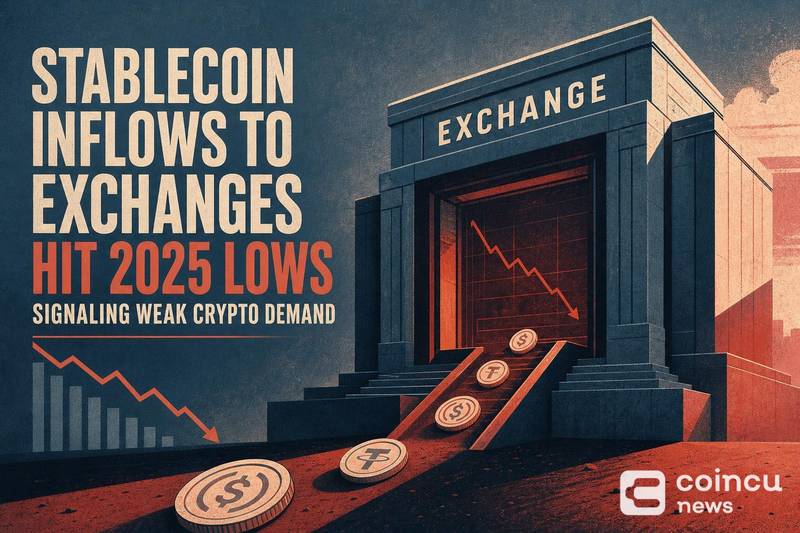
Stablecoin inflows to cryptocurrency exchanges have fallen to their lowest level in 18 months, according to a CryptoQuant analysis, pointing to subdued market demand and limited investor interest as the supply of fresh capital available for purchasing digital assets continues to thin.
The decline describes stablecoin inflows hitting an 18-month low. Exchange-bound stablecoin flows are widely tracked as a proxy for deployable buying power, because dollar-pegged tokens—predominantly Tether (USDT) and Circle's USDC—are typically moved onto trading venues before being used to purchase spot assets or posted as collateral for derivatives positions. Stablecoins now constitute the primary dollar-denominated settlement layer across both centralized exchanges and decentralized finance protocols, making their flow patterns a core liquidity barometer for the broader crypto market.
A stablecoin inflow refers to tokens such as USDT or USDC being transferred into exchange wallets. A sustained drop in that activity signals that less new capital is arriving at the point where it could be converted into risk assets. On its own, the metric suggests weak demand rather than confirming any particular price direction.
Why Exchange Stablecoin Inflows Serve as a Demand Gauge
Stablecoins function as the primary on-ramp for most exchange trading, particularly in regions where direct banking access to crypto markets remains limited. Deposits onto platforms are often the first step before a spot purchase or a leveraged trade is opened. When those deposits slow, it can reflect reduced readiness among market participants to acquire risk assets.
The signal measures potential rather than realized buying. Capital residing in exchange wallets is not equivalent to executed orders, which is why lower inflows describe intent and readiness rather than confirmed activity.
The metric is most useful when paired with broader sentiment and liquidity conditions. Read in isolation, it can be misleading, which is why the CryptoQuant framing ties the trend back to conditions for Bitcoin rather than treating it as a standalone verdict. Historically, sustained increases in exchange stablecoin balances have preceded major crypto rallies—including the late-2020 and early-2024 upswings—while prolonged drawdowns in inflow activity have coincided with periods of range-bound or corrective price action.
What Muted Flows Suggest About Investor Sentiment
The core interpretation attached to the trend is straightforward: weak demand combined with a lack of investor interest. A drop in exchange inflows can indicate hesitation to deploy capital aggressively while market conditions remain uncertain.
Reduced stablecoin movement often aligns with wait-and-see behavior, where holders keep funds off-exchange rather than positioning for immediate purchases. That dynamic points to caution and sidelined capital rather than outright capitulation.
Absent inflows do not mean permanent disengagement, however. Capital parked in stablecoins can return quickly, so the reading reflects muted participation rather than a definitive bearish signal. The trend mirrors earlier observations that stablecoin outflows have weakened buying pressure even as coins continue moving onto exchanges.
How Traders Interpret the Signal
For traders, exchange stablecoin inflows help indicate whether fresh sidelined capital is entering the market. Thin inflows may limit upside follow-through if buying pressure stays weak, even when other catalysts move prices.
A reversal in inflows would be the clearest development to monitor, as a pickup in deposits could mark renewed participation. Traders also watch complementary on-chain indicators—such as exchange Bitcoin reserves, derivatives open interest, and spot ETF flow data for Bitcoin and Ethereum—to corroborate whether demand is genuinely returning. Prices can still rally or decline on external catalysts regardless of flow data, making the metric one input among many rather than a forecasting tool.
The broader liquidity backdrop also plays a role. The pace of stablecoin issuance has slowed after total stablecoin supply surpassed $300 billion. Cautious flow data has additionally coincided with subdued readings on market sentiment gauges, including the Crypto Fear & Greed Index registering in extreme fear territory at a score of 24.
Frequently Asked Questions
Are low stablecoin inflows bearish?
Not by themselves. They point to weak demand and cautious sentiment, but the signal describes buying readiness rather than confirming a specific price direction.
Why do investors move stablecoins to exchanges?
To convert them into spot assets or to post them as collateral for derivatives trading. This is why deposits are treated as a measure of deployable buying power.
What would indicate demand is returning?
A sustained reversal in exchange inflows, signaling that sidelined capital is being moved back onto trading venues.

