Shiba Inu Buyers Absorb 2.4 Trillion SHIB in Exchange Flows as Price Clears Resistance
Key Takeaways
- •SHIB exchange wallets received about 2.399 trillion tokens while roughly 2.376 trillion tokens exited during the same 24-hour period.
- •Net exchange inflows were approximately 22.6 billion SHIB, making the net figure far smaller than the gross inflow total.
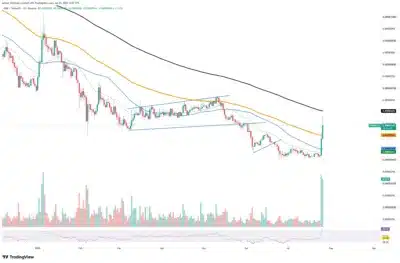
- •SHIB rose from around $0.0000042 to about $0.0000054 while reclaiming its 50-day and 100-day moving averages.
- •Centralized exchanges held about 86.1 trillion SHIB, among the lowest reserve levels recorded for the token, according to CoinMarketCap’s market summary.
- •The Relative Strength Index climbed above 78, signaling strong momentum but also placing SHIB in overbought territory.
Shiba Inu saw nearly 2.4 trillion SHIB move into exchange wallets over a 24-hour period, but almost the same amount left trading platforms during the same window, keeping net inflows limited.
The data showed heavy two-way activity rather than a one-sided increase in exchange supply. Buyers absorbed much of the available SHIB, helping the token regain key moving averages while trading activity remained elevated.
Exchange wallets received approximately 2.399 trillion SHIB during the period, while about 2.376 trillion SHIB exited those platforms. As a result, net exchange inflows totaled roughly 22.6 billion SHIB, far below the gross inflow figure. In crypto market analysis, inflows to exchanges are often monitored because they can precede selling, while outflows can indicate tokens leaving readily tradable venues. In this case, the near balance between the two made the net figure more relevant than the headline gross inflow.
That gap provided important context for the price move. Instead of indicating overwhelming selling pressure, the exchange-flow data pointed to active trading between buyers and sellers. During the move, SHIB rose from around $0.0000042 to approximately $0.0000054 while maintaining strong momentum.
The token also moved back above its 50-day and 100-day moving averages before testing the 200-day moving average near $0.0000050. Those moving averages are commonly used by traders to track short- and longer-term trend strength, making the reclaim of those levels a notable part of the rally. Trading volume increased as the move developed, supporting the breakout above key resistance levels.
At the same time, the Relative Strength Index rose above 78. The reading reflected strong upward momentum, but it also placed SHIB in overbought territory, which can increase the risk of short-term volatility and profit-taking.
Source: TradingView
Lower exchange reserves and South Korean demand supported the move
Several market reports connected the rally to stronger buying activity from South Korean traders. Reported trading volumes on Korean exchanges matched activity on some of the largest global crypto platforms, adding support to SHIB’s advance.
Declining exchange reserves also appeared to strengthen the price move. CoinMarketCap’s market summary showed that centralized exchanges held approximately 86.1 trillion SHIB, one of the lowest reserve levels recorded for the token.
Lower liquid supply can increase price sensitivity when demand accelerates. In that environment, fewer additional purchases may be needed to move a token through important technical resistance levels, especially when spot volume is rising at the same time.
Market reports also cited recent whale accumulation as another contributing factor. However, available on-chain data did not show that one identifiable whale transferred the full 2.4 trillion SHIB into exchanges. Instead, the inflows appeared to reflect combined activity from traders, market makers, and larger holders adjusting positions during the rally.
SHIB also drew support from increased burn activity and renewed attention on the Shibarium ecosystem. However, the number of burned tokens remained too small to explain the double-digit price increase by itself.
The move therefore appeared to result from several overlapping factors, including lower exchange liquidity, stronger Korean trading demand, whale positioning, and short covering after the technical breakout.
Although gross exchange inflows approached 2.4 trillion SHIB, nearly the same amount left exchanges during the period, leaving only modest net inflows. Buyers absorbed available supply and extended SHIB’s recovery above key resistance levels. Still, the elevated RSI reading suggested traders could watch whether net exchange flows, reserve levels, and trading volume continue to support the move if buying momentum slows.

