Sberbank Plans Crypto Trading Infrastructure as Russia Builds Regulated Market
Key Takeaways
- •Sberbank is preparing a digital depository to track client cryptocurrency ownership rights and support regulated crypto trading infrastructure.
- •The planned system would process most transactions off the main blockchain while using active wallets for deposits, withdrawals and transfers.
- •Russia’s emerging crypto framework would place the Bank of Russia in charge of asset eligibility, licensing rules and implementing regulations.
- •The law is set to define regulated crypto exchanges, brokers, asset managers, custodians and exchange service providers from Sept. 1, 2026.
- •The EU and UK have continued expanding sanctions measures affecting crypto service providers, including HTX.
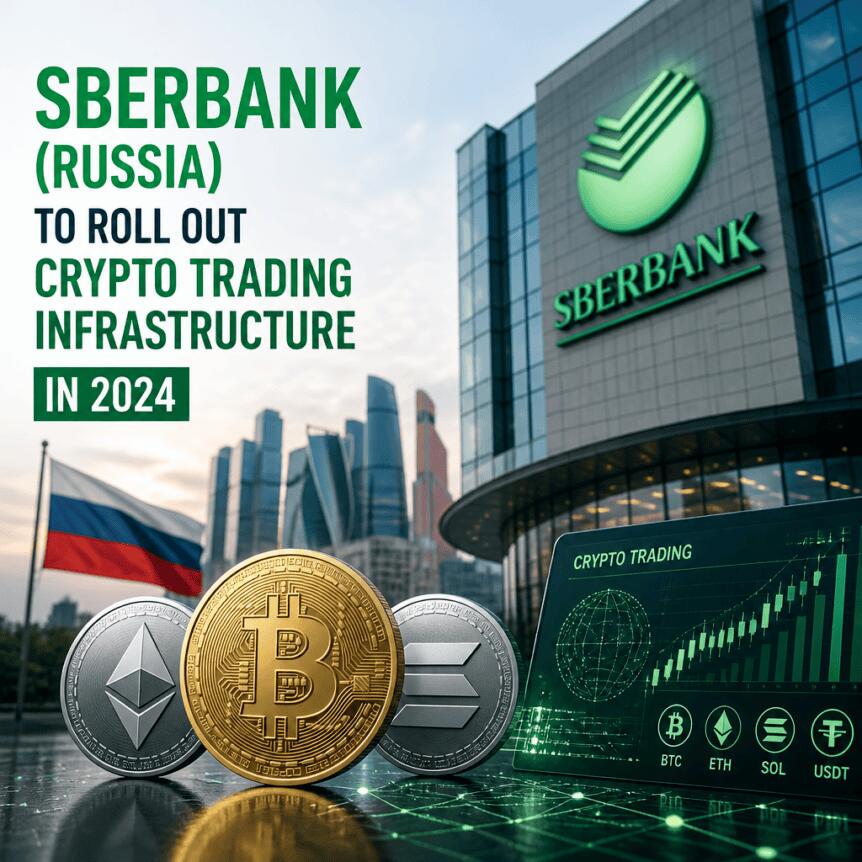
Sberbank, Russia’s largest bank, plans to introduce new cryptocurrency trading infrastructure as the country moves digital-asset activity into a regulated financial system, according to Interfax. The bank is preparing to create a “digital depository” by Dec. 1, together with client-facing wallet functions for deposits, withdrawals and transfers.
The planned structure would move ownership tracking and a significant share of transaction processing away from the public blockchain layer. Interfax reported that the depository will record clients’ rights to cryptocurrency and process most transactions outside the main blockchain, while Sberbank will also operate active wallets to carry out customer instructions for moving funds in and out.
Sberbank’s proposed “digital depository”
According to Interfax, Sberbank’s planned digital depository is intended to function as an institutional ledger for customer cryptocurrency ownership. Rather than relying only on on-chain records to reflect balances and account entitlements, the system would maintain records of clients’ crypto rights and account for transactions outside the main blockchain.
Sberbank’s state-affiliated press service quoted Alexander Vedyakhin, first deputy chairman of Sberbank’s management board, describing the depository as a central component of the new infrastructure. He said it would record clients’ rights and support transfers through transactions connected to “active wallets” used for deposit, withdrawal and client transfer instructions.
For regulated market participants, an institutional depository model can affect operational processes such as reconciliation, custody accounting and settlement. In traditional financial markets, depository and custody records are used to establish account entitlements and support post-trade processing; Sberbank’s proposal applies a similar recordkeeping concept to crypto assets inside a regulated banking environment. It can also reduce the need to use public-chain activity for day-to-day internal movements and bookkeeping, while keeping wallet operations available for customer-facing transactions.
Russia’s regulated crypto market framework
Russia has been moving toward its first comprehensive framework for the crypto market. Earlier this month, lawmakers advanced that process after completing final readings on a bill to regulate digital-asset activity, according to earlier reporting cited in the source text.
The framework would give the Bank of Russia broad oversight of the regulated market. As described in the source, the central bank’s role would include determining which crypto assets may be offered through licensed intermediaries and issuing implementing regulations.
Liquidity requirements are also part of the framework. The Bank of Russia has set thresholds that include an average market capitalization of more than 5 trillion rubles, or about $64 billion, and an average daily volume above 1 trillion rubles, or about $12.8 billion, over a two-year period. These benchmarks are designed to narrow eligibility and help determine which assets qualify under the licensing regime.
Once the framework takes effect, the law establishes five categories of regulated market participants: crypto exchanges, brokers, asset managers, custodians and exchange service providers. The effective date for defining who can buy, sell, hold and exchange crypto assets is set for Sept. 1, 2026.
Importance of the Dec. 1 infrastructure target
The reported Dec. 1 target for Sberbank’s digital depository points to a pre-launch period in which banks and regulated intermediaries build internal systems before the broader participant categories become fully operative in 2026. The infrastructure timetable is therefore developing ahead of the formal effective date for the market framework.
Custody and settlement mechanics are among the more complex parts of integrating crypto assets into a regulated financial model. The Bank of Russia’s licensing and asset-selection approach is also expected to require firms to demonstrate controlled processes for ownership records and transaction handling.
The source does not provide additional technical details beyond off-chain recordkeeping and wallet-based customer operations. However, the stated function of the system is to maintain ownership records and process most transactions outside the main blockchain, indicating that Sberbank is seeking to standardize how balances and client entitlements are managed within regulated channels.
Sanctions pressure continues alongside domestic regulation
Russia’s regulatory push is taking place while external pressure on crypto businesses remains elevated. The source notes that the European Union has continued to tighten sanctions targeting Russia and has expanded crypto-related measures affecting service providers.
In a Thursday European Council decision, the bloc amended previous measures “in view of Russia’s actions destabilizing the situation in Ukraine.” The decision added HTX, formerly Huobi Global, to a list of 18 entities described as “providing crypto-assets services or payment services established outside of the Union” that significantly “frustrate the purpose of the prohibitions” against Russia. The source text cites a decision published on the EU’s legal database.
The HTX sanctions were reported as coming on the same day that EU officials announced a prohibition on Belarusian nationals and residents owning, controlling or managing crypto exchanges and digital asset service providers under MiCA compliance requirements, according to linked earlier coverage in the source.
The UK government also imposed similar sanctions on HTX in May, citing “reasonable grounds to suspect” that the exchange supported Russia’s government through financial services involving funds facilitated by sanctioned entities, based on the linked prior report included in the source.
The developments show two parallel tracks: Russia is building domestic regulated infrastructure for crypto trading, while European and UK authorities are restricting certain offshore service providers through sanctions and regulatory compliance measures.
Further developments will depend on how Sberbank’s digital depository plan proceeds after the announced deadline and whether other regulated market participants introduce comparable custody and settlement systems before the Sept. 1, 2026 effective date for participant categories. Sanctions risk also remains a factor for cross-border access to services, with practical effects on liquidity and venue availability dependent on enforcement and compliance decisions in Europe and the UK.

