Samsung and SK hynix Set to Announce Major Chip Supply Deals With US Tech Firms
Key Takeaways
- •Samsung Electronics and SK hynix are preparing to announce large-scale agreements with leading US technology firms during President Lee Jae Myung's Silicon Valley visit, including long-term memory chip supply contracts and strategic investment partnerships.
- •President Lee is scheduled to meet separately with the CEOs of Nvidia, OpenAI, Anthropic, and Broadcom during his trip to San Francisco, which begins Friday and includes an AI summit.
- •South Korea's presidential office expects the visit to convert much of the recently announced $880 billion investment plan into concrete projects with specific customers, sites, and engineering partners.
- •American technology companies account for 80 to 90 percent of the orders driving South Korea's latest domestic semiconductor and AI data-center expansion plans.
- •Lee plans to deliver a San Francisco AI Declaration setting out South Korea's ambition to become a dependable supplier of AI infrastructure while broadening AI adoption across its economy.
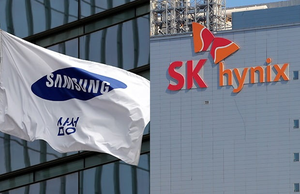
Samsung Electronics and SK hynix are preparing to announce major agreements worth “very large” sums with leading US technology companies during President Lee Jae Myung’s visit to Silicon Valley, a senior presidential official said.
The expected announcements are likely to include new long-term memory chip supply contracts, strategic investment partnerships and memorandums of understanding, presidential policy chief Kim Yong-beom told reporters Thursday. Kim declined to disclose the value of the agreements before the companies make their own announcements.
The talks come as advanced memory has become a critical component of AI infrastructure, with high-performance chips used alongside accelerators in data centers operated by major technology companies. Samsung and SK hynix are among the world’s largest memory makers, making their supply commitments closely watched by customers building AI computing capacity.
Kim said the presidential visit had served as a “catalyst,” helping Korean companies and their US counterparts conclude negotiations that had been underway for an extended period.
Lee is scheduled to begin his overseas trip in San Francisco on Friday. During the visit, he is set to attend an AI summit and hold separate meetings with Nvidia CEO Jensen Huang, OpenAI CEO Sam Altman, Anthropic PBC CEO Dario Amodei and Broadcom CEO Hock Tan.
The AI summit is also expected to bring together Samsung Electronics Executive Chairman Jay Y. Lee, SK Group Chairman Chey Tae-won, Hyundai Motor Executive Chair Euisun Chung and Naver founder Lee Hae-jin.
Last month, Seoul announced an investment plan worth at least $880 billion, backed by Samsung Electronics, SK Group and Naver, aimed at expanding chip production, building AI data centers and reinforcing South Korea’s leadership in semiconductors and physical AI.
Kim said the Silicon Valley trip is expected to convert much of last month’s planned investment into concrete projects. More than half of the government’s planned roughly 8 gigawatts of first-phase AI data-center capacity is expected to take shape during the visit.
Unlike the earlier announcement, which reflected initial investment intentions, the new projects are expected to identify specific customers, sites and Korean engineering partners, Kim said. Those details are significant because AI data-center projects depend not only on chip supply, but also on power availability, construction capacity and long-term customer commitments.
Earlier this month, US Commerce Secretary Howard Lutnick urged Samsung and SK Hynix to expand memory-chip production in the US. Kim said it was natural for a US commerce secretary to encourage companies to expand domestic manufacturing, but added that Washington had made no formal requests for additional semiconductor investments in the US.
Kim also said the latest domestic expansion plans are being driven by strong demand from American technology companies, which account for 80 percent to 90 percent of the underlying orders.
At the Silicon Valley AI summit, Lee is expected to deliver what the presidential office described as a “San Francisco AI Declaration,” setting out South Korea’s ambition to become a dependable supplier of AI infrastructure while broadening the use of AI across its economy. (Bloomberg)

