Karl Rove Identifies Georgia and Texas as Key Vulnerabilities for Trump's Senate Majority
Key Takeaways
- •Democrats outraised Republican Senate candidates in seven of the nine most competitive races and hold more cash on hand in five, according to the latest FEC filings.
- •Senate Democrats reported raising $290 million compared to $196.8 million for Republicans across the competitive map, with $117.3 million versus $85.3 million in cash on hand.
- •The fundraising gap is most acute in Texas and Georgia, where Democratic candidates hold multi-million-dollar advantages in both total raised and cash reserves.
- •Republicans claim a fundraising edge in only four Senate races, with candidates in Iowa and Maine leading in both metrics while Alaska and Michigan GOP candidates lead only in cash on hand.
- •Democrats need to win seven of the nine competitive Senate seats to take majority control, which would enable them to block Trump's judicial nominees and launch congressional investigations.
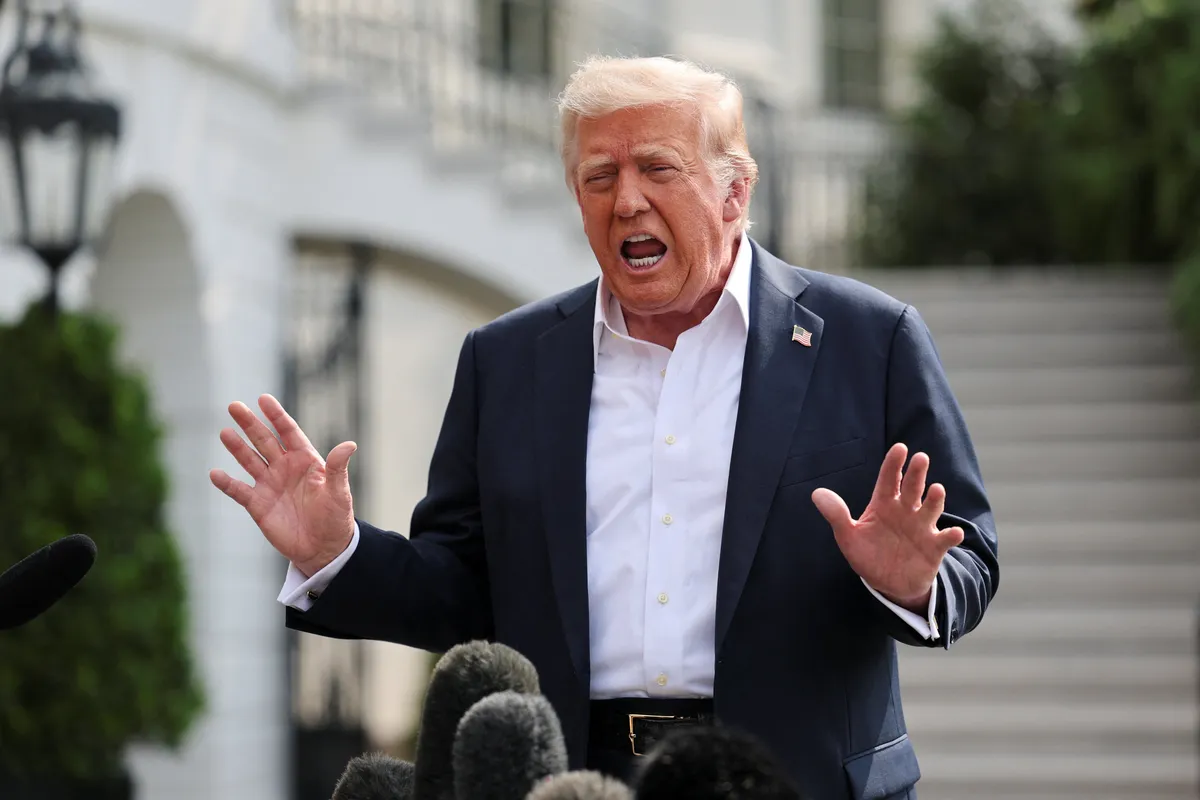
President Donald Trump needs Republicans to hold their Senate majority to avoid congressional investigations and to keep his legislative agenda on track. A Senate controlled by Democrats would also slow or block the president's judicial nominees and executive-branch appointments, compounding the legislative risk. Warning signs are already emerging in critical battleground states, ranging from low turnout in Texas Republican primaries—where the GOP has reduced polling locations in certain areas—to Trump's endorsement of a vulnerable candidate in Georgia.
Veteran Republican strategist Karl Rove detailed in a Wall Street Journal editorial published Wednesday how Georgia and Texas, in particular, underscore the challenges facing the president's party. The president's party has historically lost ground in midterm elections, a pattern that adds pressure on Republicans defending seats across a broad nine-state map.
Rove, who served as a top political adviser to President George W. Bush, highlighted the fundraising disparities that have become a growing concern for Republicans in these states.
"In the five other battlegrounds, Democrats raised more money and have more cash on hand. The problem for Republicans is acute in Texas and Georgia," Rove wrote.
Breaking down the numbers, Rove noted: "In the Lone Star State, the Democrat raised $68.6 million with $21.6 million cash on hand, while the Republican raised $9.2 million and has $1.8 million in the bank. The Peach State's Democrat raked in $98 million and holds $42.6 million; the Republican collected $7.4 million and retains $2.1 million."
The fundraising gap extends across the broader Senate map. Rove analyzed the nine most competitive Senate races based on the latest Federal Election Commission filings.
"The most recent Federal Election Commission reports on the nine most competitive Senate races show Democrats outraising Republicans in seven and with more cash on hand in five," Rove wrote. "Of these races—Alaska, Georgia, Iowa, Maine, Michigan, New Hampshire, North Carolina, Ohio and Texas—Democrats must win seven to take the Senate."
Rove continued: "Excluding Maine, where Democrat Troy Jackson replaced Graham Platner as a Senate candidate less than two weeks ago and has yet to report his fundraising, Senate Democrats told the FEC they've raised $290 million, while Republicans have brought in $196.8 million. More important, Democrats have $117.3 million cash on hand to the Republicans' $85.3 million."
The GOP's fundraising advantages are limited to a handful of races. "The GOP can claim some sort of fundraising advantage in only four Senate races. Republican candidates in Iowa and Maine appear ahead both in total fundraising and cash on hand," Rove wrote. "Maine's Mr. Jackson has said he received $2 million within three days of his selection and had raised $1 million before the convention that picked him. Republican Senate candidates in Alaska and Michigan were outraised overall but have more cash on hand."
Rove cautioned that a fundraising edge does not guarantee electoral victory. However, in races projected to be especially tight—such as the Texas contest between Democrat James Talarico and Republican Ken Paxton, or the Georgia race between Democrat Jon Ossoff and Republican Mike Collins—fundraising could prove decisive. These races and several others on the competitive map are likely to determine not only Senate control but the trajectory of the remainder of Trump's term.
"Whichever party comes out with a bigger pot of cash, money is no guarantee of victory," Rove concluded. "Good candidates, appealing visions, voter enthusiasm, capable organization and the national environment will each have a strong effect. But in that post-Labor Day sprint, money could tilt the balance—and the president has plenty of it."
