Police Raid Starbucks Korea Headquarters Over 'Tank Day' Promotion Investigation
Key Takeaways
- •South Korean police raided Starbucks Korea's Gangnam headquarters on Wednesday morning to seize evidence related to the controversial Tank Day promotion investigation.
- •The promotion launched on May 18 was criticized for allegedly trivializing the 1980 Gwangju Democratic Uprising, a pivotal event in South Korea's pro-democracy movement.
- •Shinsegae Group dismissed Starbucks Korea CEO Son Jeong-hyun and another executive on the day the controversy surfaced and issued a public apology from Chairman Chung Yong-jin.
- •The company's internal audit was constrained because three employees refused to surrender their phones and early planning-stage messages had exceeded the data retention period.
- •Prosecutors approved the search warrant only for insult charges, declining to support police allegations involving the Special Act on the May 18 Democratization Movement and defamation.
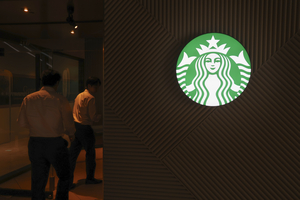
South Korean police executed a search and seizure warrant at Starbucks Korea's headquarters on Wednesday as part of an ongoing investigation into the company's controversial "Tank Day" promotion.
The Seoul Metropolitan Police Agency carried out the raid at the company's Gangnam-gu headquarters in Seoul at approximately 8:50 a.m., roughly two months after the probe was launched following a complaint filed by a civic group.
The warrant was issued in connection with a suspected insult offense. Investigators sought mobile phones, internal messaging records, and planning documents. Police intend to analyze the seized materials to determine whether the promotion was deliberate and to establish the level of involvement of each employee.
The controversy began on May 18, when Starbucks Korea launched a "Tank Day" promotion featuring phrases that critics said mocked or distorted the historical significance of the May 18 Gwangju Democratic Uprising. The uprising, which took place from May 18 to 27, 1980, in the southern city of Gwangju, was a defining moment in South Korea's pro-democracy movement. Citizens rose up against the military government of Chun Doo-hwan, and the revolt was violently suppressed by paratroopers and army units deploying tanks and live ammunition, with hundreds killed. The event remains deeply resonant in South Korean public memory, and any perceived trivialization of it provokes intense public backlash.
Shinsegae Group, one of South Korea's largest retail conglomerates and the operator of Starbucks Korea, dismissed then-Starbucks Korea CEO Son Jeong-hyun and another executive on the same day the controversy surfaced. Chairman Chung Yong-jin issued a public apology, and the group initiated an internal audit into the incident.
The internal audit, however, proved limited in scope. Three of the five employees involved in planning the promotion reportedly refused to hand over their mobile phones. In addition, internal messenger records from the campaign's initial planning stage could not be recovered because they had exceeded the company's data retention period.
Police initially sought a search warrant on June 8, arguing that compulsory investigative measures were necessary to determine how the promotion was planned. Prosecutors returned the warrant application, stating that Starbucks Korea was cooperating with the investigation and that voluntary measures should be attempted first.
Authorities also reportedly disagreed over the applicable charges. Police had sought the warrant based on allegations including violations of the Special Act on the May 18 Democratization Movement, insult, and defamation. Prosecutors concluded that only the insult allegation could be supported. The Special Act, enacted to honor the victims and preserve the historical integrity of the uprising, carries penalties for acts that distort or deny the events surrounding May 18.
Investigators have so far questioned company officials, including Shinsegae Group's head of audit, regarding how the promotion was planned, whether senior executives were involved, and how the campaign was reported to Chairman Chung.

