Philippine Agricultural Production Rises 2.9% in Q2, Slowing from Year-Ago Pace
Key Takeaways
- •Philippine agricultural sector growth slowed to 2.9% year-on-year in the second quarter, compared with 6% expansion in the same quarter of the prior year.
- •All four agricultural subsectors—crops, livestock, poultry, and fisheries—posted improved output during the quarter.
- •Agriculture employs roughly one quarter of the Philippine workforce, making sector performance directly relevant to rural incomes and domestic food supply.
- •The Philippines is among the world's largest rice importers, underscoring the sensitivity of its food supply to domestic farm output trends.
- •Slower agricultural growth could constrain food supply and complicate inflation management, as food carries significant weight in the Philippine consumer price index.
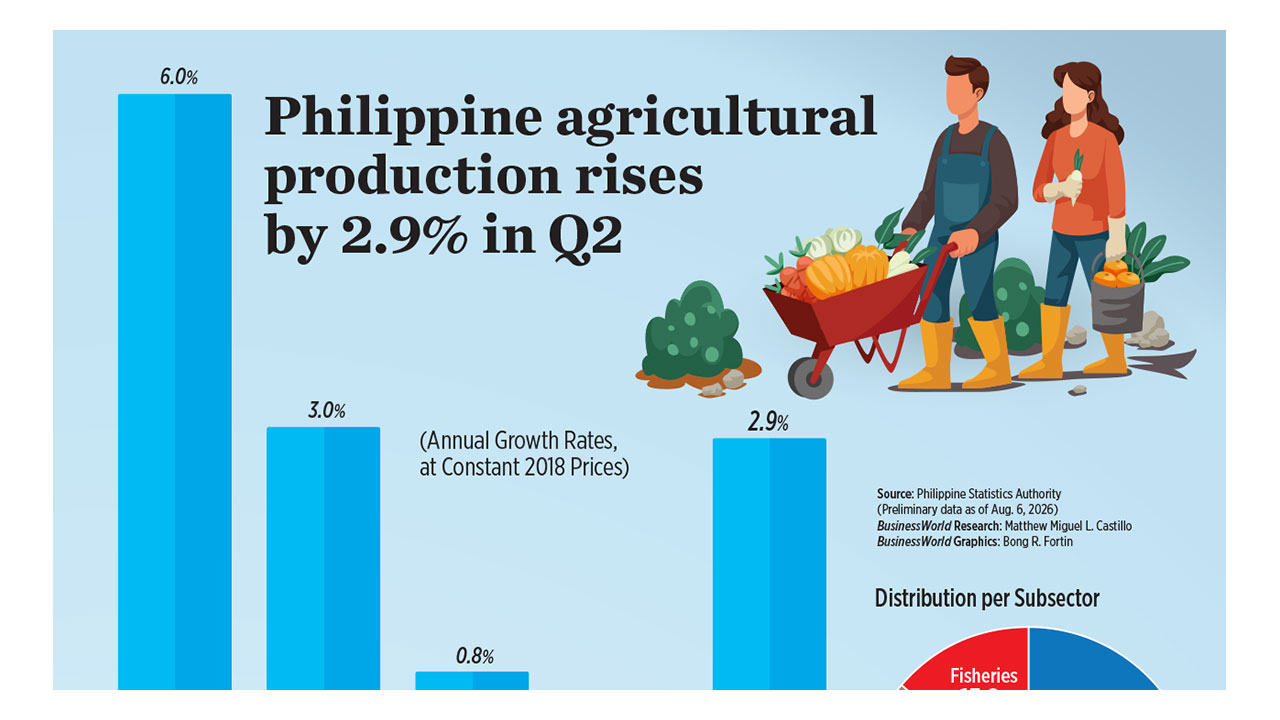
The Philippines' agricultural sector recorded 2.9% growth in the second quarter, a deceleration from the 6% expansion posted in the same period a year earlier, according to data released by the Philippine Statistics Authority (PSA).
Despite the slower year-on-year pace, the PSA reported that all agricultural subsectors — crops, livestock, poultry, and fisheries — posted improved output during the quarter. The broad-based gains across all four subsectors suggest that growth, while moderating, was not concentrated in a single category.
Agriculture accounts for a meaningful share of Philippine employment, with roughly a quarter of the country's workforce engaged in farming, fishing, and related activities. The sector's performance carries direct implications for rural household incomes and domestic food supply, particularly in staple commodities such as rice, where the Philippines ranks among the world's largest importers.
Farm output trends also feed into broader inflation dynamics, as food carries substantial weight in the Philippine consumer price index. Slower agricultural growth can constrain supply at a time when policymakers are managing food-price pressures, making quarterly PSA data a closely watched input for economic planning.
The PSA regularly tracks agricultural performance as part of its quarterly reporting on the country's macroeconomic indicators.
The full story is available at BusinessWorld Online.
