Pentagon Discloses Critical Ammunition Shortage as US-Iran Strait of Hormuz Negotiations Intensify
Key Takeaways
- •The Pentagon disclosed a significant ammunition shortage during a cabinet meeting with President Trump, raising concerns about U.S. military readiness amid tensions with Iran.
- •The United States has depleted substantial portions of its munitions stockpiles by supplying artillery shells, air defense interceptors, and precision-guided weapons to Ukraine since 2022 and more recently to Israel.
- •Approximately 20% of global daily oil consumption transits through the Strait of Hormuz, making the waterway critical to international energy markets.
- •Qatar, Pakistan, and Oman are actively mediating diplomatic dialogue between the United States and Iran to reduce the risk of disruption to global energy supplies.
- •Prediction market participants currently estimate a 55% probability that a U.S.-Iran diplomatic meeting will occur by August 31.
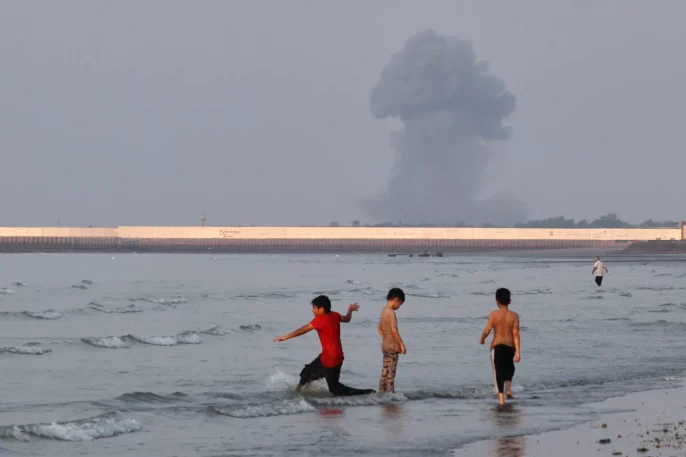
The Pentagon has disclosed a critical shortage of ammunition during a cabinet meeting with President Donald Trump, a revelation that adds new urgency to ongoing diplomatic negotiations between the United States and Iran over the Strait of Hormuz.
The admission underscores the operational challenges currently confronting U.S. military readiness at a time of heightened tensions with Iran. The disclosure comes as the United States has drawn down significant portions of its munitions stockpiles to supply allies in ongoing conflicts, including artillery shells, air defense interceptors, and precision-guided munitions committed to Ukraine since 2022 and, more recently, to Israel. Replenishment of those stockpiles has been constrained by limited domestic production capacity and lengthy industrial lead times, factors that defense planners have flagged for over a year.
The Strait of Hormuz, situated between Iran and Oman, is one of the world's most consequential maritime chokepoints, connecting the Persian Gulf to the Gulf of Oman and the Arabian Sea. According to the U.S. Energy Information Administration, roughly 20% of global daily oil consumption transits through this narrow waterway, along with substantial volumes of liquefied natural gas (LNG), making its security essential to international energy markets.
Diplomatic efforts to stabilize the region and ensure the safe passage of energy shipments through the strait are being mediated by Qatar, Pakistan, and Oman. These countries have been engaged in facilitating dialogue between Washington and Tehran, with the aim of reaching an agreement that would reduce the risk of disruption to global energy supplies.
The Pentagon's disclosure of ammunition shortages has introduced additional pressure on all parties involved to accelerate the diplomatic process. The shortage raises questions about the sustainability of a prolonged U.S. military posture in the region should tensions escalate further. The U.S. Fifth Fleet, headquartered in Bahrain, is responsible for naval operations across the Persian Gulf, Red Sea, and Arabian Sea, and any sustained confrontation would place heavy demands on the munitions and logistics pipelines now under strain.
According to prediction market pricing, participants currently assign a 55% probability to the likelihood of a U.S.-Iran diplomatic meeting taking place by August 31. The potential signing of an agreement within hours, if it materializes, would mark a significant de-escalation in regional tensions and would be consistent with a positive resolution in the diplomatic meeting market.
Official announcements from the White House, Iran, or the mediating governments of Qatar, Pakistan, and Oman are being closely monitored for any indication of progress toward a formal diplomatic meeting. Confirmation of a negotiated framework for talks or observable steps toward military de-escalation would further support expectations of a peaceful resolution. Conversely, any military escalation or collapse of the negotiating process could shift the outlook away from a diplomatic outcome.
The negotiations come against a backdrop of long-standing tensions between the United States and Iran over Iran's nuclear program, its regional activities, and the security of shipping lanes in the Persian Gulf. Previous incidents in the Strait of Hormuz, including attacks on commercial vessels and seizures of oil tankers, have repeatedly raised alarm among energy-importing nations and contributed to volatility in global oil prices.
