Nigeria's Banking Recapitalisation: A Strategic Path to Financial Stability and Inclusive Growth
Key Takeaways
- •The CBN's recapitalisation programme, announced in March 2024, represents the first major revision of bank capital requirements since the 2005 consolidation exercise reduced the number of banks from 89 to approximately 25.
- •International commercial banks face a new minimum paid-up capital of ₦500 billion, marking a twenty-fold increase over the previous ₦25 billion threshold set nearly two decades ago.
- •Banks must comply with the revised requirements by March 2026 through retained earnings, fresh capital injections, rights issues, public offers, or mergers and acquisitions.
- •Several of Nigeria's largest banks have already launched multi-hundred-billion-naira capital raises that have attracted strong participation from both domestic and foreign investors.
- •The recapitalisation agenda extends beyond deposit money banks to include microfinance banks and fintech companies, which are expected to uphold governance and capital standards commensurate with their licensing categories.
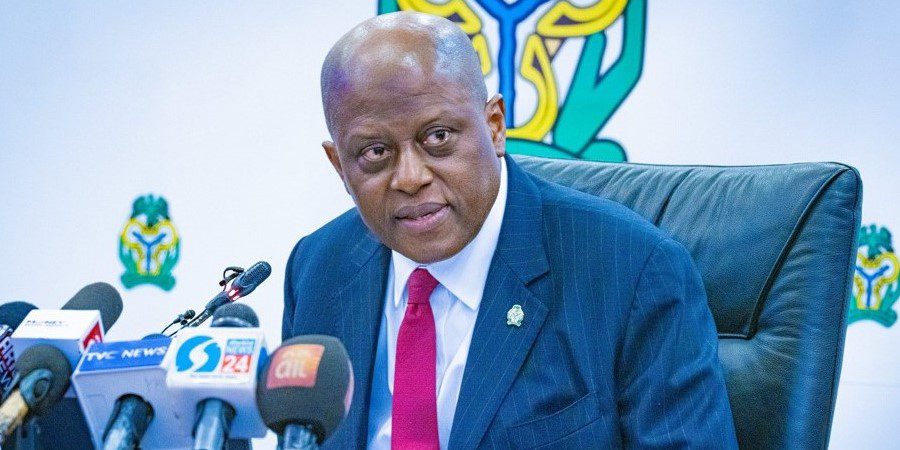
Nigeria's banking sector is undergoing one of its most profound transformations since the landmark 2005 consolidation exercise, when then-CBN Governor Chukwuma Soludo raised the minimum capital requirement from ₦2 billion to ₦25 billion and the number of banks shrank from 89 to roughly 25 through mergers and acquisitions. Nearly two decades later, those thresholds had never been revised, even as the economy expanded and the currency's value eroded. The Central Bank of Nigeria's (CBN) recapitalisation programme—announced in March 2024 under CBN Governor Olayemi Cardoso, appointed by President Bola Tinubu in late 2023—represents not merely a regulatory mandate but a strategic response to the widening gap between legacy capital bases and present-day economic scale. A successful implementation could reinforce financial stability, broaden credit access, bolster investor confidence, and underpin a more inclusive and resilient economy.
New Capital Requirements
In March 2024, the CBN unveiled revised minimum capital requirements spanning commercial, merchant, and non-interest banks. Under the updated framework:
- International commercial banks must maintain a minimum paid-up capital of ₦500 billion.
- National commercial banks are required to hold ₦200 billion.
- Regional commercial banks must maintain ₦50 billion.
- Merchant banks are subject to a ₦50 billion minimum.
- National non-interest banks must hold ₦20 billion, while regional non-interest banks are required to maintain ₦10 billion.
The revised thresholds reflect present-day economic realities, where inflation, currency depreciation, and expanding financial demands have substantially reshaped the capital needed to sustain banking operations. The naira's sharp depreciation—particularly following the mid-2023 currency float that removed longstanding exchange-rate controls—has significantly eroded the dollar-equivalent value of capital positions that were adequate when last set in 2005. Banks have been given a deadline of March 2026 to meet the new requirements, whether through retained earnings, fresh capital injection, or combinations of rights issues, public offers, and mergers.
Industry Response
Numerous institutions have already pursued compliance through rights issues, public offers, private placements, as well as mergers and acquisitions. Several of Nigeria's largest banks—including those with international licences whose new ₦500 billion floor represents a twenty-fold increase over the previous requirement—have launched multi-hundred-billion-naira capital raises that have drawn strong participation from both domestic and foreign investors. Beyond meeting regulatory benchmarks, the recapitalisation exercise is fostering stronger corporate governance, improved capital planning, and heightened investor participation across Nigeria's financial markets.
Beyond Deposit Money Banks
The recapitalisation agenda extends well beyond deposit money banks. The CBN has also introduced revised capital requirements for microfinance banks, acknowledging the vital role they serve in delivering financial services to underserved individuals, nano businesses, and small enterprises. As the financial landscape grows increasingly digital, robust capital bases will empower these institutions to invest in technology, cybersecurity, risk management, and product innovation while sustaining public confidence.
Nigeria's rapidly expanding fintech ecosystem, though governed by distinct licensing frameworks depending on operational scope, faces a similarly clear regulatory trajectory. Entities facilitating payments, tech-enabled banking, lending, and savings are expected to uphold governance, capital, and consumer protection standards commensurate with their respective licensing categories. This regulatory evolution is particularly significant given that fintechs continue to account for a growing proportion of financial transactions and deliver services to millions of previously underserved Nigerians.
Collectively, these reforms present a singular opportunity to reshape Nigeria's financial ecosystem.
Economic Implications
A stronger banking sector yields stronger economic outcomes. Well-capitalised financial institutions are better equipped to finance infrastructure, manufacturing, agriculture, housing, and technology. They possess greater capacity to absorb economic shocks, support long-term lending, and endure periods of market volatility. Critically, they can extend larger volumes of prudently underwritten credit to businesses that generate employment and drive economic expansion.
For small and medium-sized enterprises—which contribute significantly to Nigeria's GDP and employment—improved access to financing remains one of the most powerful growth enablers. This matters acutely in Africa's most populous nation, where SMEs have long cited access to credit as among the top constraints to growth. The success of recapitalisation should therefore be measured not solely by fortified balance sheets, but by the degree to which additional capital translates into productive economic activity.
Financial Inclusion and Collaboration
Despite notable progress over the past decade, millions of Nigerians remain outside the formal financial system. Expanding financial inclusion demands complementary strategies across commercial banks, microfinance banks, fintechs, and other regulated institutions. Meaningful inclusion requires sustained collaboration among these entities and regulators, as each serves distinct customer segments while working toward a shared goal: integrating more Nigerians into the formal financial system.
At FairMoney Microfinance Bank, recapitalisation aligns with ongoing investments in responsible lending, digital banking capabilities, sound risk management, and financial inclusion. The institution holds that technology can complement prudent credit assessment and help extend financial services to eligible individuals and businesses.
Measuring Success
As the recapitalisation programme advances, success should ultimately be evaluated against broader outcomes: stronger institutions, deeper financial inclusion, increased SME financing, enhanced consumer confidence, and sustained economic growth. Capital alone does not transform economies—how that capital is deployed does.
The Federal Government and the Central Bank of Nigeria have introduced reforms designed to strengthen the long-term resilience of the financial sector. Continued implementation of these measures will be critical to supporting financial stability and sustainable sector growth. These decisions demand vision, consistency, and regulatory discipline. While the adjustment process may pose short-term challenges for certain institutions, the long-term benefits for financial stability, investor confidence, and economic development substantially outweigh the costs.
Nigeria possesses one of Africa's most dynamic financial services sectors. With stronger capital foundations, responsible innovation, and continued collaboration between regulators and financial institutions, the country is well positioned to build a banking ecosystem capable of advancing its development ambitions—empowering millions more individuals and businesses and supporting inclusive economic growth over the long term.

