Kansas voters reject GOP-led amendment to change Supreme Court selection system
Key Takeaways
- •About 62% of Kansas voters rejected the amendment, with 593,695 votes counted late Tuesday night.
- •The proposal would have ended the state’s 68-year-old merit-based system for choosing Supreme Court justices and replaced it with direct elections.
- •Campaigns for and against the measure spent at least $12.8 million, much of it described as dark money.
- •Supporters and opponents framed the vote as a fight over abortion rights, school funding, and the level of political influence over the court.
- •The defeat keeps the current justices in place to handle ongoing cases, including abortion-related matters.
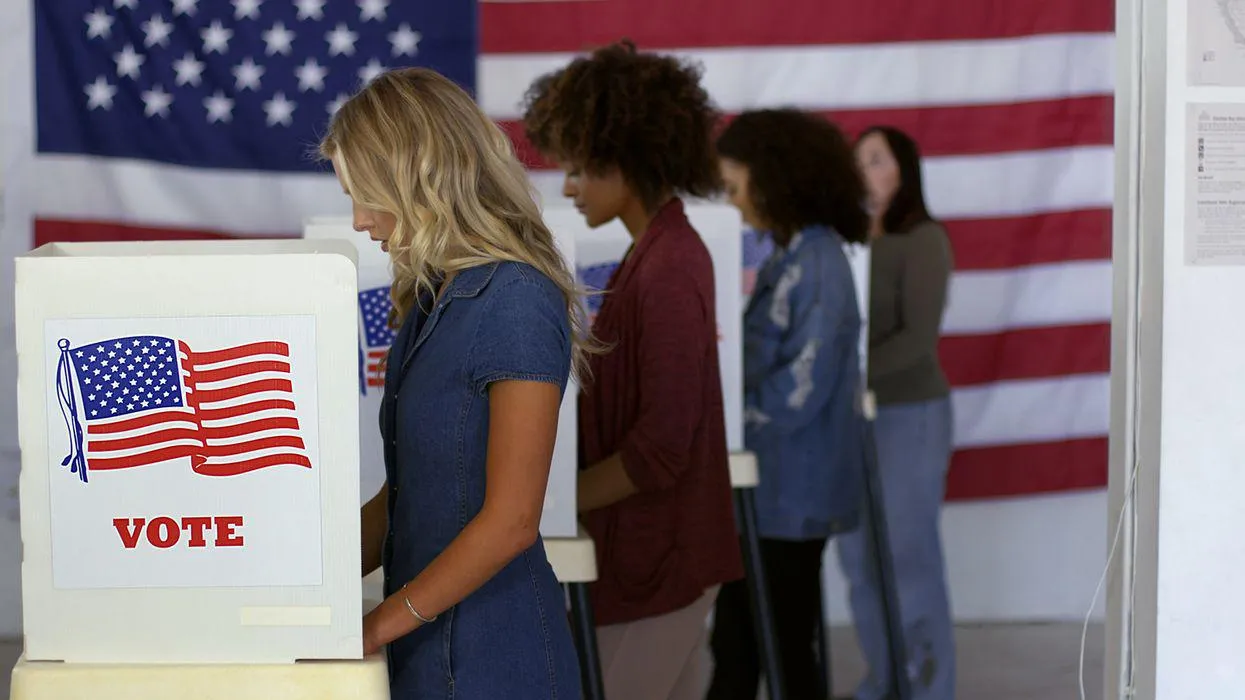
TOPEKA — Kansas voters on Tuesday overwhelmingly rejected a proposal to rewrite the state constitution and elect Kansas Supreme Court justices, defeating a plan long sought by Republicans who want more conservative rulings on issues including abortion and school funding.
About 62% of Kansans were voting “no” on the constitutional amendment, with 593,695 votes counted as of 11:15 p.m.
“This victory is beyond gratifying,” said retired Supreme Court Justice Carol Beier, who opposed the amendment. “Kansans have made their wishes known, and those wishes are noble. The Kansas Supreme Court must remain fair and impartial for every citizen. It cannot and will not be bought to give a few an unfair advantage.”
The primary ballot asked voters to weigh a proposal that would scrap a 68-year-old system for selecting justices to the state’s highest court, a system created after a scandal from an era when justices were elected and the governor had total control over choosing replacements.
Under the amendment, voters would have chosen Supreme Court candidates directly, while mega-donors would have gained greater influence over court decisions.
Danedri Herbert, chair of the Kansas Republican Party, warned Tuesday morning that the vote on whether to elect Supreme Court justices was “the most important election of our lifetime.”
“Yeah, I know everyone says that every year,” Herbert said. “This cycle, it’s true.”
In a social media video, Herbert said the constitutional amendment “is the difference between Kansas becoming Detroit or Kansas becoming a land of prosperity.”
Conservatives have long criticized Kansas Supreme Court rulings that upheld constitutional rights to terminate a pregnancy and to adequately fund public schools. They sought to change how justices are selected in hopes of overturning those rulings. The court’s role in those disputes helped make the amendment a proxy fight over how much political influence should shape the bench, even as voters were deciding a procedure that has guided the court for decades.
With supermajorities in both the House and Senate, Republicans in the Legislature adopted a resolution during the 2025 session to place the constitutional amendment on the 2026 primary ballot. The strategy was to hold the vote on a date when independent voters would have no other reason to go to the polls. Republicans hold a sizable advantage over Democrats in the state among affiliated voters who participate in primary elections.
The same strategy failed four years ago, when voters overwhelmingly rejected a constitutional amendment that would have removed abortion rights from the state constitution. That measure failed by a 60-40 margin, with 942,851 Kansans weighing in, just weeks after the U.S. Supreme Court overturned Roe v. Wade.
“I think a lot of people are just frustrated that we’re seeing this effort again to change the constitution because the state Legislature doesn’t like what the Supreme Court has done,” said Democratic U.S. Rep. Sharice Davids, speaking with reporters after she voted Tuesday morning.
“There are plenty of us who disagree with court rulings on a regular basis, but you don’t completely change the way that we get Supreme Court justices just because you don’t like some of the rulings that they make,” she added.
The American Civil Liberties Union of Kansas, Planned Parenthood Great Plains Votes and Kansas Appleseed joined together to form Kansas United for Impartial Courts in a campaign against the amendment. They warned that it would allow out-of-state billionaires to buy the court.
“The billionaire political donors and politicians behind this amendment tried to buy our Supreme Court,” said Micah Kubic, executive director of the ACLU of Kansas. “They tried to turn our justices into politicians for sale, all so they could control the court’s rulings and take away our rights. But tonight, Kansas said no.”
Attorney General Kobach, through his PAC and various conservative groups, flooded airwaves and mailboxes with advertisements criticizing the current selection process.
Speaking at a GOP watch party Tuesday night in Wichita, Kobach said the vote “creates more certainty” that the current justices will decide cases moving through the judicial system.
“If there had been a shift, there would be some question as to who would eventually be on the court that hears those cases,” Kobach said. “Now we know it’s probably going to be the justices right now, unless somebody retires.”
At least $12.8 million, much of it dark money, fueled “vote yes” and “vote no” campaigns ahead of Tuesday’s primary.
The current selection system traces back to the notorious political scandal known as the “triple play.” In 1956, incumbent Republican Gov. Fred Hall lost his primary election, and Democrat George Docking defeated the Republican nominee in November. Supreme Court Chief Justice Bill Smith, a Republican, was preparing to retire midterm but did not want a Democrat to choose his replacement.
At the start of the new year, Smith resigned from the Supreme Court, Hall resigned as governor, and the new governor appointed Hall to take Smith’s seat on the court.
The following year, more than 70% of Kansas voters approved a constitutional amendment that created a merit-based system. It established a nominating commission, with attorneys choosing five members and the governor appointing four. The commission vets candidates for Supreme Court openings and sends three finalists to the governor, who chooses from among them.
Justices then face retention votes in the next general election and again every six years.
This year’s amendment would have required justices to run for office like candidates for other political positions and would have removed current restrictions on justices engaging in political activities or raising money for campaigns. It also would have given the Legislature authority to decide how elections would be conducted — partisan or nonpartisan, statewide or by districts drawn by lawmakers.
Supporters of the amendment noted that no justice has ever lost a retention election.
Rep. Bob Lewis, a Garden City Republican, said in a video ad posted on social media that it was “balderdash” to argue that voters already get to evaluate justices.
“A retention election is not an election at all. It’s not competitive,” Lewis said. “Voters are given only one choice: Vote yes or no for this particular candidate. A true election, as we all know, is grounded in competition, giving the voters a choice.”
He called a retention election “a rubber stamp.”
“It’s a rigged election, much like in communist countries,” Lewis said. “The result is foregone. You pick the guy the politburo has picked, or you pick no one.”
The video was paid for by Derby Republican Rep. Blake Carpenter’s reelection campaign.
Advance voting totals showed a sharp drop from the historic turnout four years ago, when the anti-abortion amendment was on the ballot. This year, 176,703 Kansans had voted by mail or in person as of Monday. In 2022, 320,048 voted by mail or in person before Election Day.
The stakes were underscored when Christopher Jayaram, minutes before becoming the newest Supreme Court justice on Monday, issued an opinion striking down numerous abortion restrictions under state law, some dating to 1997. Democratic Gov. Laura Kelly selected Jayaram, a Johnson County district judge, from the three finalists for an open seat on the high court.
“Tonight Kansans rebuffed a constitutional amendment that was designed to undermine access to abortion, mislead voters, and politicize the state’s Supreme Court,” said Emily Wales, president and CEO of Planned Parenthood Great Plains Votes.
