Iran and Oman Near Completion of New Strait of Hormuz Traffic Regime
Key Takeaways
- •Iran and Oman have agreed on geographical coordinates for a proposed Strait of Hormuz shipping route and are finalizing a joint statement on its operational framework.
- •The plan would direct inbound vessels through Iranian territorial waters and outbound ships through an Omani-controlled lane for an initial trial period.
- •Iran is seeking transit fees of 5–7% of cargo value while Oman is discussing a rate of approximately half that amount, leaving the fee structure as the main unresolved issue.
- •The United States and eight major international shipping associations have formally opposed mandatory charges, arguing they could erode transit passage rights under UNCLOS and increase costs across global supply chains.
- •Houthi forces claimed ballistic missile attacks on at least two Saudi-linked tankers within roughly 24 hours, while a separate uncrewed surface vessel attack sank the Indian vessel Faize Noore Oliya off Al Mukha with all crew rescued.
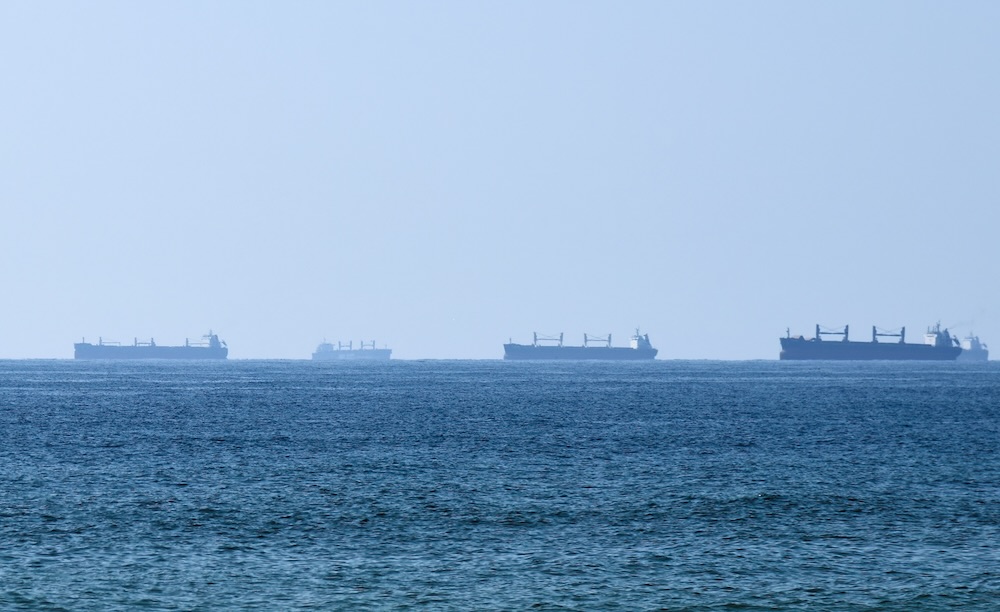
Iran and Oman are poised to unveil a new traffic arrangement for the Strait of Hormuz, a development that could reshape established shipping lanes and grant Tehran a formal role in overseeing vessels entering the Persian Gulf. The waterway carries approximately one-fifth of the world's daily oil consumption, making any change to its governance a matter of direct relevance to global energy markets.
Iran's foreign ministry confirmed that the two nations have agreed on the geographical coordinates of a proposed shipping route and are now finalizing a joint statement detailing its operational framework.
"The geographical coordinates of the route envisaged by the two sides have been agreed upon," said foreign ministry spokesman Esmaeil Baqaei, noting that the text is in its final drafting stage.
Under the reported plan, inbound vessels would travel primarily through Iranian territorial waters, while outbound ships leaving the Gulf would use a lane controlled by Oman. The arrangement is expected to be implemented for an initial limited period, allowing both countries to evaluate its effectiveness before any longer-term commitment.
The most contentious unresolved issue is whether transiting ships would be required to pay security, environmental, or other service fees. A senior Iranian official told Reuters that Tehran is seeking fees equivalent to 5–7% of cargo value. Oman is reportedly discussing a rate of roughly half that figure.
In practical terms, Iran's proposed 5–7% would translate to approximately $8 million to $11 million per VLCC (Very Large Crude Carrier), while Oman's level would fall in the $4 million to $5 million range. For spot market vessel owners, the fee would likely function as a pass-through cost — incorporated into time charter rates and ultimately borne by the charterer.
The United States has firmly opposed any compulsory charges, maintaining that the Strait of Hormuz is an international waterway where the right of transit passage must be preserved under the United Nations Convention on the Law of the Sea (UNCLOS), which designates straits used for international navigation as corridors subject to transit passage regimes that cannot be suspended or tolled.
Eight of the shipping industry's largest international associations have also weighed in, sending a joint letter to UN Secretary-General António Guterres and IMO Secretary-General Arsenio Dominguez. The signatories — the Asian Shipowners' Association, BIMCO, Cruise Lines International Association, European Shipowners, the International Chamber of Shipping, Intercargo, Intertanko, and the World Shipping Council — cautioned that service fees could effectively constitute tolls under a different name.
"Once such a precedent is established, it becomes increasingly difficult to resist similar measures elsewhere," the organizations warned.
They argued that mandatory charges would erode the internationally recognized legal framework governing straits used for international navigation and would feed through global supply chains, driving up energy prices, inflation, and economic uncertainty.
The proposed arrangement comes at a time when commercial traffic through Hormuz remains severely depressed following months of conflict and attacks on commercial vessels. US President Donald Trump stated this week that progress had been made and that an announcement could be forthcoming, though Washington emphasized that no final agreement has yet been reached.
Any eventual deal would still hinge on broader security conditions and the willingness of shipowners, insurers, and crews to resume regular transits through the waterway. War-risk premiums for vessels transiting the region have fluctuated sharply in response to prior incidents, and any mandatory fee structure would add a further cost layer on top of existing insurance and security expenditures.
Separately, the Houthis have expanded their campaign targeting Saudi-linked shipping. The group claimed a ballistic missile attack on the product tanker Daisy in the Gulf of Aden. UK Maritime Trade Operations (UKMTO) reported that a tanker experienced a loud explosion in close proximity approximately 95 nautical miles southeast of Aden on Wednesday. All crew members were reported safe, with no damage or pollution initially recorded.
Vanguard Tech identified the vessel as the Dominica-flagged Daisy, stating that the explosion occurred roughly 40 meters from its port side and generated a shockwave through the ship. The Houthis subsequently claimed a direct strike that forced the tanker to reverse course, though that assertion has not been independently corroborated.
The incident marked the group's second claimed attack on a Saudi-linked tanker within approximately 24 hours. Houthi spokesman Yahya Saree said the Saudi-flagged, Bahri-controlled NCC Wafa had been targeted off Yanbu with multiple ballistic missiles.
UKMTO also confirmed that the Indian vessel Faize Noore Oliya was struck by an uncrewed surface vessel southwest of Al Mukha earlier this week. The attack ignited a fire before the ship sank, though all 14 people aboard were rescued. No group has claimed responsibility for that attack.
