Hagland Shipping Charters Battery-Hybrid Newbuild from Reederei Gerdes
Key Takeaways
- •The Forty-Two G is a 2026-built 3,800 dwt Damen Combi Freighter 3850 constructed at Ba Son Shipyard in Vietnam, equipped with battery-hybrid propulsion, B100 biodiesel capability, and Econowind VentoFoils for wind-assisted operation.
- •Hagland Shipping plans to outfit the chartered vessel with an onboard excavator, enabling self-unloading functionality for timber, aggregates, and other shortsea bulk trades across Northern Europe.
- •The charter agreement brings a fourth externally owned vessel into Hagland's long-term chartered fleet, complementing nine owned self-discharging general cargo ships ranging from 3,700 to 5,000 dwt.
- •Shipbroker IntelliMar arranged the charter, while commercial management of the vessel will be handled by the over-C platform.
- •Hagland is separately advancing a four-vessel methanol-convertible newbuilding programme at Royal Bodewes in the Netherlands, representing an investment exceeding NOK 800 million with deliveries scheduled through the first half of 2027.
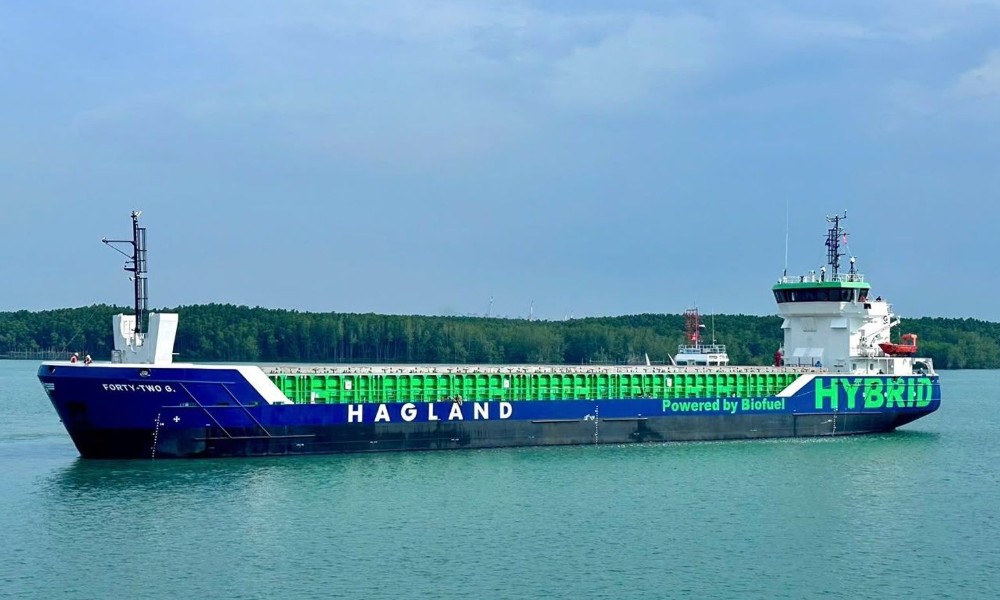
Norwegian shortsea operator Hagland Shipping has secured a multiyear charter for a battery-hybrid mini-bulker from Germany's Reederei Gerdes, with commercial management handled by the over-C platform.
The vessel in question, the Forty-Two G, is a 2026-built 3,800 dwt Damen Combi Freighter 3850 constructed at Ba Son Shipyard in Vietnam. Financial terms and the exact duration of the charter were not disclosed.
Damen Shipyards Group, the Dutch shipbuilding conglomerate, designed the Combi Freighter 3850 as a versatile shortsea vessel capable of operating in shallow waters and small ports. The Forty-Two G incorporates several emissions-reducing technologies, including battery-hybrid propulsion paired with shore-power connectivity, B100 biodiesel capability, and two foldable Econowind VentoFoils — wind-assisted propulsion units developed by Dutch company Econowind. The battery system enables the vessel to sail on fully electric power for short periods, particularly during port approaches and operations in populated areas.
The combination of battery-hybrid propulsion, biodiesel compatibility, and wind-assist places the Forty-Two G among a growing cohort of shortsea vessels deploying multiple clean-energy technologies simultaneously. Shortsea and coastal routes are considered particularly suitable for hybrid architectures because shorter voyages and frequent port calls allow batteries to be recharged more regularly than on deep-sea trades. The deployment also comes as European regulatory pressure intensifies, with the EU Emissions Trading System extended to maritime CO2 emissions from 2024 and the FuelEU Maritime regulation taking effect in 2025 to mandate gradual reductions in the greenhouse gas intensity of energy used onboard.
Hagland plans to equip the vessel with an onboard excavator, enabling it to function as a self-unloader in the company's timber, aggregates, and other shortsea bulk trades throughout Northern Europe. Shipbroker IntelliMar arranged the charter agreement.
The addition of the Forty-Two G brings a fourth externally owned vessel into Hagland's long-term chartered fleet. The Haugesund-based company also owns nine self-discharging general cargo ships, ranging from 3,700 dwt to 5,000 dwt.
Separately, Hagland is advancing a four-vessel newbuilding programme at Royal Bodewes, the Dutch shipyard based in Hoogezand. The approximately 4,900 dwt methanol-convertible series represents a total investment exceeding NOK 800 million, with the three remaining vessels scheduled for delivery through the first half of 2027.
Source: Splash247
