Grayscale Calls CLARITY Act Crypto's Next ETF Moment, With XRP Poised to Benefit
Key Takeaways
- •The full draft of the CLARITY Act was released on July 22 and seeks to establish a comprehensive regulatory framework defining how cryptocurrencies are governed and which federal agencies oversee them.
- •Grayscale estimates the Senate has approximately 14 days to pass the legislation before the August recess, after which the midterm election cycle could significantly delay progress.
- •The CLARITY Act has drawn bipartisan support for substantial portions of the bill, though negotiations continue over ethics provisions related to public officials and digital assets.
- •A July 2023 court ruling partially relieved XRP by determining that programmatic exchange sales did not constitute investment contracts, but broader regulatory questions remain unresolved.
- •Ripple has continued expanding its enterprise offerings through the XRP Ledger, RLUSD, and tokenized real-world assets, positioning itself to benefit from clearer regulatory rules.
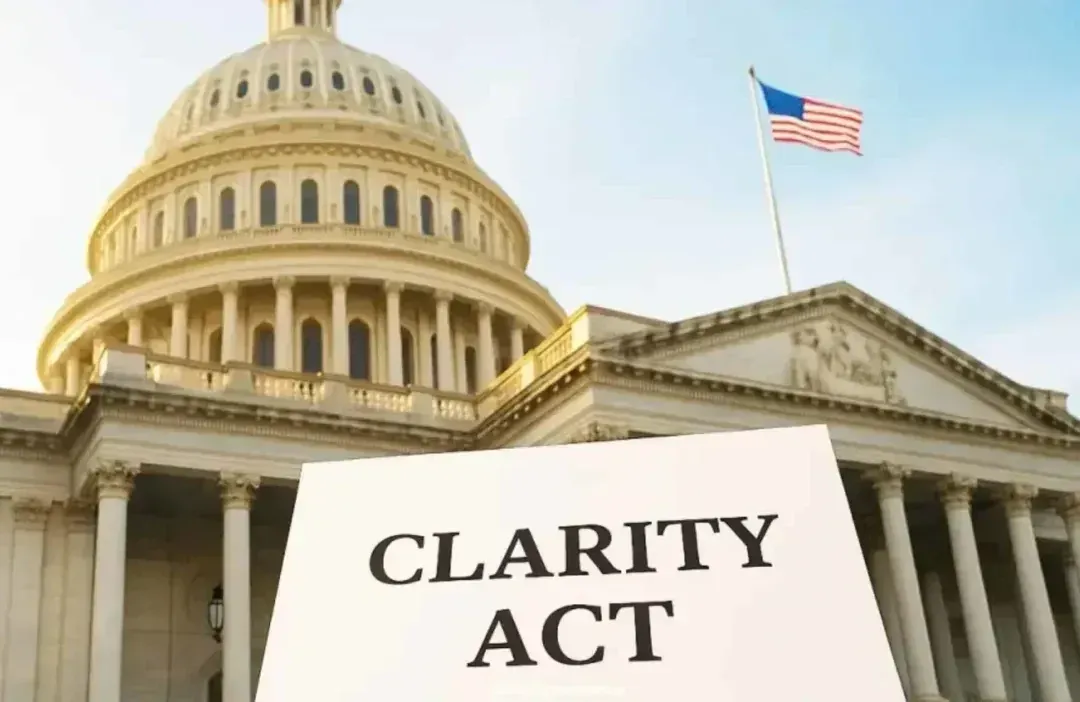
Leading digital asset manager Grayscale argues that the United States crypto industry is nearing a defining juncture, one that could mirror the transformative impact of spot crypto exchange-traded funds on institutional investing. Grayscale occupies a notable vantage point for this comparison: the firm's August 2023 federal court victory over the SEC paved the way for the conversion of its Grayscale Bitcoin Trust into a spot Bitcoin ETF, part of the wave of approvals the SEC granted in January 2024.
Grayscale contends that the bipartisan CLARITY Act has the potential to do for blockchain adoption what spot crypto ETFs did for institutional capital flows: eliminate regulatory ambiguity and open the door to the next phase of growth. Where ETFs created a regulated wrapper for investment exposure, the CLARITY Act targets something arguably more foundational — clarifying the dividing line between SEC and CFTC jurisdiction over digital assets.
A Narrow Legislative Window
The firm emphasizes that the timeline is compressed. According to Grayscale, the Senate has approximately 14 days to pass the legislation before lawmakers depart for the August recess. Failing to meet this deadline risks pushing the bill into the midterm election cycle, where competing political priorities could further delay the regulatory clarity the industry has been awaiting.
The first full draft of the CLARITY Act was released on July 22. It lays out a comprehensive legal framework for digital assets, aiming to define how cryptocurrencies are regulated, delineate the responsibilities of federal agencies, safeguard non-custodial software developers, and strengthen know-your-customer (KYC) and anti-money laundering (AML) standards.
Although negotiations remain ongoing over ethics provisions concerning public officials and digital assets, substantial portions of the legislation have garnered bipartisan support.
Implications for XRP
For XRP, the stakes are especially significant. XRP has already positioned itself as infrastructure for cross-border payments, on-demand liquidity, tokenization, and enterprise finance. However, years of regulatory uncertainty — intensified by the SEC's December 2020 lawsuit against Ripple alleging XRP was an unregistered security — have constrained broader adoption by banks, payment providers, and institutional investors. A July 2023 federal court ruling that programmatic sales of XRP on exchanges did not constitute investment contracts provided partial relief, but questions about how digital assets fit within the broader U.S. regulatory framework remain unresolved.
If enacted, the CLARITY Act would equip businesses with clear rules governing digital assets and specify which regulators oversee distinct segments of the market. This legal certainty could remove a primary barrier that has prevented institutions from deploying XRP-based payment and settlement solutions at scale.
The legislative timeline also coincides with Ripple's expanding enterprise strategy. Through the XRP Ledger, RLUSD, tokenized real-world assets, and institutional blockchain infrastructure, Ripple has continued developing tools tailored for financial institutions. A predictable regulatory framework could provide banks and enterprises with greater confidence to adopt these technologies without concern over shifting regulatory interpretations.
A Comparison to Spot Crypto ETFs
Grayscale's analogy to spot crypto ETFs carries particular weight. ETFs enabled institutional capital participation by offering a regulated investment vehicle. The CLARITY Act could produce an even wider effect by establishing the legal foundation that companies need to build, invest in, and deploy blockchain technology across the broader economy.
This is why the XRP community is monitoring the legislation closely. Beyond being another crypto bill, the CLARITY Act could serve as the catalyst that accelerates institutional adoption of the XRP Ledger, reinforces enterprise demand for XRP, and establishes the groundwork for the network's next growth phase.
Source: Coinpaper

