Republican Senators Increasingly Push Back Against Trump's Legislative Priorities
Key Takeaways
- •Republican senators including John Kennedy, John Cornyn, and Majority Leader John Thune have publicly challenged President Trump on multiple legislative priorities, signaling a departure from the compliance seen in the early months of his presidency.
- •Senator John Cornyn threatened to block the confirmation of Todd Blanche as Attorney General over the $1.8 billion Anti-Weaponization Fund before backing down after claiming he had secured his objectives.
- •Majority Leader John Thune acknowledged publicly that he cannot produce the votes needed to pass the SAVE America Act, citing genuine procedural and political hurdles in the Senate.
- •Senator John Kennedy declined to support the anti-weaponization fund without conditions and directly questioned the president's characterization of the Lincoln Memorial reflecting pool incident.
- •Senator Mitch McConnell's ongoing unavailability has left Republicans with a one-vote numerical gap, meaning a single dissenting senator can effectively stall the administration's legislative agenda.
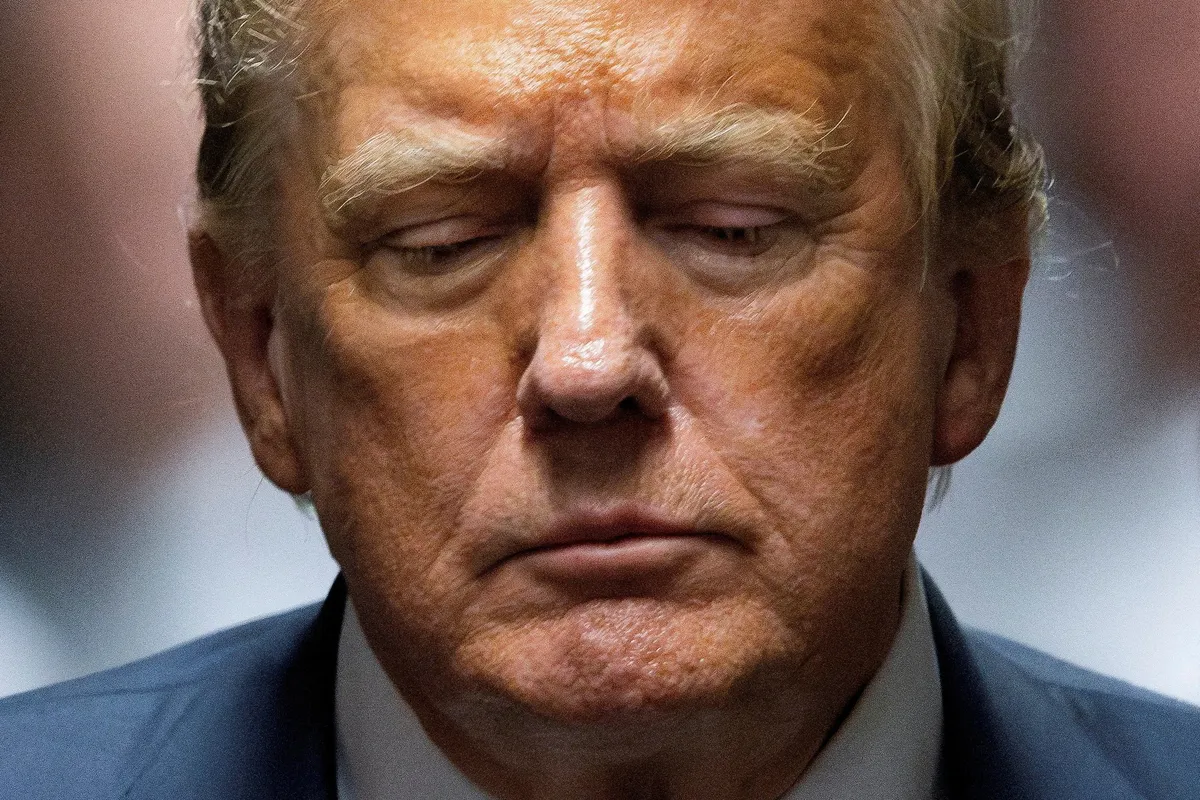
President Donald Trump, aged 80, recently claimed victory in his golf club's championship for the 43rd consecutive time. In a social media post, Trump wrote: "The Winning Shot in the Bedminster Club Championship! ... so honored... I'm given very little time to practice, because I'm focused on many other things. It's called TALENT, and I have it, and they don't!"
However, while Trump may retain unquestioned authority at his private golf course, his grip on power in Washington has shown signs of loosening. Over the past two months, a discernible political shift has taken place, with Republican senators increasingly pushing back against the president's demands — a development observed both on Capitol Hill and in the broader political landscape.
The Republican caucus is also operating with a numerical disadvantage. Senator Mitch McConnell remains sufficiently unavailable to affect Senate math, though not absent enough to trigger a replacement process in Kentucky. This one-vote gap has amplified the impact of individual Republican dissent, meaning a single senator can effectively stall the administration's legislative agenda.
The shift accelerated visibly in recent weeks, beginning with the Senate's resistance to Trump's pressure campaign over the SAVE Act ahead of the November elections. Some Republican senators opted to preserve the legislative filibuster — and their own institutional power — rather than accede to the president's demands, calculating that maintaining procedural protections would serve them better in a potential minority scenario. The filibuster, which requires 60 votes to advance most legislation, has long been a point of tension between presidents eager to pass their agendas and senators who view it as a guardrail of minority rights — regardless of which party holds the majority.
On NBC's Meet the Press, Senator John Kennedy (R-LA) addressed the proposed Trump administration "anti-weaponization" fund. Kennedy stated he "would not provide the Trump administration with a 'blank check'" for the fund and that rioters who stormed the Capitol on January 6, 2021, should not benefit from it. He later described the issue as too emotional.
The proposed fund holds significant importance for the president, as it would signal to his supporters that those who act on his behalf in the future would not only receive pardons but also financial compensation. Despite its priority for the White House, Kennedy has declined to support it without conditions.
Senator John Cornyn (R-TX) also pushed back, threatening to block the confirmation of Todd Blanche as Attorney General unless the Justice Department nullified the $1.8 billion "Anti-Weaponization Fund." Cornyn also sought limits on provisions he viewed as enabling the president to file legally questionable tax returns. Cornyn backed down on Monday, claiming he had secured what he wanted. However, for several days, he had publicly opposed the administration's position — a notable posture for a senior member of the Judiciary Committee with a long history of backing Republican judicial nominees.
The resistance has extended to Senate leadership. Senate Majority Leader John Thune (R-SD) has grown increasingly pointed in his responses to reporters, stating he cannot "wave a magic wand" to produce the votes needed to pass the SAVE America Act — a non-citizen voting ban that critics describe as both redundant and dystopian. Thune's remarks signal that the White House's legislative demands are facing genuine procedural and political hurdles in the chamber, and that even an ally tasked with advancing the president's agenda acknowledges those limits publicly.
The pushback has also touched on the controversy surrounding the Lincoln Memorial reflecting pool. D.C. U.S. Attorney Jeanine Pirro dropped charges against U.S. Olympic canoeist David Hearn, who had been accused of vandalizing the pool. Senator Kennedy offered pointed commentary on the matter:
"Well, the whole thing is a multiple vehicle pile-up. Let me start with the president. [The] president says it was caused by vandals. I don't know whether he really believes that, or it's part of his political messaging, or he's just thinking out loud."
Kennedy continued: "Now, the stakes are a lot higher for U.S. Attorney Pirro. You can't lie to a federal judge. If she can't prove her case, she was right to pull back. Because if you fool around with a federal judge, you will find out."
Kennedy's remarks amounted to a direct challenge to the president's characterization of events, suggesting that Trump's version of reality may not withstand scrutiny before a federal judge — or before American voters.
Republican senators are aware that they will face voters in the near future. Public anger is directed at incumbents across the political spectrum, particularly those perceived as aligned with a billionaire-driven agenda. Lawmakers pictured alongside figures such as Elon Musk, Jeff Bezos, and Mark Zuckerberg face heightened scrutiny.
Much of the Republican resistance is driven by political self-interest and survival instincts. However, it also reflects a growing assessment among GOP senators that Trump no longer wields sufficient power to compel their silence — a dynamic common in second-term presidencies, when lawmakers increasingly look beyond the incumbent toward their own electoral futures and the next party standard-bearer. This dynamic could prove consequential in the coming months, particularly if the president seeks to deploy troops to monitor elections or intervene in local vote-counting processes. Senators more willing to publicly challenge the administration on such actions could serve as a meaningful check.
The contrast with the early months of Trump's presidency is notable. During that period, a compliant Republican-controlled Senate acceded to the president's agenda with little resistance. The current dynamic represents a departure from that pattern, with senators asserting greater independence on issues ranging from executive spending priorities to judicial nominations.
Jason Miciak is a Rawstory columnist. He can be followed on Bluesky and reached at jasonmiciak@gmail.com.

