Canadian Solar Begins First U.S. HJT Solar Cell Production at Indiana Facility
Key Takeaways
- •Canadian Solar's Jeffersonville, Indiana facility is the first in the United States to manufacture heterojunction technology (HJT) solar cells domestically.
- •The initial 2.1-GW production phase is expected to scale to over 6 GW annually, supporting more than 1,200 jobs and representing approximately $1 billion in local investment.
- •All other domestic U.S. solar cell manufacturers currently produce n-type designs such as PERC or TOPCon, while Canadian Solar is the sole HJT cell producer in the country.
- •CS PowerTech plans to begin phase-two expansion before the end of 2025 and separately intends to increase Texas panel assembly capacity to 10 GW annually.
- •HJT cell architecture offers potential efficiency advantages over conventional designs, though broader adoption has been constrained by higher production costs and limited manufacturing equipment supply chains.
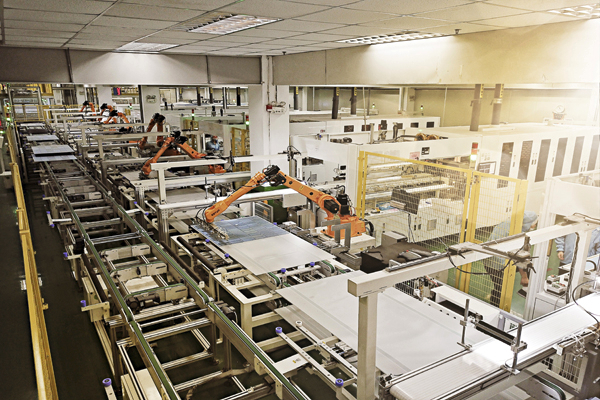
The United States has begun domestic production of heterojunction technology (HJT) solar cells for the first time, following Canadian Solar's official opening of the initial 2.1-GW phase of its cell manufacturing facility in Jeffersonville, Indiana. The plant operates under Canadian Solar's subsidiary CS PowerTech and will manufacture HJT cells destined for the company's module assembly plant in Mesquite, Texas. The launch marks a notable step in the broader U.S. solar manufacturing buildout that has accelerated since the passage of the Inflation Reduction Act, which introduced tax credits and incentives for domestic clean energy production.
At full capacity, the Jeffersonville facility is expected to produce more than 6 GW of solar cells annually, support over 1,200 jobs, and represent nearly $1 billion in local investment.
"Jeffersonville is a cornerstone of our strategy to build one of North America's most advanced energy manufacturing supply chains," said Rusty Schmit, President of CS PowerTech. "This facility will produce next-generation HJT solar cells, support domestic manufacturing and ultimately strengthen grid reliability as our customers deploy the products. We are proud to invest in Indiana's workforce and work with regional partners to build a long-term center of excellence for solar technology and advanced manufacturing."
CS PowerTech plans to ramp the Jeffersonville facility to full phase-one production capacity over the coming months and expects to commence work on a phase-two expansion before the end of the year. Separately, Canadian Solar intends to increase its Texas panel assembly capacity to 10 GW annually. The pace of that ramp and the viability of further domestic cell capacity investments will likely be shaped by ongoing developments in U.S. trade policy, including tariff proceedings and domestic content requirements tied to federal incentives.
Canadian Solar is the first manufacturer operating in the United States to produce HJT cells domestically. All other domestic cell manufacturers — Suniva, ES Foundry, and Qcells — currently produce n-type designs, either PERC or TOPCon. While a few panel assemblers have reported making HJT modules, the cells used in those products are not manufactured in the United States. HJT is widely viewed in the industry as a next-generation cell architecture with potential for higher efficiency and lower temperature coefficients compared to conventional designs, though its adoption has been limited by higher production costs and thinner installed manufacturing equipment supply chains.

