California Democrats Back Billionaire Tax Proposal Ahead of November Vote
Key Takeaways
- •California voters will decide in November whether to approve a one-time 5% tax on individuals with billionaire-level wealth.
- •The California Democratic Party supports the measure, while Governor Gavin Newsom and several labor unions have expressed opposition due to concerns about economic fallout.
- •Supporters argue the revenue would expand healthcare access and fund public services without affecting middle-class households.
- •Opponents warn the tax could drive wealthy residents to relocate, reducing investment and threatening California's budget stability since a small number of high-income residents contribute a significant portion of state tax revenue.
- •No U.S. state currently levies a broad wealth tax, making California's proposal a closely watched policy experiment with potential national implications.
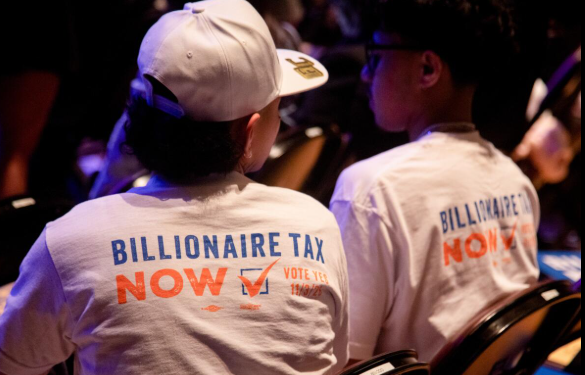
California Democrats have formally endorsed a billionaire tax proposal, setting up a significant political divide with Governor Gavin Newsom and several influential labor organizations that have voiced concerns over potential economic fallout.
According to information confirmed through the X account of Coin Bureau and independently reviewed by Hokanews, California voters will decide the measure's fate during the November election. If approved, it would impose a one-time 5% tax on individuals with billionaire-level wealth. Supporters argue the resulting revenue could expand healthcare access and bolster public services.
The proposal has rapidly emerged as one of California's most closely watched economic debates, underscoring a broader national conversation about wealth inequality, taxation, and the government's role in funding social programs. California is home to more billionaires than any other U.S. state, giving the measure particular fiscal significance.
Backers contend that billionaires have profited enormously from California's economic environment and should contribute more toward addressing challenges such as healthcare affordability, housing costs, and public infrastructure. Opponents warn that targeting ultra-wealthy residents with additional taxes could produce unintended consequences — including incentivizing relocation, reducing investment, and undermining the state's economic competitiveness.
A New Approach to Wealth Taxation
The California Democratic Party's decision to support the billionaire tax marks a notable shift in the state's tax policy debate.
California already maintains one of the highest income tax rates in the United States. However, supporters of the new measure argue that traditional income taxes fail to adequately capture wealth accumulated through assets such as company shares, investments, and private holdings. Unlike income taxes, which apply to annual earnings, the proposed billionaire tax would target the total wealth held by individuals meeting the billionaire threshold.
Wealth taxes of various designs have been implemented in several European countries, including Spain, France, and Norway, while others such as Sweden and the Netherlands have repealed them, citing administrative complexity and concerns about capital flight. No U.S. state currently levies a broad wealth tax, making California's proposal a closely watched policy experiment.
Advocates say the measure is designed to ensure California's wealthiest residents contribute more directly to public programs benefiting millions of people. They argue that billionaires frequently accumulate wealth through appreciating assets rather than traditional income, allowing their financial positions to grow substantially without generating equivalent tax contributions. The proposal's backers believe a one-time tax could generate significant funding without affecting middle-class households.
Healthcare Funding Becomes Central Argument
One of the most compelling arguments from supporters is that revenue from the billionaire tax could help address California's healthcare challenges. The state continues to grapple with concerns over healthcare affordability, access to medical services, and financial pressure on residents.
Supporters argue that additional funding could strengthen healthcare programs, expand coverage options, support medical facilities, and improve access for underserved communities. Advocates note that California's wealthiest individuals have benefited from the state's economic success — particularly through industries such as technology, entertainment, finance, and real estate — and that asking billionaires to make a larger contribution is a reasonable approach to addressing public needs.
Campaign supporters have framed the proposal as part of a broader effort to reduce inequality and ensure economic growth benefits a wider segment of the population.
Source: X post
Governor Gavin Newsom Raises Concerns
Despite the California Democratic Party's support, Governor Gavin Newsom has expressed opposition to the billionaire tax proposal. Newsom has warned that policies targeting wealthy residents could create economic uncertainty and potentially encourage high-net-worth individuals to move their assets or establish residency elsewhere.
California relies heavily on revenue generated by wealthy taxpayers, particularly those in technology, finance, entertainment, and entrepreneurship. Because a relatively small number of high-income residents contribute a significant portion of state tax revenue, policymakers frequently debate how changes affecting wealthy individuals could influence California's budget stability.
Critics argue that increasing taxes on billionaires may incentivize some wealthy residents to leave the state, potentially reducing future tax collections. The governor's concerns reflect a broader policy debate about how to balance revenue generation with maintaining economic competitiveness.
Labor Union Opposition Adds Complexity
The proposal has also drawn opposition from several powerful labor unions in California. Although labor organizations often support policies aimed at increasing funding for public services, some unions have raised concerns about the potential economic impact of a billionaire tax.
Critics argue that if wealthy residents relocate, the consequences could extend well beyond lost tax revenue. They warn that reduced investment from wealthy individuals could affect businesses, job creation, charitable donations, and overall economic growth. Some opponents believe California should focus on broader economic policies rather than targeting a small group of extremely wealthy individuals.
The disagreement highlights a rare political divide, with some progressive groups supporting the tax while others worry about unintended consequences.
Wealth Migration Debate Takes Center Stage
One of the biggest questions surrounding the proposal is whether wealthy residents would leave California if the tax is approved. The issue of wealth migration has become a major topic in states considering higher taxes on the wealthy.
Supporters argue that billionaires are unlikely to abandon one of the world's largest economies over a single tax measure. They point to California's unique advantages, including its technology sector, universities, innovation ecosystem, climate, and cultural influence.
Opponents counter that wealthy individuals have far greater flexibility than average residents and can move their primary residence, investments, or businesses to states with lower tax burdens. They argue that even a small number of departures could carry significant financial consequences, since billionaires represent a large source of tax revenue and investment activity. This debate remains one of the central issues voters will weigh before November.
Potential Economic Impact on California
If approved, the billionaire tax could have wide-ranging economic implications. Supporters believe the measure could provide a new source of government funding without significantly affecting most Californians. They argue that deploying additional revenue toward healthcare and public services could produce broader economic benefits by improving quality of life and reducing financial pressure on residents.
Opponents, however, contend that taxation policies must account for long-term economic effects. They warn that additional costs for wealthy individuals could influence decisions about where entrepreneurs launch companies, where investors allocate capital, and where successful individuals choose to live.
The outcome could shape future discussions about wealth taxation not only in California but across the United States.
National Attention on California's Proposal
The billionaire tax proposal has attracted attention beyond California because it reflects a growing national debate over economic inequality. Across the United States, policymakers have increasingly discussed whether wealthy individuals should contribute more through new forms of taxation. Members of Congress have also floated federal wealth tax proposals in recent years, though none have advanced into law.
Supporters argue that wealth concentration has increased significantly and that governments need additional resources to address social challenges. Opponents counter that higher taxes on wealthy individuals may discourage entrepreneurship, investment, and economic growth.
California's vote could serve as a significant case study for other states considering similar proposals. If approved, it could catalyze additional wealth tax discussions nationwide. If rejected, critics may cite the result as evidence that voters remain concerned about potential economic consequences.
Billionaire Tax Faces Election Battle Ahead
As November approaches, both supporters and opponents are expected to launch campaigns aimed at shaping public opinion. Supporters will likely emphasize healthcare funding, economic fairness, and the responsibility of wealthy individuals to contribute to society. Opponents are expected to focus on concerns related to investment, economic competitiveness, and the possibility of wealthy residents leaving the state.
The debate is poised to become one of the most closely followed ballot issues in California's election cycle. Voters will ultimately decide whether the potential benefits of the billionaire tax outweigh concerns about economic risk.
Looking Ahead
California's billionaire tax proposal represents a major test of public opinion regarding wealth, taxation, and government spending. The measure highlights the ongoing challenge facing policymakers: finding ways to fund essential services while maintaining an environment that encourages investment and economic growth.
Supporters believe the proposal could generate critical resources for healthcare and public programs, while critics warn the policy could produce consequences beyond its intended goals. As California prepares for the November vote, the debate over billionaire taxation is expected to continue shaping discussions about economic policy both within the state and across the country.
Regardless of the outcome, the proposal reflects a broader shift in political conversations surrounding wealth inequality and the future of taxation in an increasingly unequal economic landscape.

