S&P 500 Falls as Brent Oil Tops $100 and Megacap Tech Sells Off
Key Takeaways
- •Brent crude settled near $100.69 per barrel, marking a roughly 7% one-day increase driven by renewed tanker attacks in the Red Sea shipping corridor.
- •The S&P 500 closed down 1.21% at approximately 7,408.30, while the Nasdaq Composite fell about 2.15%, with megacap technology stocks bearing the heaviest losses.
- •Tesla declined roughly 14% to 15% and Alphabet dropped approximately 7% after their respective earnings updates and guidance reignited concerns about AI capital expenditure and growth timing.
- •Energy producers and select defensive sectors attracted relative support, reflecting a familiar rotation pattern on days when oil prices spike sharply.
- •Higher oil prices threaten to lift headline inflation expectations and pressure corporate margins, potentially complicating the Federal Reserve's interest rate path and tightening financial conditions.
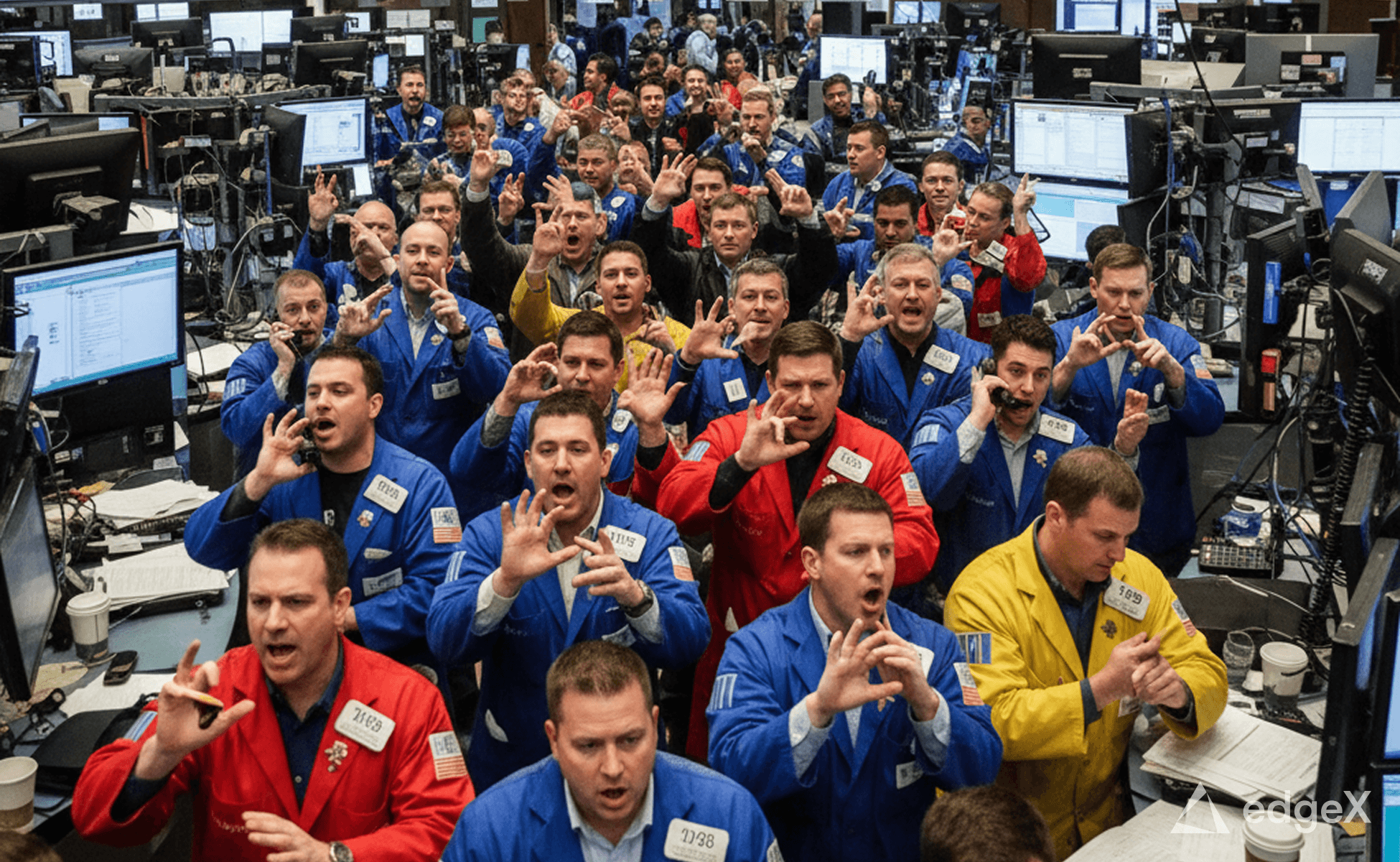
Brent crude returned to triple digits, and U.S. equities quickly shifted into risk-off trading. Brent settled above $100 per barrel after renewed tanker attacks in the Red Sea, a critical shipping corridor linking the Suez Canal to the Indian Ocean via the Bab el-Mandeb Strait. The attacks added fresh supply and shipping concerns to a market already focused on inflation, interest rates, and corporate earnings.
By the close, the S&P 500 had lost ground, with megacap technology stocks bearing the steepest selling pressure. Because a handful of megacap technology companies account for a disproportionate share of the S&P 500's market capitalization, concentrated selling in those names can amplify index-level declines regardless of conditions in other sectors. Traders attributed the decline to a combination of higher input-cost concerns, renewed inflation risks, and earnings updates that revived questions about the scale and timing of artificial intelligence-related spending.
Brent settled near $100.69 after tanker attacks in the Red Sea, a roughly 7% one-day jump, according to AP News. The S&P 500 closed around 7,408.30, down 1.21%, with broad weakness led by megacap technology shares, according to the Los Angeles Times. The Nasdaq Composite fell about 2.15% as investors weighed the intensity of AI capital expenditure while oil prices rose, Reuters reported. Tesla dropped roughly 14% to 15%, while Alphabet slid about 7% after earnings updates and guidance, according to Reuters.
Energy shares and some defensive sectors attracted relative support, while long-duration growth stocks lagged. The broader macro read-through was straightforward: higher oil prices can lift headline inflation expectations and add uncertainty to the path for interest rates.
Why the $100 oil move mattered
Energy shocks are not new, but this move stood out because of its speed and the market backdrop. Brent's settlement near $100.69 was not a slow advance; it was a roughly 7% gain in one session tied to tanker attacks in the Red Sea. That revived concerns about supply disruption and shipping risk, according to AP News. Shipping disruptions in the Red Sea corridor have periodically affected global freight routes, and each renewed incident raises the question of whether costs from rerouted vessels and higher insurance premiums will feed into goods prices more broadly.
There are several channels through which oil prices can affect equities.
First, higher crude prices can push up headline inflation expectations. That can influence yields and tighten financial conditions before new inflation data are even released.
Second, higher energy costs can pressure corporate margins. Transportation, logistics, manufacturing, and other energy-intensive businesses face faster increases in input costs. Some companies can pass those costs on to customers, while others may not be able to do so immediately.
Third, geopolitical headlines can increase risk premia. When investors demand more compensation for uncertainty, equities with high valuations and high expectations are often among the first to feel pressure. The Cboe Volatility Index (VIX), a widely followed gauge of equity-market risk pricing, typically rises in such sessions as options markets reprice the cost of downside protection.
Those dynamics landed in a market that has been heavily focused on AI growth narratives. The result was not simply a day of oil strength and technology weakness. It was a session in which oil rose, inflation risk increased, duration-sensitive assets came under pressure, and stocks with the richest expectations faced additional selling.
Why technology stocks were hit hardest
Technology shares entered the session with investors already debating how quickly AI revenue can offset the rising cost of building AI infrastructure. Earnings arrived against that backdrop, and the oil spike added to the pressure. The Nasdaq Composite fell about 2.15% as concerns about AI spending collided with the higher-rate narrative, Reuters reported.
Growth stocks are often treated as long-duration assets because a large share of their expected value depends on cash flows projected far into the future. When rates rise or inflation fears increase, those future cash flows are discounted more heavily. The earnings outlook may not change immediately, but the present value investors assign to those earnings can fall.
AI spending added another layer. Building AI infrastructure requires substantial capital, including data centers, chips, and power. If management teams indicate higher capital expenditures or longer payback periods, investors may adjust valuations. That was one reason megacaps led the decline. Tesla fell roughly 14% to 15%, and Alphabet dropped around 7% after their updates and guidance raised concerns about spending and growth timing, according to Reuters.
For investors tracking earnings, guidance language around capital expenditures and operating expenses for AI has become central to assessing near-term margins. In that context, headline earnings-per-share results may be less important than the timing and scale of spending commitments.
Rotation inside the S&P 500
The S&P 500 closed near 7,408.30, down about 1.21%, with the sharpest losses concentrated in growth-heavy areas, according to the Los Angeles Times. Energy stocks and selected defensive groups held up better, following a familiar pattern on days when oil rises sharply.
The relative leaders included energy producers, integrated oil companies, some refiners, and parts of the utilities sector. Laggards included high-multiple software names, AI platform companies linked to large capital-spending programs, electric-vehicle stocks exposed to consumer demand sensitivity, and advertising-driven platforms affected by broader macro concerns.
Industrials and materials were more mixed, depending on fuel intensity and pricing power. Financial stocks remained tied to the shape of the yield curve and the broader credit backdrop.
If oil remains elevated, potential headwinds may include airlines, package delivery companies, rideshare platforms, energy-intensive manufacturers, and long-duration growth companies with rich valuations. Potential areas of support may include energy producers, oilfield services, pipelines, selected utilities, commodity-linked miners, value-oriented cyclicals with pricing power, and defensive consumer staples.
Market breadth will be important. If oil prices cool but technology stocks still struggle to attract buyers, that would suggest investors are focused more on earnings quality and AI payback timing than on crude oil alone.
Data and signals to watch
Energy data and supply routes will remain central. Weekly petroleum status reports from the U.S. Energy Information Administration, along with inventory trends, can show whether supply tightness is broadening. Large draws and tight refined-product stocks could keep gasoline prices elevated. Shipping lanes will also matter, because continued Red Sea disruptions can raise freight costs and complicate supply chains.
Inflation data and rate expectations are another focus. Upcoming CPI and PCE reports could show whether higher pump prices are feeding into headline inflation. Core inflation remains central for Federal Reserve policy, but headline inflation can shape market sentiment. Fed communications will also be watched, because even unchanged policy can feel tighter if real rates move higher because of the growth and inflation mix.
Earnings calls may provide additional clarity. Investors are watching the cadence of AI capital expenditure, including whether spending is front-loaded or spread over several years. They are also assessing which companies can pass along higher fuel and freight costs without losing sales volume. Demand elasticity is especially relevant for electric vehicles and discretionary technology products, which can react quickly when macro conditions become more volatile.
Positioning and liquidity may amplify moves. Dealer gamma, options expirations, and lower-liquidity periods can increase market swings. Technical trend signals, including breaks in 20-day and 50-day moving averages across megacap stocks, may also affect flows.
Portfolio and risk considerations
The combination of an oil shock, earnings uncertainty, and pressure on growth stocks creates a more volatile trading environment. Different investors will respond differently, but several risk-management principles are broadly relevant.
Concentration risk is a key issue. If a small group of megacap stocks drives a large share of portfolio risk, position sizing and risk limits become more important during headline-driven sessions.
Margin sensitivity also matters. Investors may assess how a 5% to 10% increase in energy and freight costs could affect gross margins and unit economics for companies they hold.
Hedging can be selective. Index puts or collars around major catalysts may be alternatives to forced selling, but cost, timing, and exit rules matter.
Chasing sharp energy moves can also carry risk. Energy stocks can benefit from higher oil prices, but entries after large one-day moves can create unfavorable risk-reward setups.
Cash buffers can be useful during volatility clusters. Wider spreads and broad selloffs can affect stronger and weaker companies alike, creating a need for clear criteria rather than reactive trading.
Time horizon is also important. Tactical decisions over the next two weeks should not automatically rewrite longer-term plans. Investors may benefit from using separate checklists for short-term risk management and long-term allocation decisions.
Crypto market implications
Although the session was centered on equities and oil, crypto markets can be affected by the same macro forces. When yields rise and growth stocks are hit, Bitcoin and Ethereum can experience sympathy moves. This does not happen every time or with the same magnitude, but it is relevant for risk management.
In risk-off sessions marked by higher yields, correlations across risk assets can compress. That can reduce the short-term diversification benefits of crypto. Crypto miners are also exposed to energy-cost dynamics; higher power costs can affect profitability and, at the margin, supply behavior.
Stablecoin liquidity and on-chain volumes may also be useful indicators. If equities wobble around quarter-end or major catalysts, stablecoin supply and transaction activity can offer a view into digital-asset risk appetite.
For multi-asset traders, the key point is that a single macro shock can move through several markets at once. Oil, yields, equities, credit, and crypto may all reflect the same underlying stress, even if the transmission mechanisms differ.
Daily S&P 500 closing levels from June 24 to July 24, 2026, highlighted the July 23 decline that coincided with Brent crude topping $100, according to the Federal Reserve Bank of St. Louis (FRED).
Common mistakes on a $100 oil day
One common mistake is treating a one-day move as destiny. Oil can retrace, earnings narratives can change, and positioning can reverse quickly.
Another is ignoring context. Technology drawdowns during earnings season are common, and the size of a single session's candle is less meaningful without considering valuation, positioning, and guidance.
Leverage can intensify losses when volatility rises. Gap moves and sudden spread widening can damage tight stops and thin margins, making risk management more important than directional conviction.
Investors may also miss important details if they rely only on presentation decks. Earnings calls can reveal how management teams frame capital expenditure, expected returns, and timing.
Tax considerations and time horizons should not be overlooked. Short-term trades carry costs, and an investment account should not be turned into a day-trading account solely because of a volatile session.
Possible near-term paths
One possible path is that oil remains above $100 while technology stocks stabilize. If crude holds near triple digits but supply fears ease, markets could settle into a new range. Technology shares could find support if earnings commentary becomes clearer on AI payback periods and capital-spending schedules.
A second path is that oil retraces and risk assets recover. Calmer headlines, normalized shipping routes, and rebuilding inventories could reduce inflation concerns and ease pressure on duration-sensitive assets. Large technology companies with strong balance sheets could be among the first to attract renewed interest.
A third path is escalation and tighter financial conditions. Further disruption could push oil higher and widen risk premia. In that scenario, energy and defensive sectors would likely remain relatively supported, while valuation multiples elsewhere could come under pressure. Credit spreads would be an important signal to monitor.
The front end of the yield curve may provide additional clues. If 2-year yields rise alongside oil while growth stocks weaken, the market may be pricing tighter policy risk. If 2-year yields do not respond strongly to oil, investors may be treating the spike as temporary.
Frequently asked questions
Why can $100 oil pressure technology stocks?
Higher oil can lift headline inflation expectations, which may push yields higher and pressure long-duration assets such as growth stocks. It can also arrive at the same time companies are committing large sums to AI infrastructure, causing investors to reassess margins and valuation multiples.
Is one session enough to confirm a longer technology downturn?
No. A single day does not establish a trend. The key issue is whether earnings calls ease concerns about AI spending, margins, and payback periods. If guidance becomes clearer and oil prices cool, technology shares could stabilize. If heavy capital expenditure and slower payback concerns persist while oil stays elevated, pressure could continue.
Which sectors may benefit if oil stays above $100?
Energy producers, oilfield services companies, and pipelines often receive support when oil prices rise. Some defensive sectors, including regulated utilities and consumer staples, can outperform on a relative basis when risk premia increase. Outcomes vary by company, and balance sheet quality and pricing power remain important.
How did the broader market close?
The S&P 500 ended around 7,408.30, down roughly 1.21%. The Nasdaq Composite fell about 2.15%. Megacap stocks including Tesla and Alphabet led declines after earnings and guidance raised concerns about spending.
Does oil above $100 immediately mean inflation will jump?
Not immediately. The effect depends on how long oil prices stay elevated and how quickly higher fuel and freight costs move through goods and services. Headline inflation expectations can shift quickly, while pass-through to core inflation measures usually takes more time and varies by sector.
Disclaimer: This article is provided for informational purposes only. It is not offered or intended to be used as legal, tax, investment, financial, or other advice.

