Avalon Advanced Materials Reports 42% Increase in Contained Rare Earth Resource at Nechalacho Project
Key Takeaways
- •Avalon's updated resource estimate for the Nechalacho Basal zone reports a 42% increase in total contained rare earth oxides, with inferred resources more than doubling to 1.7 million tonnes.
- •Measured and indicated resources declined 14% from 2013 levels to 875,000 contained tonnes at 1.49% TREO, while a higher cut-off grade was applied to exclude lower-value material.
- •Avalon intends to publish a new preliminary economic assessment for Nechalacho in the fourth quarter, marking the first economic evaluation of the deposit since 2013.
- •The Basal zone ranks among the largest rare earths deposits in North America and within Canada's top four, supported by approximately 120,000 metres of drilling across 582 holes.
- •Avalon shares fell 2% to $4.89 in Toronto trading following the announcement, valuing the company at approximately $22.8 million.
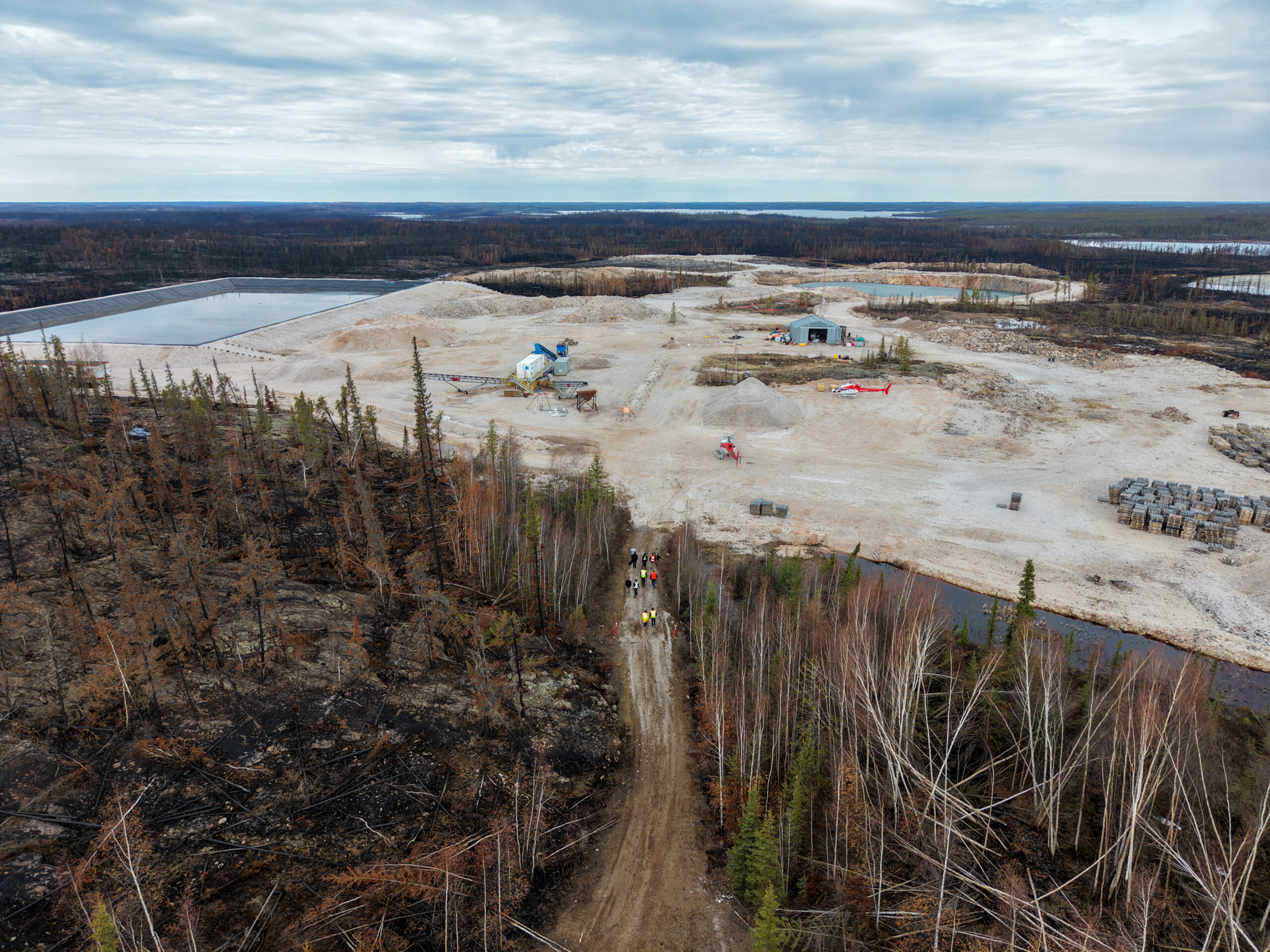
Avalon Advanced Materials (TSX: AVL; US-OTC: AVLNF) has released an updated resource estimate for the Basal zone at its Nechalacho rare earths project in the Northwest Territories, reporting a 42% increase in the global contained resource as the company prepares a new economic study for later this year.
The updated estimate outlines 58.6 million measured and indicated tonnes grading 1.49% total rare earth oxides (TREO), yielding 875,000 tonnes of contained TREO — a 14% decrease compared to the same categories in the 2013 feasibility study. However, inferred resources more than doubled, reaching 130.6 million tonnes at 1.31% TREO for 1.7 million contained tonnes. Inferred resources carry the lowest geological confidence under Canadian reporting standards and would require additional drilling to upgrade to higher-confidence categories. The Nechalacho project is located approximately 100 km southeast of Yellowknife.
Revised Economic Threshold
The latest estimate applies a net metal return cut-off of US$366.40 per tonne, which is 14% higher than the cut-off used in the 2013 report. This elevated threshold effectively excludes lower-value material from the resource calculation.
Avalon CEO Scott Monteith emphasized the deposit's breadth in a release: "Nechalacho offers exposure not only to the four principal magnet rare earths—neodymium, praseodymium, dysprosium and terbium—but also to an exceptionally broad suite of other light and heavy rare earth elements together with zirconium, niobium and tantalum."
Magnet rare earths are essential inputs in high-performance permanent magnets used in electric vehicle motors, wind turbines, and defense applications. China currently dominates global rare earth mining and processing supply chains, a concentration that has prompted Western governments — including Canada through its Critical Minerals Strategy and the United States through Defense Production Act funding — to prioritize developing alternative, allied sources of supply.
"At a time when governments and industry are increasingly focused on establishing secure Western supply chains for critical minerals, Nechalacho represents a unique opportunity: a large, extensively studied Canadian resource containing meaningful concentrations across a broad range of commercially important rare earth elements," Monteith added.
One of North America's Largest Rare Earths Deposits
The Basal zone remains among the largest rare earths deposits in North America by contained tonnes and ranks within Canada's top four rare earths resources. The resource update is based on approximately 120,000 metres of drilling across 582 holes.
The announcement comes as Avalon prepares to release a new preliminary economic assessment for Nechalacho in the fourth quarter. That study will be the first economic evaluation of the deposit since 2013, incorporating updated cost assumptions, current rare earth pricing, and the revised resource model, providing a fresh benchmark against the decade-old feasibility figures. The update also arrives as the Northwest Territories government seeks new mining projects to offset the economic impact of shuttered diamond mines.
According to the 2013 feasibility study, the Basal zone could produce 9,300 tonnes of TREO annually over a 20-year mine life, with a post-tax net present value of $1.3 billion at an 8% discount rate. The project has an after-tax internal rate of return of 20% and capital costs of $1.6 billion, figures the company has acknowledged could increase due to inflation. While the 2013 feasibility study outlined proven and probable reserves for Basal, those reserve estimates were not carried forward into the current update.
Shared Site with Vital Metals
Vital Metals (ASX: VML; US-OTC: VTMXF) owns the Tardiff portion of the Nechalacho deposit, with rights extending from surface to approximately 150 metres depth. Avalon's rights begin at 150 metres and extend deeper.
Tardiff, estimated to be a smaller operation than Basal, was briefly Canada's first-ever producing rare earths mine on a demonstration-scale basis during 2021–2023. Mining operations ceased due to cost overruns, market difficulties, and the bankruptcy of Vital's processing subsidiary in Saskatoon, Saskatchewan. The closure underscored the challenges of establishing integrated rare earth mining and processing infrastructure in North America, where downstream refining capacity remains limited compared to established operations in China.
Avalon shares declined 2% to $4.89 in Thursday morning trading in Toronto, valuing the company at approximately $22.8 million. The stock has traded in a 12-month range of $4.52 to $27.
