US Deploys B-1 Bomber as Conflict with Iran Escalates
Key Takeaways
- •The United States has deployed a B-1 Lancer supersonic heavy bomber to the current conflict theater, reflecting a transition toward a higher-intensity strike posture.
- •The Strait of Hormuz, through which approximately one-fifth of global daily oil supply transits, remains the central flashpoint of the U.S.–Iran confrontation with no discernible signs of de-escalation.
- •Prediction-market pricing reflects a heightened likelihood of Iranian military action against Gulf states, indicating increased regional tensions.
- •Supreme Leader Ali Khamenei holds final authority over Iran's military decisions, while IRGC Commander Hossein Salami oversees a powerful military branch that controls much of the country's missile and asymmetric warfare capabilities.
- •July 24th and July 26th have been cited as dates when the likelihood of Iranian actions against Gulf states is considered notably high.
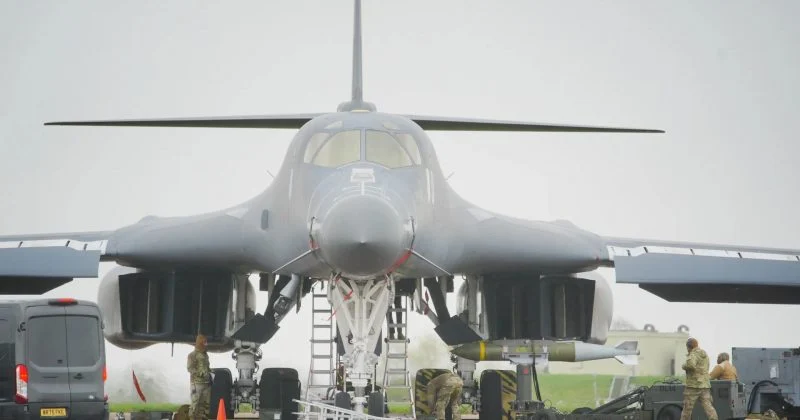
The United States has deployed a B-1 bomber amid escalating attacks on Iran, according to a report by Axios. The deployment marks a significant development in the ongoing U.S.–Iran conflict, which has been characterized by repeated airstrikes and retaliatory actions on both sides.
The B-1 Lancer is a supersonic heavy bomber operated by the U.S. Air Force, designed for high-speed, low-altitude penetration and capable of delivering precision-guided munitions over long distances. The aircraft has previously been used in U.S. operations across the Middle East, including strikes against ISIS targets in Syria and Iraq. Its introduction into the current theater suggests a shift toward a higher-intensity strike posture, potentially targeting Iran's strategic military capabilities. The move reflects a transition from limited retaliatory operations to more sustained strategic actions.
The conflict remains centered on the Strait of Hormuz, a narrow waterway between Iran and Oman through which approximately one-fifth of the world's daily oil supply transits. Disruptions to shipping through the strait have historically triggered sharp reactions in global energy markets, given the volume of crude oil and liquefied natural gas moving through the corridor. The strait has long been a flashpoint in U.S.–Iran relations, and the current confrontation shows no discernible signs of de-escalation.
Prediction-market activity has reflected a heightened likelihood of Iranian military action against Gulf states, with pricing indicating increased regional tensions. The intensified U.S. military posture appears consistent with scenarios in which Iran may expand its military responses.
The situation remains volatile. Supreme Leader Ali Khamenei holds final authority over Iran's national security and military decisions, while IRGC Commander Hossein Salami oversees the Islamic Revolutionary Guard Corps, a powerful military branch established after the 1979 revolution that operates independently of Iran's conventional armed forces and controls much of the country's missile and asymmetric warfare capabilities. Monitoring statements from Iran's leadership could signal potential shifts in military strategy.
Diplomatic efforts led by regional actors such as Qatar and Oman may also affect the trajectory of the conflict. Both countries have previously served as intermediaries in U.S.–Iran discussions, including during negotiations that led to the 2015 nuclear agreement and subsequent prisoner exchange deals.
Developments over the coming days are considered particularly significant, with attention focused on July 24th and July 26th, dates cited as periods when the likelihood of Iranian actions against Gulf states is notably high.
