SpaceX Stock and Bonds Plunge: Peter Schiff Warns of Broader Market Reckoning
Key Takeaways
- •SpaceX stock closed just above $115, approximately 20% below its June IPO price and 48% below its peak of $225.64.
- •The company's 2056 maturity bonds fell below 89 for the first time, sending the yield to worst to 7.6% as credit spreads widened from roughly 175 to over 230 basis points since issuance.
- •SpaceX reported a first-quarter net loss of $4.28 billion against $4.69 billion in revenue, meaning quarterly losses consumed approximately 91 cents of every dollar earned.
- •Approximately 911.5 million shares valued at around $123 billion will become eligible for sale when the post-IPO lockup period expires in early August, two days after the company's second-quarter earnings report.
- •Economist Peter Schiff characterized the SpaceX selloff as a potential harbinger of broader corrections in overvalued stocks and cryptocurrencies.
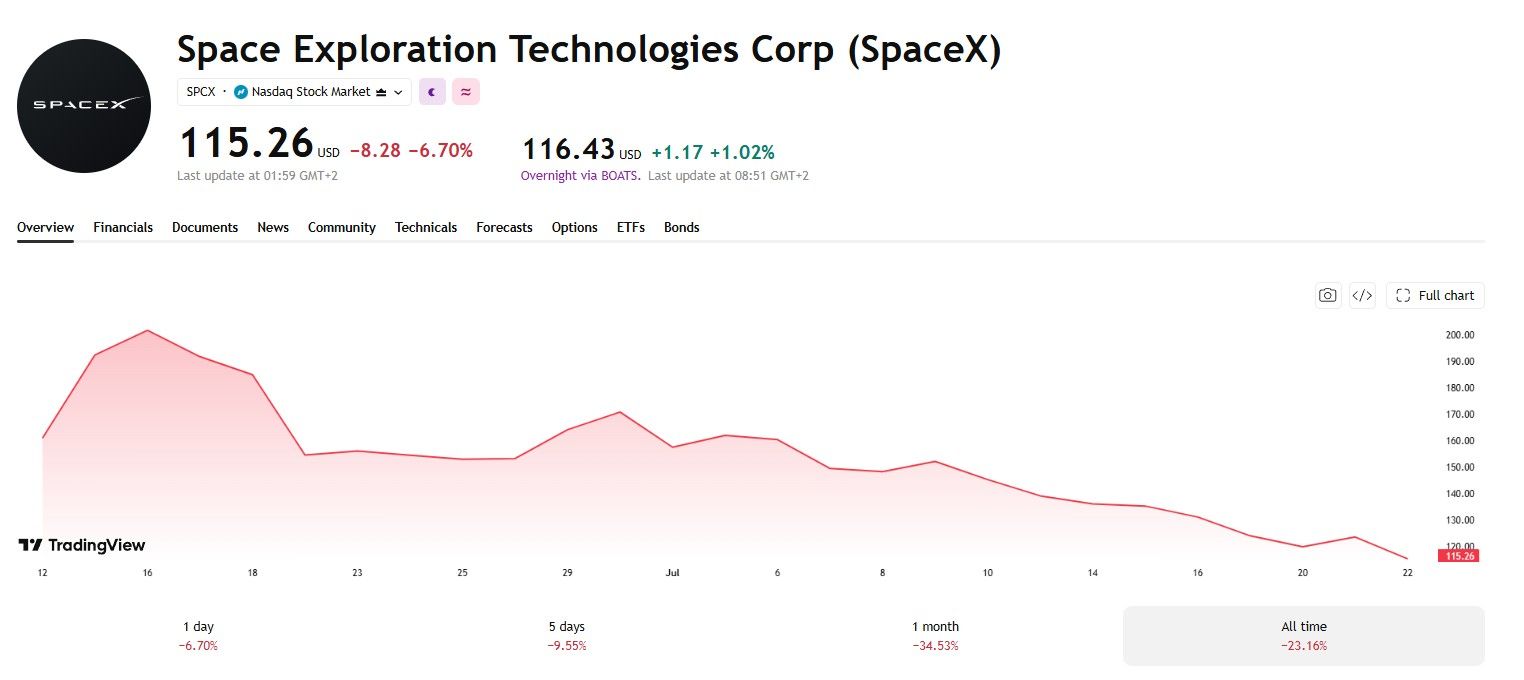
SpaceX stock (SPCX) closed just above $115 on Wednesday, nearly 20% below its June IPO price, while its 2056 bonds sank to a record low below 89. The simultaneous slide in both equities and debt pushed the bonds' yield to worst to 7.6% and reignited debate over whether AI-driven valuations across stocks and cryptocurrencies are due for a correction. SPCX now trades approximately 48% below its June peak of $225.64. When a company's bonds and stock fall in tandem, it typically signals that investors are reassessing fundamental creditworthiness rather than reacting to equity-specific sentiment alone.
Bond Market Flashes a Warning Signal
In June, SpaceX priced $25 billion in bonds across five tranches, offering coupons ranging from 5.35% to 6.65%. The longest maturity, due in 2056, has experienced the steepest decline and now trades at levels typically associated with junk-rated debt, meaning investors are demanding yields more commonly required for below-investment-grade issuers despite SpaceX's original pricing at issuance.
Zerohedge reported the bonds dipping below 89 this week, coinciding with a broader selloff in hyperscaler debt, the bonds of large cloud and AI infrastructure companies such as Microsoft, Amazon, and Alphabet. The move echoes a market top signal that analysts flagged shortly after the IPO priced. Credit spreads on the 2056 notes have widened from approximately 175 basis points at issuance to more than 230 basis points currently, reflecting bondholders' demands for greater compensation to hold the debt.
Another record low: SPCX bonds dip below 89; YTW climbs to 7.6% pic.twitter.com/LddxR2cvHL — zerohedge (@zerohedge) July 22, 2026
The company also reported a first-quarter net loss of $4.28 billion on $4.69 billion in revenue, meaning quarterly losses consumed roughly 91 cents of every dollar earned. This burn rate intensifies scrutiny of the company's path to profitability and its bond fundamentals. Analysts argue that this widening gap between losses and revenue explains why bondholders, unlike equity investors, are pricing in substantially more risk.
Schiff Frames SpaceX Selloff as a Broader Signal
Economist Peter Schiff reposted the bond data and separately highlighted that SPCX had closed nearly 50% below its high. He characterized the decline as a potential harbinger for other overvalued stocks and cryptocurrencies.
$SPCX closed just above $115, nearly 20% below its IPO price and almost 50% below its high. This could be a harbinger of things to come for other overhyped stocks and cryptos. Look out below! — Peter Schiff (@PeterSchiff) July 22, 2026
Schiff has previously warned about the bond market, arguing that credit stress rather than Bitcoin would trigger the next major financial crash. Schiff, a well-known gold advocate and longtime bearish macro commentator, has built his public profile on calls for dollar weakness and equity market declines. His critics point to a long track record of predictions that have not always materialized on the timelines he suggested.
The timing of the SpaceX selloff aligns with broader concerns about AI-linked valuations across markets. SpaceX joined the Nasdaq 100 shortly after its public debut, a milestone that typically triggers passive index-fund buying but can also amplify volatility when sentiment turns. The stock has since fallen approximately 29% from that milestone. A delayed Starship test flight further dampened investor sentiment this month, adding execution risk to the list of concerns weighing on the shares.
Lockup Expiry Adds to Selling Pressure
SpaceX's first major share unlock is scheduled for early August, arriving just two days after the company's second-quarter earnings report. Approximately 911.5 million shares, valued at roughly $123 billion based on recent prices, will become eligible for sale. Lockup expiries are contractual restrictions that prevent insiders and early investors from selling shares immediately after an IPO; their expiration historically introduces significant selling pressure, as pre-IPO holders gain their first opportunity to liquidate positions.
Investors are closely monitoring the lockup expiry schedule alongside dilution concerns stemming from SpaceX's reported Cursor AI acquisition. Some traders, however, have identified a falling wedge technical pattern that could potentially support a rebound near current price levels.
Whether the weakness in SpaceX's stock and bonds spills over into cryptocurrency markets may become clearer once the lockup period and earnings results pass in August. Market participants are likely to watch SPCX bond yields as an early indicator before any broader repricing reaches digital assets.
