Scaramucci: Trump's Canada Tariffs Are a Distraction From 'Ever-Spiraling Failures'
Key Takeaways
- •Scaramucci said Trump’s latest tariffs on Canada add distractions amid what he described as the president’s ongoing failures.
- •Fortune writers Jeffrey Sonnenfeld and Steven Tian characterized the Canada tariffs as part of a broader distraction strategy.
- •The article cited Trump’s 37 percent approval rating, persistent high prices and an unpopular Middle Eastern war as political pressures facing him.
- •Sonnenfeld and Tian argued that tariffs are typically paid by importing businesses and consumers rather than foreign exporters.
- •A Yale CEO Caucus survey cited in the article found that more than two-thirds of CEOs said Trump’s tariffs had harmed their businesses.
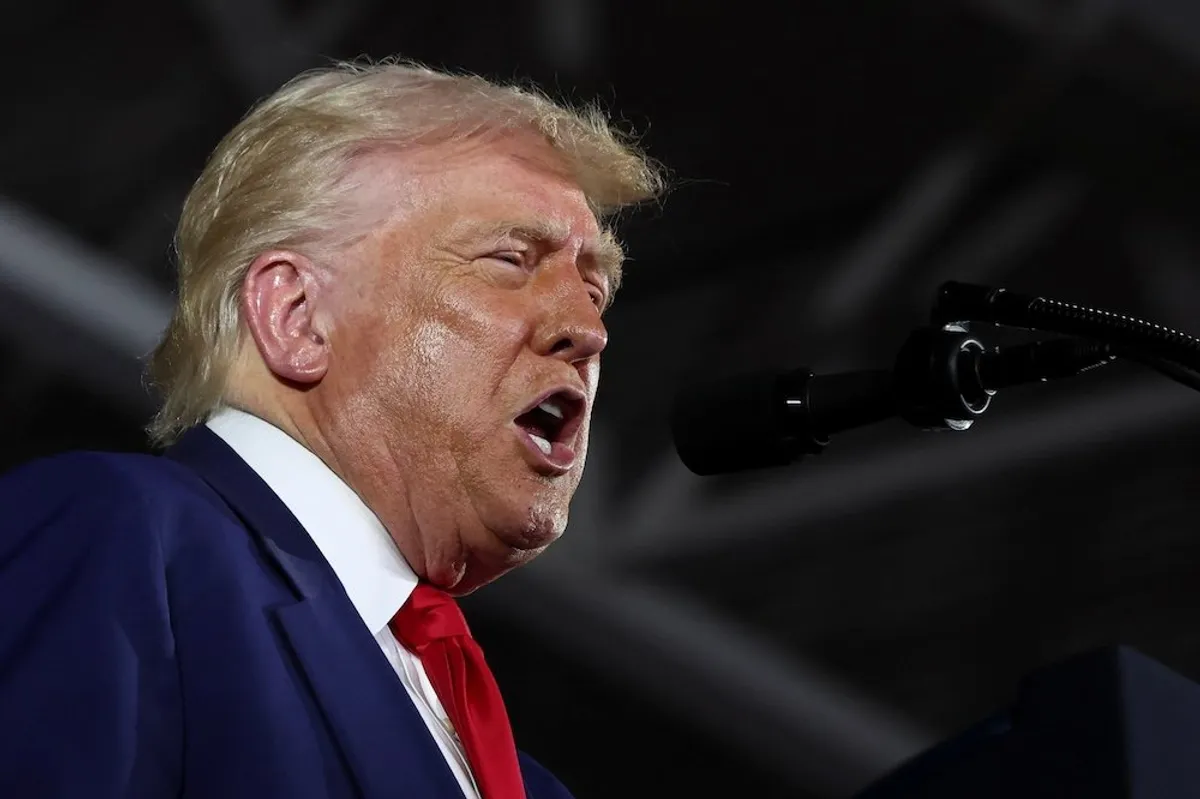
President Donald Trump's former communications director, Anthony Scaramucci, says the Republican leader's latest policy move — raising tariffs on Canada, one of America's largest trading partners under the U.S.-Mexico-Canada Agreement that Trump himself renegotiated during his first term — is a direct response to what he described as Trump's "ever-spiraling failures." The Wall Street Journal recently called the tariff policy "madness."
"Trump's third tariff tantrum piles more dizzying distractions on top of ever-spiraling failures," Scaramucci, who served in the Trump administration during its first term, posted on X on Wednesday.
The Wall Street financier referenced a recent Fortune Magazine article by Jeffrey Sonnenfeld and Steven Tian, co-authors of "Trump's Ten Commandments," in which they characterized the anti-Canada tariffs as part of a broader "Wall of Sound" strategy — what they described as "his perpetual noise machine of constant, overwhelming distractions to divert attention away from bad news."
Sonnenfeld and Tian offered several reasons why Trump would seek distractions at this moment.
"Trump was humiliated by raucous boos showering down upon him at the World Cup as he was pushed off stage while jockeying for a central photo position with the Spanish team he publicly disparaged while cheering for their rival Argentina," they wrote. They also noted that earlier in July, Trump was overshadowed over Independence Day weekend by Taylor Swift's wedding celebration, which they described as "glamorous, mellifluous, joyous, unifying," contrasting it with what they called "his angry divisive ego-maniacal bellicose growls as he tried to co-opt the 250th celebration by rebranding it around himself."
They further wrote: "Since last November, he has implausibly claimed that affordability is a hoax amidst persistently high prices, even as 3 million files are still unreleased related to convicted [sex-trafficker] Jeffrey Epstein." They also pointed to Trump's approval rating, which sits at 37 percent, while he remains engaged in an unpopular Middle Eastern war and has been unable to improve Americans' economic conditions.
"As a result, Trump has retreated to a collection of what he sees as his greatest hits, old chestnuts such as attacks on law firms and universities, but especially a combative swagger, swinging the distracting cudgel of tariffs," the authors observed.
The tariff strategy carries tangible economic consequences, they argued. Tariffs function as a tax on imported goods, and the burden is typically borne by importing businesses and consumers rather than foreign exporters. "Trump might love all tariffs all the time, but CEOs distinctly do not," they wrote. "At our previous Yale CEO Caucus, over two-thirds of CEOs surveyed told us that Trump's tariffs had been harmful to their own businesses, and 80 [percent] said that tariff costs had been passed on in part to consumers. 62 [percent] told us that they were not planning to invest more in manufacturing despite Trump's tariffs."
Scaramucci, for his part, has long maintained that Trump's greatest political asset was his ability to address voters' genuine economic concerns. In a 2018 interview with Salon, Scaramucci argued that Trump won over swing voters by speaking directly to their economic anxieties.
"What I saw was in a generation we went from aspirational working class families, like the one I grew up in, to [desperate] working class families," Scaramucci said at the time. "What I saw is a decline in wages causing some level of economic asphyxiation for a very large group of people. And so Trump being out there, going into those areas, explaining the policies that he's going to put in place, and then executing on some of those policies. I mean it's not me saying, it's just go look at 'The Wall Street Journal.'"

