CBN Governor Cardoso Explains How Fintech Adoption and Inflation Are Reducing Circulation of ₦100 and ₦200 Notes
Key Takeaways
- •CBN Governor Olayemi Cardoso confirmed that ₦100 and ₦200 notes remain legal tender and have not been withdrawn from circulation.
- •The scarcity of lower-denomination notes is primarily driven by increasing adoption of digital payment platforms such as OPay, Moniepoint, and PalmPay for everyday transactions.
- •Persistent double-digit inflation has eroded the purchasing power of the ₦100 note, reducing its practical usefulness and public demand for holding it.
- •The Monetary Policy Committee held Nigeria's benchmark interest rate at 26.5% during the same meeting where Cardoso addressed the note scarcity.
- •The transition to digital payments is uneven across Nigeria, with urban centres adapting readily while rural communities with unreliable connectivity still depend heavily on physical cash.
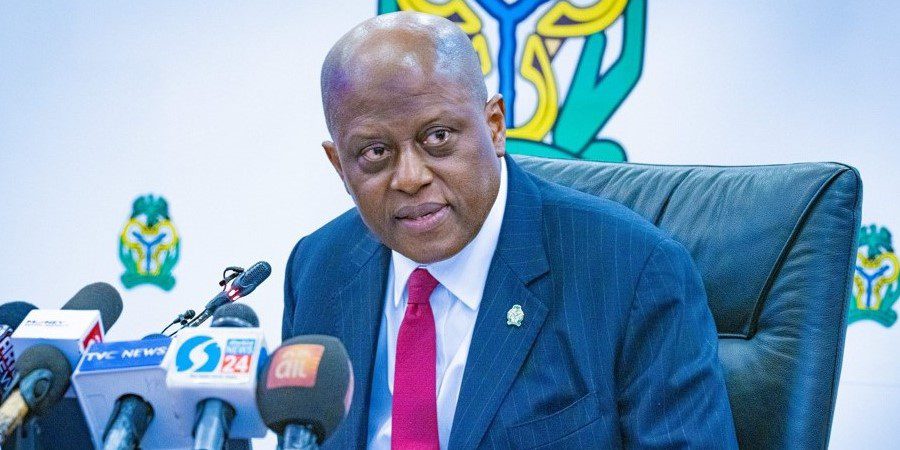
The growing scarcity of ₦100 and ₦200 notes in Nigeria is being driven by rising adoption of digital payment channels and the erosion of purchasing power by inflation, according to Central Bank of Nigeria (CBN) Governor Olayemi Cardoso.
Speaking on Tuesday after the 306th Monetary Policy Committee (MPC) meeting in Abuja, Cardoso clarified that the central bank has not withdrawn the lower-denomination notes from circulation. They remain legal tender. However, he explained that as more Nigerians turn to digital payments, demand for smaller notes naturally falls, reducing the need for the CBN to print and circulate them in large quantities.
"As more people adopt digital payment channels, the demand for coins and lower-denominated notes naturally declines," Cardoso said. "If there is less demand for them, there is less need to print and circulate them in large quantities."
TheCable reported on Cardoso's remarks linking the scarcity to both declining purchasing power and digital payment adoption.
Inflation's role in shrinking note utility
Cardoso also acknowledged a second factor: inflation has steadily eroded what the ₦100 note can buy. Nigeria's inflation rate has remained in double digits for several years, with the MPC holding the benchmark interest rate at 26.5% at this same meeting. What ₦100 could purchase five years ago is substantially more than what it covers today. When a note can no longer buy anything meaningful on its own, consumers stop holding it, stop requesting it as change, and eventually stop noticing when it becomes scarce.
These two forces — digital payment adoption and declining purchasing power — are reshaping how physical money moves through Nigeria's economy. The CBN has pursued some form of cashless policy since 2012, when it first introduced cash-handling charges in Lagos before expanding nationally, meaning the shift Cardoso describes builds on more than a decade of deliberate policy direction. Fintech companies have accelerated that shift, but inflation, cash distribution logistics, and changing consumer behaviour also contribute to how lower-denomination notes circulate.
How fintech platforms changed everyday transactions
The transformation is visible in everyday commerce. Five years ago, purchasing suya from a roadside vendor, paying for a motorcycle ride, or splitting grocery costs at a local market all required physical cash. The ₦100 note was essential for these daily transactions.
Today, much of that commerce happens through digital channels. Platforms such as OPay, Moniepoint, and PalmPay have aggressively expanded digital payment infrastructure into segments of the economy once dominated entirely by cash. Roadside vendors now display POS terminals or QR codes. Motorcycle riders accept bank transfers. Market traders share their account details before customers reach for their wallets.
Related: CBN holds interest rate at 26.5% as inflation eases
This shift did not occur by accident. Companies including OPay, Moniepoint, and PalmPay invested years of effort and significant capital into customer acquisition, agent training, and infrastructure development to make digital payments as seamless as handing over cash. The Nigeria Inter-Bank Settlement System (NIBSS) reported that electronic payment transactions have grown dramatically in recent years, with mobile and POS transaction volumes now reaching levels that would have been considered implausible a decade ago. OPay alone processes over 100 million transactions daily.
As more small-value transactions migrate from cash to digital platforms, demand for lower-denominated notes has declined. Cardoso noted that when demand falls, the CBN has less incentive to print and distribute those notes at scale. The central bank has not, however, published specific data quantifying how much demand for ₦100 and ₦200 notes has shifted over time.
Debit cards account for approximately 99% of card payment volume in Nigeria, but even card usage is increasingly being displaced by direct transfers through fintech applications, which involve less friction and require no physical card swipe.
Uneven impact across communities
For consumers, the declining availability of the ₦100 note reflects both progress and an ongoing transition. In Lagos, Abuja, and other major urban centres, going an entire day without physical cash is feasible for millions of residents. In rural communities, smaller towns, and markets where connectivity is unreliable or older traders have not adopted digital tools, cash remains indispensable. For those populations, the scarcity of small notes creates a practical inconvenience rather than a sign of digital advancement.
The sensitivity around cash availability also reflects recent memory. The 2023 naira redesign policy, which involved swapping old higher-denomination notes for redesigned ones within a tight deadline, triggered widespread cash shortages and public disruption before the Supreme Court ruled the old notes remained legal tender. That episode made the presence or absence of specific denominations a more visible public concern.
For merchants, the transition carries trade-offs. Traders who accept digital payments gain access to a broader customer base, build transaction records that could eventually support credit access, and eliminate concerns about counterfeit notes or theft. However, the upfront cost of acquiring a POS terminal, transaction fees on fintech platforms, and intermittent network disruptions represent real expenses that smaller operators must weigh.
Cardoso's remarks suggest the CBN views the overall trajectory positively. The governor has consistently presented financial inclusion and digitisation as complementary objectives — broader participation in formal financial channels makes more of the economy visible, taxable, and serviceable. He noted that on certain days, turnover in Nigeria's foreign exchange market surpasses $1 billion, pointing to growing confidence in the system.
Related: CBN PSV 2028 — How Nigeria is using eNaira and stablecoins to bank 50 million people
Multiple factors at play
The disappearance of the ₦100 note also highlights the friction inherent in large-scale transitions. In a country of over 200 million people with significant economic inequality and infrastructure gaps, the cash-light economy that fintech companies are building remains a work in progress before it functions equitably across all segments of society.
While the CBN attributes declining demand for ₦100 and ₦200 notes primarily to digital payment adoption, other forces — including inflation, faster wear and tear of smaller notes, cash distribution challenges, and evolving consumer habits — have also shaped how lower denominations circulate. Fintech is one contributing factor among several, rather than the sole explanation for why smaller notes have become harder to find.
