Bitcoin Slides to $65,500 as Oil and Treasury Yields Rise, Clarity Act Odds Drop to 38%
Key Takeaways
- •Bitcoin fell roughly 0.7% to near $65,500, with ether, solana, and XRP also declining as broader risk assets came under selling pressure.
- •West Texas Intermediate crude futures climbed to $88.60 per barrel, the highest level since June 11, signaling a potential new inflationary impulse that could complicate central bank rate cuts.
- •The U.S. 10-year Treasury yield rose to 4.66% and the 2-year to 4.31%, raising the opportunity cost of holding non-yielding assets such as bitcoin.
- •Key Senate Democrats stated that the updated Digital Asset Market Clarity Act falls short on ethics provisions, causing Polymarket passage odds to decline from 46% to 38%.
- •The Clarity Act is now expected to miss its window before Congress' summer break, leaving the crypto sector without market structure clarity for an extended period.
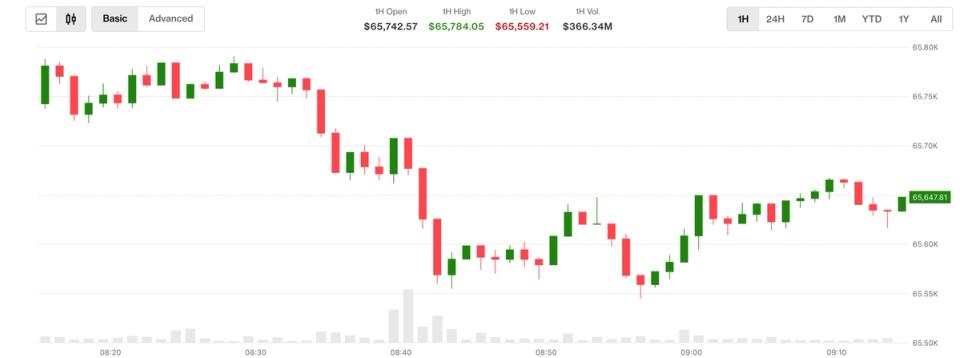
Geopolitical risks, rising rates, and fresh regulatory setbacks send crypto lower as key Democrats demand stronger safeguards in the market structure bill.
Bitcoin slipped to approximately $65,500 as rising oil prices and higher Treasury yields pressured risk assets and weighed on major cryptocurrencies.
Market sentiment was further dampened by an apparent escalation in U.S. military operations linked to Iran. Meanwhile, regulatory uncertainty persisted as key Senate Democrats criticized the latest draft of the Digital Asset Market Clarity Act, sending betting odds of its passage lower.
Bitcoin (BTC), trading near $65,092.84, remained under fresh selling pressure early Thursday as oil and Treasury yields continued their ascent and Clarity Act odds tumbled. The cryptocurrency changed hands near $65,500, down roughly 0.7% since midnight UTC, extending a pullback from a high of approximately $66,700 reached Wednesday. The weakness spilled over into the broader market, with major tokens including ether (ETH), solana (SOL), and XRP (XRP) also trading lower.
Futures tied to West Texas Intermediate crude on the NYMEX climbed to $88.60 per barrel, the highest level since June 11. The move extends a steep rebound from recent lows below $70 and signals a potential new inflationary impulse that could push up consumer price indexes in the U.S. and globally. That, in turn, would complicate efforts by central banks to cut interest rates — a policy path that has underpinned demand for risk assets including cryptocurrencies.
Bond markets have already reacted. The U.S. two-year Treasury yield jumped to 4.31%, its highest level since February 2025, while the benchmark 10-year yield rose to 4.66%, the highest since May, according to TradingView data. Higher yields raise the opportunity cost of holding non-yielding assets such as bitcoin and gold, often prompting investors to rotate out of speculative holdings and into fixed-income securities that now offer more attractive returns.
Adding to the cautious market mood, Axios reported that the U.S. military deployed a B-1 long-range bomber on Tuesday to strike targets linked to Iran's Islamic Revolutionary Guard Corps. The deployment of the heavy bomber represents a notable escalation in the scale of U.S. operations and suggests Washington may be preparing for a broader campaign, rather than continuing with the more limited strikes observed in recent days.
On the regulatory front, a group of key Senate Democrats stated that the newest draft of the Digital Asset Market Clarity Act "falls short" on ethics and other critical provisions.
Betting markets on the decentralized platform Polymarket reacted swiftly, with the implied odds of the Clarity Act passing tumbling from 46% to 38%.
Senate Republicans released the updated draft earlier Wednesday, which includes an ethics provision agreed to by the White House and President Donald Trump. Senator Bernie Moreno called it "the most powerful ethics language in U.S. history."
Leadership indicated that the Clarity Act is now expected to miss its window before Congress' summer break, leaving the sector to navigate an extended period without the market structure clarity many firms have been seeking. The convergence of macroeconomic tightening, geopolitical escalation, and stalled legislation marks a stark reversal for a market that had been rallying in recent months on expectations of friendlier crypto policy under the new administration.
