Askari Metals s’approche des approbations finales pour sa première campagne de forage en Éthiopie à Nejo
Points clés
- •Askari Metals attend des approbations imminentes pour lancer un programme de forage au diamant de première phase de 5,000 mètres sur son projet Nejo Copper-Gold en Éthiopie.
- •Le projet Nejo couvre 1,174 kilomètres carrés dans le Bouclier arabo-nubien et est entouré d’environ 5.1 millions d’onces d’or de gisements voisins.
- •Les forages et travaux de tranchée historiques sur les cibles Guji, Komto One et Komto Two ont mis en évidence une minéralisation or-cuivre proche de la surface qu’Askari souhaite valider par des forages jumelés et des forages d’extension.
- •Askari a levé 2.75 millions de dollars au cours du trimestre de décembre, a remboursé tous les billets convertibles en circulation et a cédé ses actifs australiens, laissant la société sans dette et centrée sur l’exploration africaine.
- •Le programme de forage initial représente la première tranche d’une campagne proposée de 20,000 mètres, avec pour objectif à plus long terme de définir une ressource de plusieurs millions d’onces et une éventuelle première estimation JORC.
Askari Metals (ASX:AS2) has spent the past several months laying the groundwork in Ethiopia. Now, the ASX-listed explorer is approaching a pivotal transition — from planning and preparation to drilling and data.
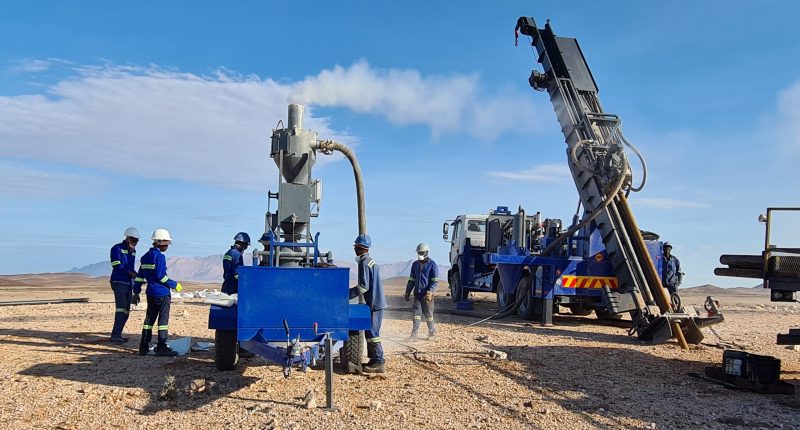
The company's flagship Nejo Copper-Gold Project, located in central western Ethiopia, is its lead value driver. Final approvals are expected imminently, which would move Nejo from the planning phase into on-ground execution, unlocking a first-phase diamond drilling program of approximately 5,000 metres across high-priority targets at Guji, Komto One, and Komto Two.
For a junior explorer, that transition is significant. Approvals, mobilisation, and assay results represent measurable milestones that allow investors to assess whether a project's historical potential holds up under modern scrutiny. Ethiopia's government has been actively promoting mining as a pillar of economic diversification, making the regulatory pathway a closely watched variable for foreign explorers operating in the country.
Nejo: A Large Landholding with Historical Pedigree
Nejo is far from a grassroots gamble. The project combines a substantial landholding — 1,174 square kilometres within the Arabian–Nubian Shield — with historical drilling and trenching data, all situated in a recognised mineral district. The Arabian–Nubian Shield is one of Africa's most prospective geological provinces for gold and base metals, hosting multiple producing and development-stage deposits across Ethiopia, Eritrea, Sudan, and Saudi Arabia.
The tenure surrounds the 1.7-million-ounce (Moz) Tulu Kapi mine and lies on the same greenstone belt as the 3.4Moz Kurmuk deposit. Combined, neighbouring endowment totals approximately 5.1Moz.
Nejo's historical gold-copper footprint was generated by earlier operators. Historic reverse circulation (RC) and diamond drilling, trenching, and sampling at Guji, Komto One, and Komto Two all returned near-surface mineralisation, though follow-up was limited.
Askari's immediate objective is to convert that legacy data into modern, drill-backed evidence.
Phased Drilling Strategy
In its first phase, selected historical holes will be twinned to validate earlier results before rigs step out along strike and laterally toward a more systematic resource-definition pathway.
The ~5,000-metre opening program forms part of a broader phased strategy. The company has flagged it as the first tranche of a proposed 20,000-metre campaign. If twinning validates historical data and continuity emerges, the longer-term goal is a multi-million-ounce resource definition pathway and a potential maiden JORC resource — the industry-standard reporting framework used by ASX-listed companies to publicly disclose estimated mineral quantities to investors.
Funding and Corporate Positioning
Execution requires capital, and Askari has been active on that front. During the December quarter, the company raised $2.75 million (before costs) through an oversubscribed rights issue and private placement, repaid all outstanding convertible and redeemable notes, and exited its Australian assets.
These moves through the end of the last calendar year and early in CY26 have left Askari debt-free and positioned to focus on African exploration.
Executive director Gino D'Anna leads the company, bringing public company, resource exploration, and capital-raising experience, supported by a board with African project and corporate transaction backgrounds.
Uis Polymetallic Project: A Second News Source
While Nejo carries the company's primary re-rating weight, the Uis polymetallic project in Namibia provides a second source of news flow.
Uis offers exposure to tin, lithium, tantalum, rubidium, and caesium — a critical minerals basket aligned with a separate commodity thematic. These metals feature on multiple government-designated critical minerals lists globally, reflecting their importance to electronics, battery technology, and supply chain security. The project is located near Andrada Mining's operating Uis tin mine, with infrastructure support and access to the Walvis Bay port.
Askari is advancing low-cost, high-impact workstreams across priority pegmatite targets, including soil geochemistry, trenching, and follow-up drilling. These activities can provide steady exploration news between Nejo milestones.
Near-Term Catalysts
The expected sequence of milestones over the next six to twelve months includes: final approvals and access confirmation at Nejo, mobilisation, commencement of the ~5,000-metre first-phase diamond drilling program, updates from Guji, Komto One, and Komto Two, first assays validating historical holes, and subsequent step-out drilling. Uis exploration will run concurrently.
Each milestone shifts the narrative from project messaging toward measurable execution. The central questions are whether historical mineralisation validates under modern drilling, whether it demonstrates continuity, and whether Nejo can advance toward resource definition.
Approvals are the gate. Once cleared, the drill program commences — and for a company positioned adjacent to 5.1Moz of neighbouring gold endowment, that marks the point where results begin to speak.
Disclaimer: This article is disseminated in partnership with Askari Metals Ltd. It is intended to inform investors and should not be taken as financial advice. Readers are encouraged to conduct their own research and consult with a certified financial advisor before making any investment decisions.

