Family Questions Scoring in Education Department Civics Game Show Tied to Trump’s 250th Celebrations
Key Takeaways
- •The competition had no visible scoreboard during the event and did not show running scores during the televised broadcast.
- •Singh’s family says two of his Article 3 answers were marked incorrect even though similar language appears in the Constitution.
- •A final-round answer identifying the 13th Amendment as ending slavery was counted wrong, while broadcast captions recorded Singh saying “thirteenth.”
- •A Department of Education official declined to release final scores to Singh’s mother, describing them as proprietary.
- •The family contacted a lawyer to seek an independent review of the answers and scoring.
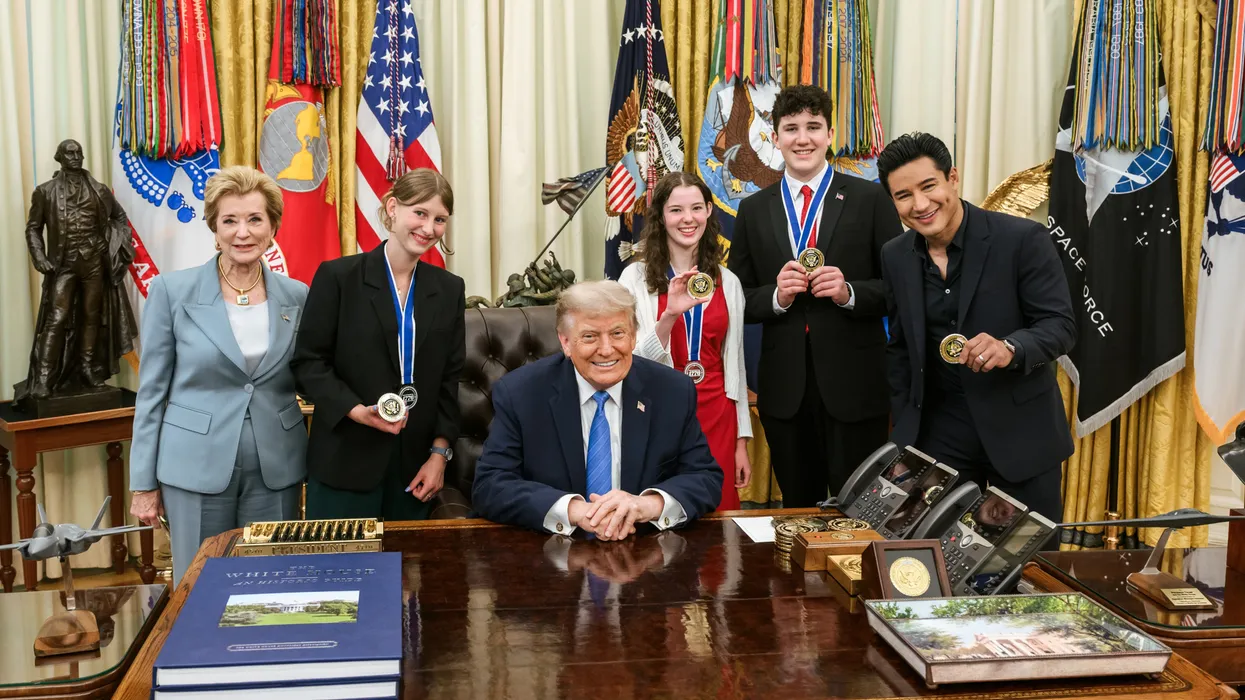
Aangad Singh’s family is questioning how the Department of Education scored a children’s American citizenship game show held as part of President Donald Trump’s 250th celebrations, after a broadcast appeared to show answers being counted in ways the family says did not match the Constitution or what Singh said aloud.
According to a NOTUS report, the competition depended on points but had no visible scoreboard during the event. The program also did not display contestants’ running scores on screen when it later aired.
That absence of visible scoring is central to the family’s complaint: without a scoreboard, final scores, or an on-screen point trail, contestants and parents had little way to compare what judges counted with what viewers later saw in the broadcast.
“It doesn’t make sense,” Singh’s mother, Ramandeep, said.
“They just made this whole thing for show,” Singh’s uncle said. “They know who they want to win.”
As the family left the event, other parents of contestants stopped them and said they were “shocked,” according to the report. One boy told Ramandeep that a group of contestants had kept their own scores.
“We thought he won,” the boy said, according to NOTUS.
The winner, a young blond homeschooled student from Wyoming named Miriam, also approached Singh, the report said.
“That was insane,” she told him. “You clearly knew everything.”
“What did she say?” Singh’s father asked.
“That I should have won,” Singh replied.
Ramandeep then asked a Department of Education official for the final scores. The official refused to provide them, saying the scores were “proprietary.”
“How did they count the numbers?” she said. “That’s something we need to understand.”
The family waited for the televised broadcast and reviewed it themselves. Singh’s father prepared a spreadsheet on his laptop titled “1776_Broadcast_Audit.”
“Aangad’s parents didn’t want to accuse anyone of fixing the competition,” NOTUS reported. “But they felt compelled to ask questions because their son never would.”
One disputed moment came in the third round, when contestants were asked questions with multiple answers and could receive the full 20 points. Singh was asked: “According to Article 3 of the U.S. Constitution, in which cases do the federal courts have jurisdiction?” To receive full credit, he had to list all four answers.
Singh gave the answers, but the on-screen graphic marked two of them wrong, according to the family’s review of the broadcast.
“Maritime jurisdiction” was marked correct.
“Parties of state and citizens of another state” was marked incorrect.
“What?” Aangad said from the couch as the family watched, according to the report.
He received credit for two more answers, then another answer — “Case with state and foreign nation” — was marked wrong.
“What?” Singh said again.
He then pulled out his phone and looked up the Constitution. Article 3 includes the phrases “between a State and Citizens of another State” and “between a State, or the Citizens thereof, and foreign States, Citizens or Subjects.”
In other words, the dispute was not only about whether Singh’s phrasing matched a quiz rubric. The family’s review focused on whether answers appearing in the constitutional text were treated as incorrect in a federally promoted civics contest.
Another disputed answer came during the final lightning round. Singh was asked which amendment ended slavery, and he answered the 13th Amendment. The answer was counted wrong. The screen then displayed the correct answer, prompting Singh to say that was what he had said.
Singh concluded that judges may have thought he said “fourteenth.” But when the family watched the broadcast, the auto-generated captions also recorded his answer as “thirteenth.”
The family is divided over what happened. Some relatives believe the judges were simply incompetent, while others suspect something more serious. Singh’s uncle wants an investigation.
“I personally think that they just had faulty sources,” Singh said.
The judges were teachers who had received the James Madison Memorial Fellowship to study the Constitution. Singh said the only explanation he could identify was that they graded the answers incorrectly. NOTUS wrote that “it seemed likely to him that they hadn’t memorized Article 3 as well as he had. Or maybe his answers didn’t match the phrasing on their rubrics.”
“That shows ineptness,” Singh said.
The family considered whether to pursue the issue with the Department of Education. Singh’s mother said she did not think they could afford such a fight.
The question also put the family in an unusual position: they were challenging scoring decisions made in a public-facing education event, but they lacked the official scoring records that would allow an outside review without relying on the broadcast alone.
NOTUS reporter Sam Fortier wrote that he had been invited by the Department of Education to follow Singh through the competition. “Now, their predicament felt like a window into something bigger: If the government or the courts couldn’t bring them justice, then maybe, they thought, the media could,” Fortier wrote.
“All I could do was write what happened. But the Fourth Estate was another institution at low ebbs in trust and influence, and [Singh’s father] knew it. He doubted the government would bow to media pressure,” Fortier said.
The family ultimately contacted a lawyer, seeking an objective review of the answers and scores to determine whether Singh should have placed in the top three.
Fortier wrote that the family moved on, adding: “He didn’t see Miriam, the girl from Wyoming, tell her local newspaper that she was surprised by who made the top three. He didn’t see the Education Department use Miriam’s homeschooling as a cudgel in the culture war.” A local report about Miriam was published by the Gillette News Record.
Singh’s father messaged the Department of Education but did not receive a response. The Department also posted about the event on X at https://x.com/usedgov/status/2077500499964944710.
