Crypto-Aligned PAC Pours Nearly $1 Million Into Michigan Democratic Primary as Part of Broader Multi-State Push
Key Takeaways
- •Protect Progress PAC has spent more than $986,000 on advertising supporting incumbent Rep. Shri Thanedar and opposing challenger Donavan McKinney ahead of Michigan's August 4 Democratic primary in the 13th congressional district.
- •Fairshake and affiliated crypto-linked entities have reported $191 million in available funds dedicated to influencing elections across multiple key races nationwide.
- •Thanedar backed multiple crypto-related bills including the CLARITY Act and GENIUS Act, and reportedly lost over $600,000 in the second quarter of 2026 after investing $3.7 million of campaign funds into crypto-related companies.
- •Protect Progress PAC also spent more than $100,000 supporting Rep. Greg Stanton in Arizona's 4th district, where he won his primary with 65% of the vote.
- •Defend American Jobs PAC spent over $65,000 supporting Republican Amanda McKinney in Washington's open-seat 4th district primary, a race created after Rep. Dan Newhouse announced he would not seek reelection.
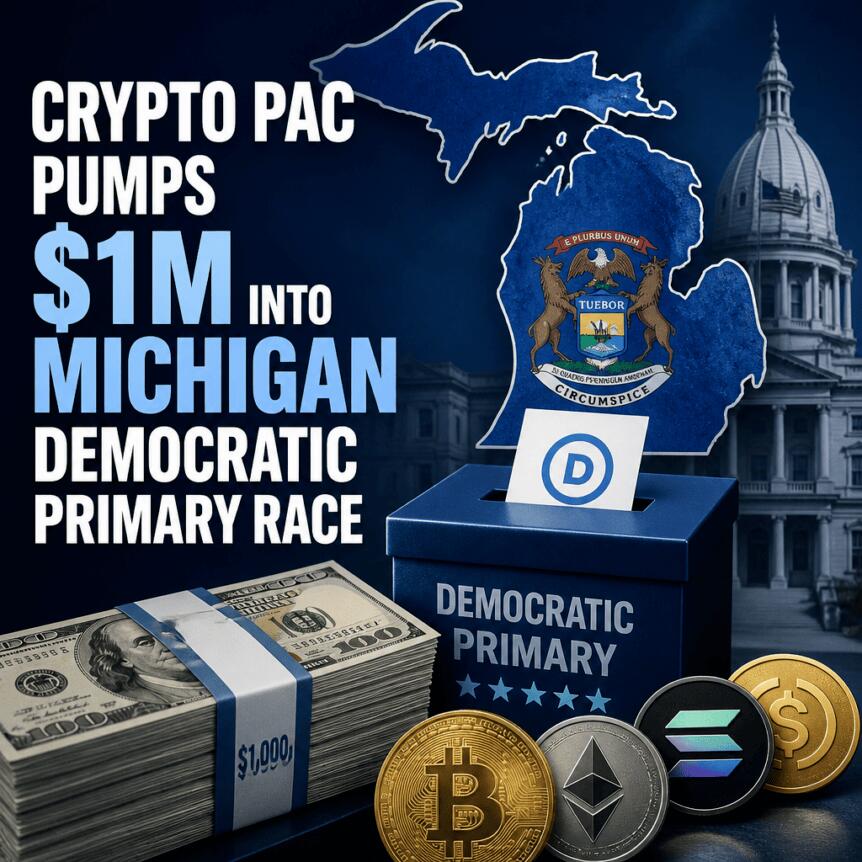
A cryptocurrency-aligned political action committee is spending heavily in a Michigan Democratic primary that will determine who advances to the November general election. Federal Election Commission (FEC) filings posted as of Tuesday show that Protect Progress PAC has poured more than $986,000 into advertising backing Rep. Shri Thanedar while also funding messaging against his challenger, Donavan McKinney, ahead of an August 4 primary.
The expenditure comes amid a broader push by crypto industry-linked political groups to shape which candidates reach Congress. Michigan's 13th congressional district race is one of several contests referenced in recent FEC disclosures showing sustained efforts by Fairshake and related entities to influence elections around "pro-crypto" policy priorities. The spending reflects a sharp escalation in the digital asset sector's political footprint, with organized PAC networks now directing tens of millions of dollars into federal races—a level of coordinated election engagement that marks a notable shift from earlier cycles when crypto policy rarely surfaced as a campaign-defining issue.
Protect Progress Steps Up in Michigan's 13th District
FEC paperwork filed by Protect Progress PAC shows that, as of Tuesday, the committee had spent more than $986,000 on advertising tied to Michigan's 13th congressional district. The ads were described in filings as supporting Democratic incumbent Shri Thanedar and opposing his Democratic primary challenger Donavan McKinney.
Those expenditures were reported roughly two weeks before the scheduled primary on August 4. Primary races often hinge on concentrated bursts of late messaging that can shape how voters perceive a candidate's record and priorities before ballots are cast, and independent expenditure campaigns like Protect Progress' are not coordinated with candidates, allowing outside groups to pour in resources during the final stretch.
Protect Progress' media push in Michigan also builds on its earlier investment in Thanedar's political trajectory. In 2024, the PAC reportedly spent approximately $1 million supporting Thanedar. That year, he won the Democratic primary with 54.9% of the vote and then carried the general election with 68.6% against Republican and other opponents.
Crypto Policy Backdrop: Votes, Investments, and Campaign Narratives
The Michigan ad campaign and counter-messaging are unfolding against a legislative and financial backdrop that both sides have used to frame the race as a referendum on crypto-related policy and financial ties.
Thanedar previously supported multiple crypto-related bills while serving in the House, including the CLARITY Act, the GENIUS Act, and the Promoting Innovation in Blockchain Development Act. The CLARITY Act seeks to establish a clearer division of regulatory authority over digital assets between the Securities and Exchange Commission and the Commodity Futures Trading Commission, while the GENIUS Act addresses stablecoin oversight. Those policy positions have been a consistent element in how pro-crypto advocacy groups assess candidate alignment.
McKinney has not been described in the filing coverage as having made prominent public statements either supporting or opposing digital assets prior to this campaign. By contrast, Thanedar has been reported to have invested campaign funds into crypto companies while in office, with coverage citing that he lost more than $600,000 in the second quarter of 2026 after investing $3.7 million of campaign funds into crypto-related companies.
McKinney's response to the Protect Progress spending was pointed. In a Tuesday statement referenced in the coverage, he argued that "the crypto lobby" was effectively backing his opponent, accusing it of seeking to stop his movement in the race.
Election Influence Spreads Beyond Michigan
The Michigan primary represents only one component of a larger political spending landscape. FEC reporting indicates that Fairshake and affiliated entities have reported $191 million available in a political war chest intended for election influence across multiple key races.
That capacity is linked to a network of PACs tied to the crypto industry's political engagement. Other groups identified in the coverage include Fellowship, described as backed by Cantor Fitzgerald and Anchorage Digital, and the Blockchain Leadership Fund, described as a hybrid PAC backed by Anchorage and Chainlink Labs.
Even within the Protect Progress ecosystem alone, the cited FEC activity extends beyond Michigan. According to the coverage, Protect Progress PAC also spent more than $100,000 on media supporting Representative Greg Stanton's reelection bid in Arizona. Stanton voted for the CLARITY Act and GENIUS Act while in the House and won his Tuesday primary in Arizona's 4th congressional district with 65% of the vote.
In Washington state, the primary calendar listed for August 4 is also tied to possible Fairshake-affiliated involvement. FEC filings cited in the coverage indicate that the Defend American Jobs PAC spent more than $65,000 on media to support Amanda McKinney, a Republican candidate running for Washington's 4th congressional district. She has made at least one public statement supporting crypto.
The coverage also notes that Representative Dan Newhouse announced in 2025 that he would not seek reelection in that district, creating an open-seat contest where outside spending may carry particular weight. Open-seat races typically draw heavier independent expenditures than contests with incumbents, since there is no established candidate with built-in name recognition or fundraising advantages.
Spending Watch Ahead of the Primaries
With Protect Progress' reported advertising push arriving just weeks ahead of Michigan's August 4 primary, counter-arguments—particularly around crypto policy alignment and campaign-finance-related claims—will compete for voter attention within the same compressed window. The outcomes in Michigan, Arizona, and Washington will offer early signals of whether the crypto sector's sustained political investment translates into electoral results, and FEC filings in the coming weeks may provide additional detail on the scope and reach of these media buys as the primaries approach.

