Trump Backs DOJ-Enforced Ethics Clause for Clarity Act
Key Takeaways
- •The Clarity Act would give the CFTC exclusive authority over spot markets for digital commodities while leaving the SEC to oversee assets resembling investment contracts.
- •The agreed ethics provision would apply to the president, vice president and members of Congress, preventing them from issuing or offering digital assets while serving in office.
- •Democrats object to DOJ enforcement because Todd Blanche, Trump’s former personal attorney, is undergoing confirmation to lead the department.
- •The bill requires 60 Senate votes, meaning at least seven Democrats must support it because Republicans hold 53 seats.
- •Trump’s July 2026 financial disclosure reported about USD 1.4 billion in crypto-related income for 2025, including TRUMP memecoin licensing fees and World Liberty Financial token sales.
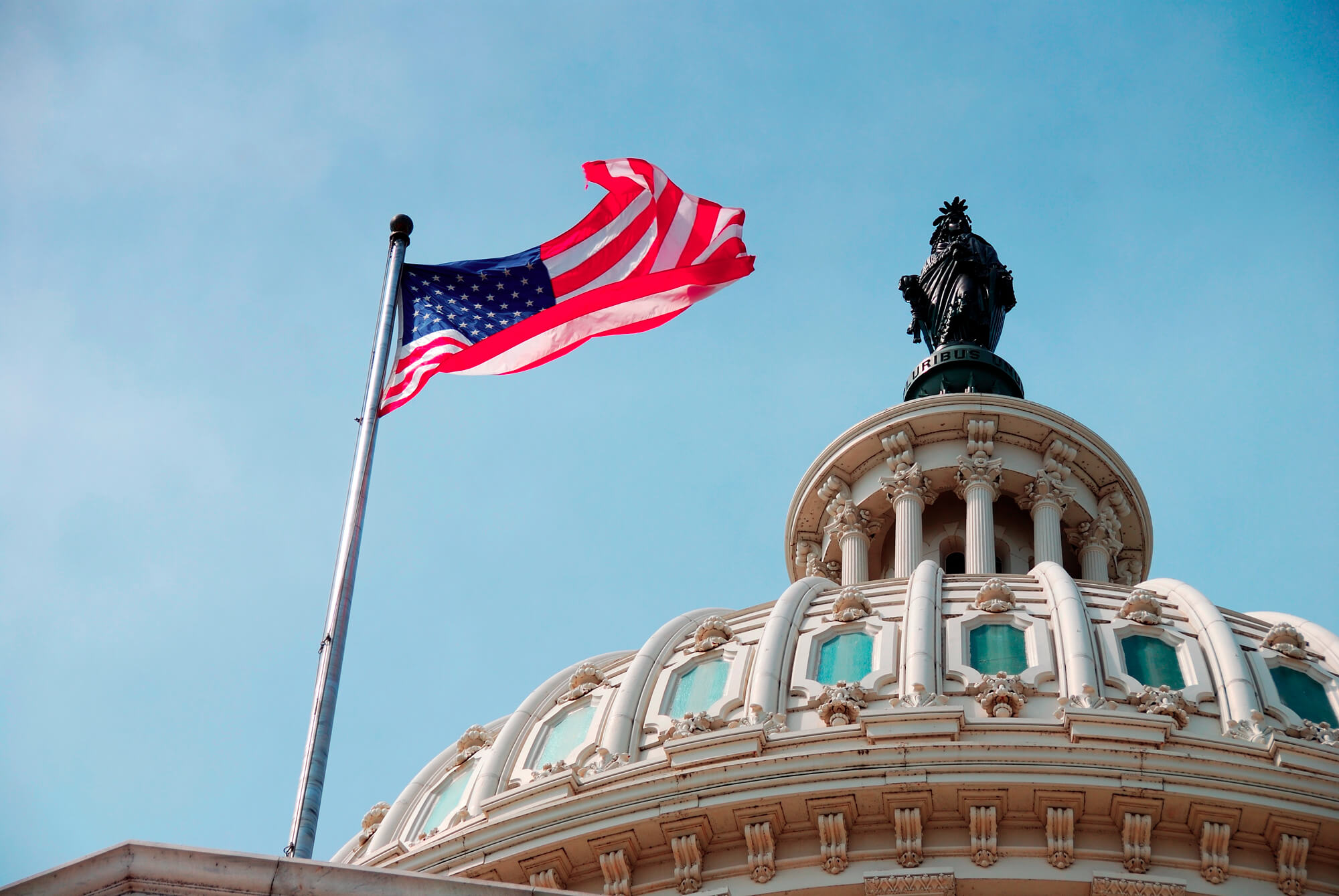
US President Donald Trump has agreed to an ethics provision in the Clarity Act that would prohibit federal officials from issuing cryptocurrencies while in office. Under the agreed language, enforcement would fall to the US Department of Justice (DOJ), rather than to state attorneys general.
The Clarity Act, formally known as the Digital Asset Market Clarity Act, is the first comprehensive federal market-structure bill for digital assets in the United States. The measure would divide oversight between the Securities and Exchange Commission (SEC) and the Commodity Futures Trading Commission (CFTC). The CFTC would receive exclusive jurisdiction over spot markets for digital commodities, while the SEC would continue to oversee assets that have the characteristics of an investment contract. That division is central to the bill because it would determine which federal agency supervises key parts of crypto trading, token issuance, and market infrastructure.
The House of Representatives first passed the bill in July 2025, and the Senate Banking Committee followed in May 2026. Since then, the legislation has been awaiting a full Senate vote under Calendar No. 423. The ethics provision remains the last unresolved hurdle. Passage requires 60 votes in the Senate, while Republicans hold 53 seats, meaning at least seven Democratic votes would be needed.
DOJ to enforce the Clarity Act ethics rule
The ethics provision applies to the president, the vice president, and members of Congress. It would bar them from issuing or offering digital assets while in office. The central issue in the negotiations, however, was not the ban itself but the authority responsible for enforcing it.
Under the language agreed to by Trump, enforcement would sit with the Department of Justice. It would no longer be handled by attorneys general in individual states. Several people familiar with the negotiations confirmed the issuance ban, and two of them confirmed the DOJ's jurisdiction.
The agreement followed months of talks. On 16 July 2026, Trump met with Republican Senators Bernie Moreno and Cynthia Lummis. Patrick Witt, the White House's top crypto adviser, also attended the meeting to resolve the wording of the ethics language. Four days later, Trump gave his approval late in the evening.
Removing state attorneys general from the process significantly changes the oversight structure. An earlier compromise proposal would have allowed state attorneys general to sue the Department of Justice if it failed to enforce the ethics rules. That mechanism was removed from the language now agreed. The exact statutory text was not public at the time of the agreement, so the reported details are based on anonymous sources. Until that text is released, the practical scope of DOJ enforcement and any limits on outside challenges remain the key details for lawmakers to assess.
Democrats cite conflict-of-interest concerns
For Democrats, the shift to DOJ enforcement is the core concern. Todd Blanche, Trump's former personal attorney, is currently going through the confirmation process to lead the Department of Justice. If confirmed, a DOJ under his leadership would be responsible for policing potential ethics violations by the president he previously represented.
Democratic criticism has focused on that potential conflict of interest. Senator Angela Alsobrooks (D-Maryland), one of two Democrats who voted the Clarity Act out of the Banking Committee, described DOJ-led enforcement as unserious and warned that she would not support the bill with the current language.
"This enforcement through the DOJ on an ethics provision? That is an unserious offer, and I would not support the bill with this language. But we are working from this basis to reach an agreement that holds all of us accountable." - Angela Alsobrooks, US Senator (D-Maryland)
The White House rejected the objections. A spokesperson did not confirm the precise language but said the administration was working with Congress to pass the bill. The spokesperson also pre-emptively blamed Democrats in the event the measure fails.
So far, Alsobrooks and Ruben Gallego are the only Democratic members of the committee to vote in favor of the bill. Both did so on the condition that the ethics rules be enforceable.
Seven Democratic votes determine the Senate path
The Senate vote count leaves little margin for the administration. The bill needs 60 votes to pass, while Republicans hold 53 seats. At least seven Democrats would therefore need to support the measure. Only two Democrats have voted for it in committee to date, and those votes depend on whether the ethics rules can be effectively enforced.
Time pressure is also increasing. 7 August 2026 is viewed as the practical deadline before the Senate's summer recess. If that deadline is missed, a vote would likely be delayed until November 2026 because of the midterm elections. A vote that had previously been expected in late June was already postponed.
In addition to the ethics provision, two other issues remain unresolved. One concerns a liability exemption for non-custodial software developers, which an association of district attorneys has opposed. The other involves a dispute over interest income on stablecoins. That issue particularly affects Coinbase's approximately USD 1.35 billion in annual USDC earnings. Together, those open questions mean the ethics clause is not the only policy detail still capable of affecting the bill's coalition, even if it is the most politically visible one.
Trump's crypto income intensifies the ethics debate
The ethics provision has become politically contentious largely because of Trump's own business interests. His financial disclosure, a 927-page document from July 2026, reported roughly USD 1.4 billion in crypto-related income for 2025. About USD 635 million of that total came from licensing fees for the TRUMP memecoin. Several hundred million dollars more came from sales of World Liberty Financial tokens. Depending on the analysis, that portion ranges from roughly USD 500 million to USD 799 million.
World Liberty Financial is a DeFi company co-founded by the Trump family in 2024. Around 75% of WLFI token sales flow to a Trump entity in which the president holds 70%. In total, the family controls roughly 22.5 billion WLFI tokens.
A Reuters analysis cited via Crypto in America put the Trump family's total crypto-related earnings at roughly USD 2.3 billion since Trump took office. At the same time, several analyses indicate a different outcome for investors. Retail investors in both the TRUMP memecoin and WLFI tokens recorded substantial losses. That contrast is central to the political dispute over whether the Clarity Act's ethics rules can be meaningfully enforced.
