Richard Tice: A Reform UK Government Would Scrap the EV Mandate to Save Jaguar Land Rover
Key Takeaways
- •Jaguar Land Rover, which employs around 40,000 people in the UK and is owned by Tata Motors, is seeking £1.7bn in cost cuts with thousands of engineers and management staff facing redundancy.
- •The ZEV mandate, introduced in January 2024, requires 22 per cent zero-emission sales per manufacturer that year, rising to 80 per cent by 2030 and 100 per cent by 2035, with fines of up to £15,000 per non-compliant vehicle.
- •Tice blames both Labour and Conservative governments, arguing consumers are not buying EVs at the mandated pace amid weak infrastructure, high energy costs, and a falling secondhand EV market.
- •The EU has imposed additional duties on Chinese-built electric cars, a measure the UK has not matched, while the SMMT has reported declining output and called for flexibility in the mandate.
- •Reform UK proposes scrapping the ZEV mandate, abandoning 2030 net zero targets, cutting industrial energy costs, and imposing tariffs and quotas on Chinese electric vehicles.
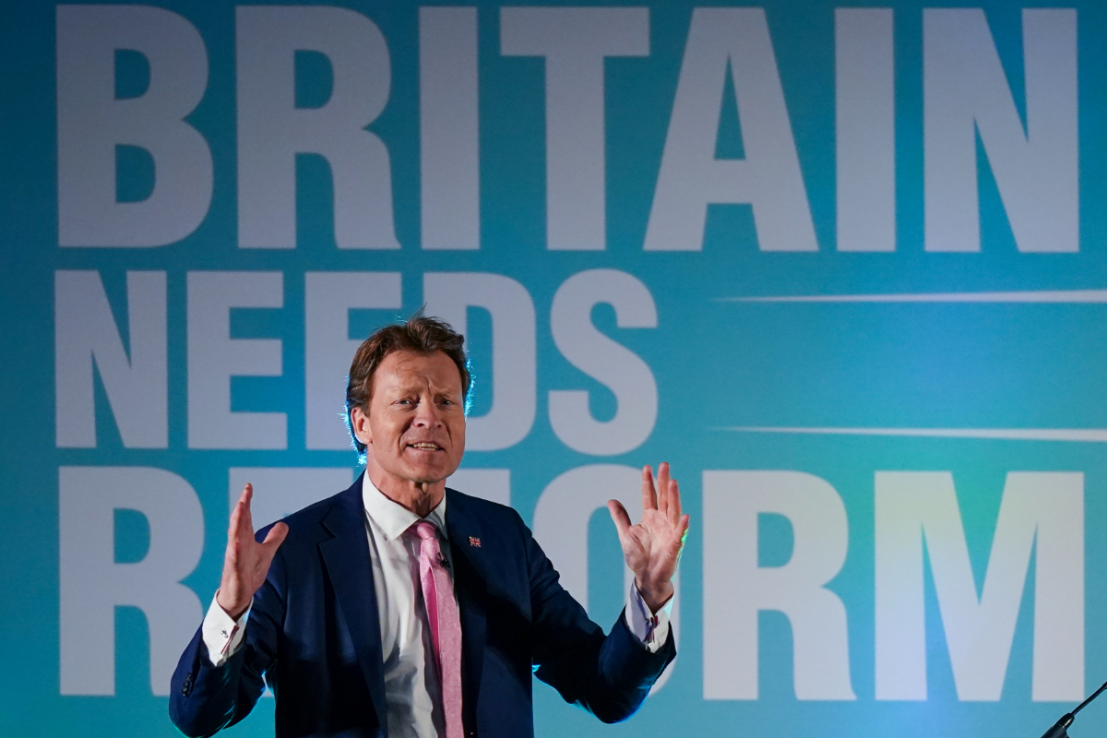
By forcing companies like JLR to wind down profitable internal combustion engine models ahead of true consumer demand, ministers have effectively forced our flagship manufacturer to cut off its own revenue streams, writes Richard Tice.
For decades, Jaguar Land Rover has stood as a proud symbol of West Midlands manufacturing might. Yet today, thousands of highly skilled engineers and management staff are facing redundancy as the company scrambles to axe £1.7bn in costs. JLR, which employs around 40,000 people in the UK and is owned by India's Tata Motors, is Britain's largest automotive manufacturer by revenue, meaning the scale of any restructuring ripples far beyond Solihull and Halewood.
I feel for those workers, I really do. And I am angry on their behalf, because what makes this commercial tragedy all the more enraging is that it is entirely self-inflicted.
While the Labour government will doubtless point to global headwinds to excuse the fallout, the truth is that the real culprits in this fiasco are both Labour and the Conservatives, with their boneheaded obsession with net zero.
The Zero Emission Vehicle (ZEV) mandate, which forces British automakers to meet arbitrary, escalating quotas for electric vehicle sales under threat of crippling financial penalties, is quite possibly one of the most destructive business policies ever drafted. Introduced in January 2024, the mandate requires that 22 per cent of new cars sold by each manufacturer that year be zero-emission, rising to 80 per cent by 2030 and 100 per cent by 2035, with fines of up to £15,000 per non-compliant vehicle, though manufacturers can also bank or trade compliance credits. Rather than letting consumers decide which vehicles suit them best, the previous Conservative government, which introduced the scheme, chose to place a loaded gun to the head of the British car industry.
British consumers are simply refusing to buy over-priced, battery-powered vehicles at the pace bureaucrats demand. Infrastructure remains a shambles, energy costs are through the roof, and the secondhand EV market is in free fall — a backdrop that has contributed to broader weakness across the UK car sector, where industry body the SMMT has reported declining output and repeatedly called for greater flexibility in how the mandate is applied. By forcing companies like JLR to wind down profitable internal combustion engine models ahead of true consumer demand, ministers have effectively forced our flagship manufacturer to cut off its own revenue streams.
Madness
Compounding this madness are the highest industrial energy tariffs in the developed world. Unreliable, heavily subsidised green energy policies have driven British power costs to eye-watering levels, making it vastly more expensive to forge steel or assemble a car in Solihull or Halewood than in China or the United States.
While British carmakers are tied up in green regulatory tape, foreign state-subsidised competitors from China — unburdened by our self-destructive virtue-signalling — are waiting in the wings to flood our market with cheap, subsidised EVs. The EU, facing similar pressures, has already moved to impose additional duties on Chinese-built electric cars, a step Westminster has so far not matched. We are gutting high-paying British engineering jobs only to offshore our carbon footprint and supply chains to Beijing. It is, quite literally, economic Hari-kiri. Even the trade unions think it is nuts.
What Reform UK would do
A Reform UK government would act immediately. We would scrap the ZEV mandate and return freedom of choice to British drivers and manufacturers, abandon the 2030 net-zero targets in favour of pragmatic, affordable industrial policy, and slash industrial energy costs by unlocking cheap, native British energy.
We would allow the British automotive sector to thrive by imposing heavy tariffs and tight quotas against Chinese electric vehicles. We need free, fair and patriotic trade. We should not destroy hundreds of thousands of jobs and businesses to virtue signal to ecozealots.
If we want a thriving automotive sector, we must stop forcing our greatest companies to sacrifice themselves on the altar of net zero. It is time for economic reality to take control of the wheel.
Richard Tice is Reform UK's business, trade and energy spokesman.
