Binance Co-Founder Yi He Challenges Netflix's Portrayal of CZ in FTX Collapse
Key Takeaways
- •Yi He rejected the Netflix narrative that portrays CZ as deliberately triggering FTX's collapse while casting Sam Bankman-Fried as a victim.
- •According to Yi He, Bankman-Fried bought back his Binance equity at a valuation significantly below market value shortly before raising funds at a higher one.
- •Yi He alleged that Bankman-Fried donated to both major U.S. political parties at the same time as lobbying against Binance.
- •Per Yi He's account, Bankman-Fried contacted CZ for assistance during FTX's crisis and described the situation as "only a liquidity problem."
- •CZ stepped down as Binance CEO in November 2023 after pleading guilty to a Bank Secrecy Act violation and was not charged in connection with FTX's failure.
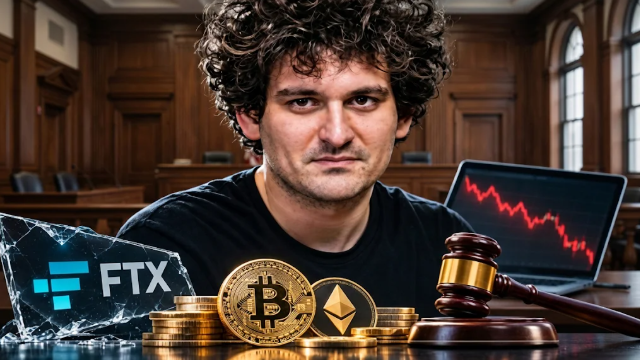
Binance co-founder Yi He has offered a different account of the events surrounding the collapse of cryptocurrency exchange FTX, challenging Netflix's portrayal of former Binance CEO Changpeng Zhao — widely known as CZ — and the role Binance played in the company's downfall.
According to information shared by Coin Bureau, Yi He disputed the narrative presented in Netflix's depiction of the FTX scandal, arguing that it cast CZ as the mastermind behind the exchange's collapse while portraying former FTX CEO Sam Bankman-Fried (SBF) as a victim.
The controversy centers on the reported $8 billion scandal involving FTX. In the Netflix portrayal described by Coin Bureau, CZ is depicted as deliberately triggering a collapse in the value of FTX's FTT token before offering to rescue the struggling exchange. Yi He's account presents a different perspective, outlining several interactions and business dealings involving Bankman-Fried and Binance in the period before FTX's failure.
The real-world sequence of that period is a matter of public record. After Binance announced plans to sell down its FTT holdings — tokens it had received when it exited its FTX equity position in 2021 — the token's price fell sharply and FTX was hit by a wave of customer withdrawals. Binance then signed a nonbinding letter of intent to acquire FTX before withdrawing roughly a day later, citing reports of mishandled customer funds and alleged U.S. agency investigations. FTX filed for bankruptcy within days, and Bankman-Fried resigned as chief executive. He was convicted on fraud and conspiracy charges by a federal jury in November 2023 and was later sentenced to 25 years in prison.
Yi He Details SBF's Early Relationship With Binance
One of the details highlighted by Yi He concerns Binance's first Blockchain Week dinner. According to her account, Bankman-Fried personally sponsored the event, yet his interest in attending reportedly focused on meeting Justin Sun — whom he regarded as his idol — rather than meeting CZ.
The anecdote offers a different view of the relationship between Bankman-Fried and Binance ahead of FTX's collapse, and it introduces Justin Sun, founder of the Tron ecosystem, as another prominent figure connected to the reported interaction.
Claims About Binance Equity and Political Lobbying
Yi He also raised questions about Bankman-Fried's financial and political activities. She claimed that he bought back his Binance equity at a valuation significantly below market value, shortly before raising funds at a higher valuation.
Her account further alleged that Bankman-Fried simultaneously donated to both major U.S. political parties while lobbying against Binance. She also referred to a so-called "PR black book" maintained in Washington, suggesting that Bankman-Fried's political and public relations activities extended beyond ordinary corporate engagement.
Political spending in Bankman-Fried's orbit drew sustained outside scrutiny in its own right. He ranked among the largest individual donors of the 2022 U.S. election cycle, and at his 2023 trial, former associates testified that some donations made in others' names were reimbursed with FTX funds.
These allegations form part of Yi He's broader response to the portrayal of the relationship between Binance and FTX, describing a more complicated history involving financial transactions, political contributions, and competing interests among major cryptocurrency industry figures.
What SBF Told CZ During the FTX Crisis
Another central detail in Yi He's account concerns Bankman-Fried's communication with CZ when FTX was experiencing financial difficulties. According to her description, Bankman-Fried personally contacted CZ to request assistance, and during that conversation characterized FTX's situation as "only a liquidity problem."
The wording is significant because it reflects how Bankman-Fried reportedly presented the exchange's financial condition when seeking help from Binance. Yi He's account contrasts that description with the scale of the eventual FTX collapse, which became one of the most consequential failures in cryptocurrency industry history.
Zhao himself stepped down as Binance CEO in November 2023 after pleading guilty to a Bank Secrecy Act violation as part of a settlement with U.S. authorities. He was not charged in connection with FTX's failure and has rejected accounts that Binance engineered the exchange's collapse.
Coin Bureau's report highlights the competing narratives surrounding the events: Netflix's portrayal presents CZ as a central figure in FTX's downfall, while Yi He offers Binance's account of its interactions with Bankman-Fried. Her claims include SBF's sponsorship of Binance's first Blockchain Week dinner, his reported Binance equity buyback, political donations to both major U.S. parties, lobbying against Binance, and his description of FTX's difficulties to CZ as "only a liquidity problem."
The dueling accounts underscore that, years after the bankruptcy filing, the FTX collapse remains contested ground — argued over in courtrooms, documentaries, and social media alike.

