Yen Carry Trade Unwinds as Fed-BOJ Policy Divergence Reshapes Global FX Markets
Key Takeaways
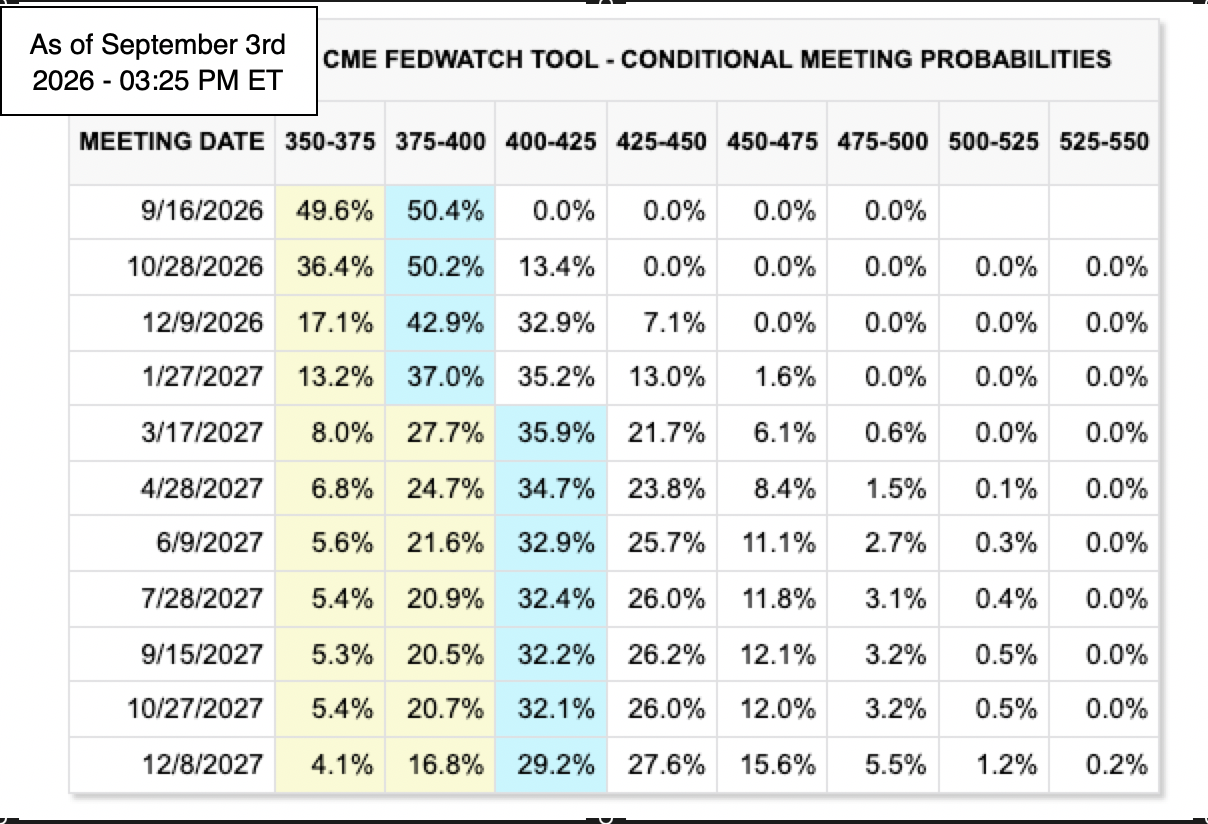
- •Market expectations for the September 16, 2026 FOMC meeting have shifted to a near 50/50 split between a rate hold and a 25-basis-point hike, with CME FedWatch showing the hike probability at 50.4%.
- •Japan's policy rate of around 1.0%, well below other major economies' rates of 2.25%–3.75%, keeps the yen a favored global funding currency for carry trades.
- •A July 30, 2026 coordinated FX intervention by Japan's Ministry of Finance sent USD/JPY from its peak near +5.8% to +1.5% within days by forcing liquidation of short-yen positions.
- •By early September 2026, the yen carry unwind had pulled EUR/JPY down to -1.60% and USD/JPY back near baseline at +0.86%, erasing earlier gains.
- •The August 2024 episode, when a BOJ rate hike triggered a sharp yen rally and global risk-asset selloff, remains a cited precedent for how quickly carry-trade unwinds can spread.
The global foreign exchange market is navigating significant macro-structural shifts driven primarily by divergent central bank monetary policies, persistent inflationary pressures, and targeted government market interventions. These dynamics—particularly the interest rate differentials between Japan and other major economies—are reshaping global capital flows and currency valuations. As market expectations for monetary policy adjustments evolve, understanding the mechanics of these shifts, especially the role of the Japanese yen as a global funding currency, is essential for assessing the resulting volatility and realignment in cross-currency pairs.
Key Drivers
- Macro-structural shifts: Divergent central bank policies, persistent inflation, and targeted intervention are driving major realignments in global capital flows and currency valuations.
- US rate dynamics: Persistent inflation (PCE at 3.7%) and hawkish Fed guidance have shifted market sentiment toward a near 50/50 split between a hold and a 25 bps hike for September 2026.
- Yen carry and volatility: Low Japanese yields (around 1.0%) continue to fuel the yen's funding role, but aggressive Ministry of Finance, Japan (MOF) intervention and BOJ rate-hike expectations have sparked a rapid unwinding across major JPY crosses.
Growing Expectations for US Dollar Interest Rate Hikes
Market expectations regarding Federal Reserve policy have shifted dramatically, pivoting from initial projections of interest rate cuts toward anticipated holds or further rate increases. Persistent inflation metrics—such as 12-month PCE at 3.7%—and hawkish guidance following Chair Kevin Warsh's Jackson Hole address have led bond markets to scale back easing bets. This macroeconomic backdrop, combined with energy shocks and updated FOMC Dot Plot projections, has re-ignited concerns over elevated short-term yields and continued monetary tightening.
Consequently, expectations for the September 16, 2026, FOMC meeting have swung to an even split between a pause and a 25-basis-point hike. The latest CME FedWatch data reflects this repricing: the probability of a rate hold in the 350–375 bps range fell to 49.6%, while the odds of a 25 bps increase to 375–400 bps climbed to 50.4%.
Japan's Interest Rate Regime and the Yen's Global Funding Role
For decades, Japan maintained a structural regime of ultra-low interest rates—including negative interest rates and yield curve control—to combat chronic domestic deflation. Even after the Bank of Japan moved away from negative rates, Japan's policy interest rate (around 1.0%) remains significantly below those of other major Western economies. The US Federal Reserve, Bank of England, and European Central Bank set baseline policy rates between 2.25% and 3.75%. This persistent interest rate differential keeps Japanese borrowing costs exceptionally low by comparison, making the yen a favored global funding currency while driving massive capital outflows toward higher-yielding foreign assets.
The mechanics of the carry trade help explain why this matters beyond FX markets: investors borrow cheaply in yen and deploy the proceeds into higher-yielding assets elsewhere, profiting from the rate gap so long as the yen does not appreciate sharply. Because these positions are often leveraged, even a modest yen rally can force rapid liquidation, with the unwind itself amplifying currency moves and, in past episodes, spilling over into global equity and bond markets as collateral is sold. The August 2024 episode—when a BOJ rate hike helped trigger a sharp yen rally and a global risk-asset selloff—remains a widely cited precedent for how quickly these dynamics can propagate.
From late February through early September 2026, the Japanese yen experienced heightened cross-pair volatility due to shifting policy stances, official intervention, and the risk of monetary tightening. Early carry-trade momentum drove USD/JPY and AUD/JPY higher, peaking near +5.8% and +8.5%, respectively, while EUR/JPY remained near baseline. However, mid-summer Japanese interventions and rising BOJ rate-hike expectations prompted a rapid unwinding across all pairs, erasing year-to-date gains and bringing EUR/JPY (-1.60%) and USD/JPY (+0.86%) back toward or below baseline levels.
Analysis of JPY Cross-Pair Volatility and Market Drivers
Recent geopolitical and monetary events through mid-2026 have had distinct impacts on three major JPY pairs: USD/JPY, EUR/JPY, and AUD/JPY.
FOMC, April 29, 2026: Following the Fed's decision to hold rates steady, USD/JPY completed a temporary trough near -1.5% before beginning a strong two-month rally, as persistent interest rate differentials re-ignited carry-trade demand against the low-yielding yen.
BOJ intervention, July 30: A massive coordinated FX intervention led by Japan's Ministry of Finance triggered a sudden liquidation of short-yen positions. This sent USD/JPY crashing from its peak near +5.8% to +1.5% within days, triggering sharp pullbacks across AUD/JPY and EUR/JPY.
BOJ intervention concerns and rate-hike expectations (late August/September): Concerns about further interventions, combined with hawkish rhetoric from Bank of Japan officials about upcoming rate hikes, triggered a second aggressive rally in the yen. This forced all major JPY crosses into a steep decline, pulling EUR/JPY down to -1.60% and bringing USD/JPY back to baseline (+0.86%).
Conclusion
The global foreign exchange market remains at a critical juncture defined by the stark divergence between the Federal Reserve's 'higher-for-longer' monetary stance and the Bank of Japan's gradual pivot away from its ultra-accommodative regime. With persistent US inflation keeping a September rate hike firmly on the table and Japanese policymakers actively defending the yen through market interventions while signaling rate hikes, the mechanics of the yen carry trade have fundamentally shifted. As short positions continue to unwind, heightened volatility across major crosses such as USD/JPY, EUR/JPY, and AUD/JPY is likely to persist. Key signposts ahead include the September 16, 2026 FOMC decision, any further MOF intervention thresholds, and BOJ communications on the timing of additional rate hikes. Navigating this environment will require close monitoring of central bank policy paths and intervention thresholds, as these structural realignments redefine global capital flows.
Opinions are the authors' and not necessarily those of OANDA Business Information & Services, Inc. or any of its affiliates, subsidiaries, officers, or directors. This publication is for informational and educational purposes only. © 2026 OANDA Business Information & Services Inc.
