Yango Explains Why It Is Not Launching in Nigeria Despite $150 Million Africa Expansion Fund
Key Takeaways
- •Yango has no near-term plans to launch ride-hailing services in Nigeria because it believes it lacks a unique value proposition in a market where operators such as Uber and Bolt already compete.
- •Shashi Singh, Yango's Head of Ride-hailing Operations in Africa, said the company's fleet-partner model focuses on long-term driver wealth-building and would require sustained investment rather than short-term deep discounting.
- •Yango announced a $150 million investment to drive its African expansion, directed mainly at West and Central African markets while also targeting smaller southern markets including Namibia, Botswana, and Mozambique.
- •Since launching its ride-hailing service in Abidjan, Côte d'Ivoire, in October 2018, Yango has expanded to more than 35 countries, with Africa as its largest region and home to 15 of its markets.
- •Singh indicated that a future Nigerian entry would most likely occur through strategic partnerships with entities such as fleet operators and taxi unions, which take considerable time to materialize.
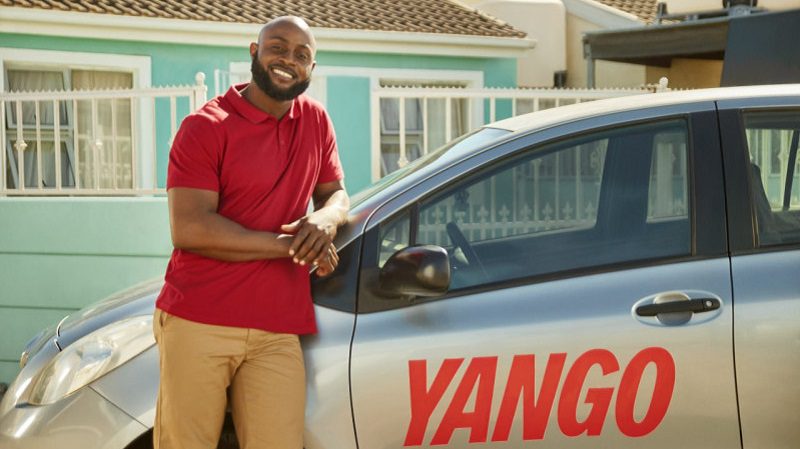
E-mobility company Yango has no plans to launch in Nigeria in the near term, saying it currently lacks a unique value proposition to bring to the market. Shashi Singh, the company's Head of Ride-hailing Operations in Africa, disclosed this in a conversation with Technext on the sidelines of Moonshot by TechCabal, TechCabal's annual technology conference held in Lagos.
According to Singh, Yango runs a distinctive e-hailing model that not only gives drivers a technology platform to digitise their operations, but is also designed to help them build long-term wealth. The approach rests on a fleet partner model, under which Yango supports fleet management companies that act as middlemen between the platform and drivers. These fleet managers aggregate drivers, supply the vehicles and make sure the cars stay in service; at the end of the day, revenue is split between Yango and the fleet partners.
In Singh's view, that model would not work in a market the size of Nigeria, where large players are already meeting the e-hailing needs of the public with different approaches — a market where established global operators such as Uber and Bolt already compete for riders. For any new entrant, the challenge in that setting is to stand apart from existing options rather than simply add another app to a crowded space.
"In the smaller markets, you have the same problem that you have here (Nigeria), but you have nobody serving them," he said. "Here, you already have people serving them. So what is the value proposition that you are going to bring to the table? For a user, you're just another kind of platform. What kind of value can you bring to them? You cannot bring them short-term value. The only short-term value that you're going to bring to them is essentially deep discounting. You know that deep discounting is not a real value proposition."
Singh noted that Yango's model is built on delivering long-term benefits, which would require long-term investments — enough for fleet companies to earn the money needed to replace vehicles when the time comes, and to build businesses that could potentially outlast their owners.
"That immediate value cannot be created in these kinds of markets. Those values are long-term values," Singh said. "If nobody was serving, I would have been happy to come and kind of solve that problem. But there are so many people already solving the problem, so what additional value am I going to bring in?"
Yango's $150 Million African Expansion Investment
Dubai-headquartered Yango (yango.com) launched its ride-hailing service in Abidjan, Côte d'Ivoire, in October 2018. Eight years later, the company has expanded its business to more than 35 countries across Africa, Asia, Europe and Latin America. Africa remains its largest market region, home to 15 of its markets, including Ghana, Senegal, Benin and Mauritania.
As a testament to the business it has built on the continent, Yango announced a $150 million investment to drive its expansion across Africa. The funding is directed mainly at West and Central African markets, while the company simultaneously eyes smaller southern markets including Namibia, Botswana and Mozambique. Nigeria's absence from that expansion map stands out given its status as Africa's most populous country and one of its largest economies, a choice consistent with the logic Singh outlined — going where the company's model can offer something riders and drivers are not already getting.
Asked what could put Nigeria into that picture, Singh said it would only come if Yango is able to attract the right kind of partnerships to drive its model.
"If there is a way to solve the problem and there is like a path in which there is a value proposition that I can bring, then there's a possibility," he said. "There are ways in which they can be done through strategic partnerships. But those kinds of things materialise over a period of time; they cannot happen immediately. So, at this moment, we are happy to explore those kinds of partnerships. But directly trying to solve that problem with our model is not something that will create value."
Singh also pointed to taxi unions as entities with which Yango readily forms strategic partnerships, as it already does in many of the countries where it operates. Aggregating drivers under a union is easier, he explained, and the unions and their members are already business-oriented and consistently looking to grow their businesses. Yango therefore positions itself as a platform that willingly works with unions, in contrast to other platforms that would rather feud with them.
"We are the first ones that will always go to the union saying, 'Become our taxi partner, and you can earn good money'. And that's how we actually bring a value proposition," Singh said.
For now, any shift in Yango's position on Nigeria would most likely announce itself through partnerships rather than a direct launch. Singh said arrangements of that kind "materialise over a period of time", which means the near-term signals to watch are alliance-building with fleet operators and taxi unions across the company's West and Central African markets.
Read also: Dubai-based Yango commits $150 million to expand into 10 new African markets

