XRP Ledger Developers Propose SponsoredAccountCreate to Enable Deposit-Free Wallets
Key Takeaways
- •The SponsoredAccountCreate proposal, filed October 15, would let an existing XRPL account create a wallet with a zero XRP balance while covering the network reserve on the new user's behalf.
- •Current XRPL rules require every new account to hold at least 1 XRP in a locked reserve, so a business opening 100,000 wallets must currently commit 100,000 XRP.
- •The feature sits within a broader Sponsored Fees and Reserves framework that would also allow sponsors to pay transaction charges while wallet owners retain control of their private keys.
- •The amendment is far from activation, holding 10 of 35 validator votes as of October 28, down from 11 on October 19, against a requirement of 29 votes maintained for two weeks, and an automated review flagged two unresolved findings.
- •Ripple's recent ecosystem moves, including the Stripe-owned Privy wallet partnership, expanded RLUSD services with Robinhood, and BNY's custody support for XRP and RLUSD, could intersect with the proposal if it advances.
Developers building on the XRP Ledger (XRPL) have proposed a way to open new accounts without placing XRP in each wallet. Under the change, a payment application could create a wallet while a sponsoring account pays the network's required reserve on the new user's behalf, sparing users from funding their own deposits.
New XRP Ledger Account Transaction
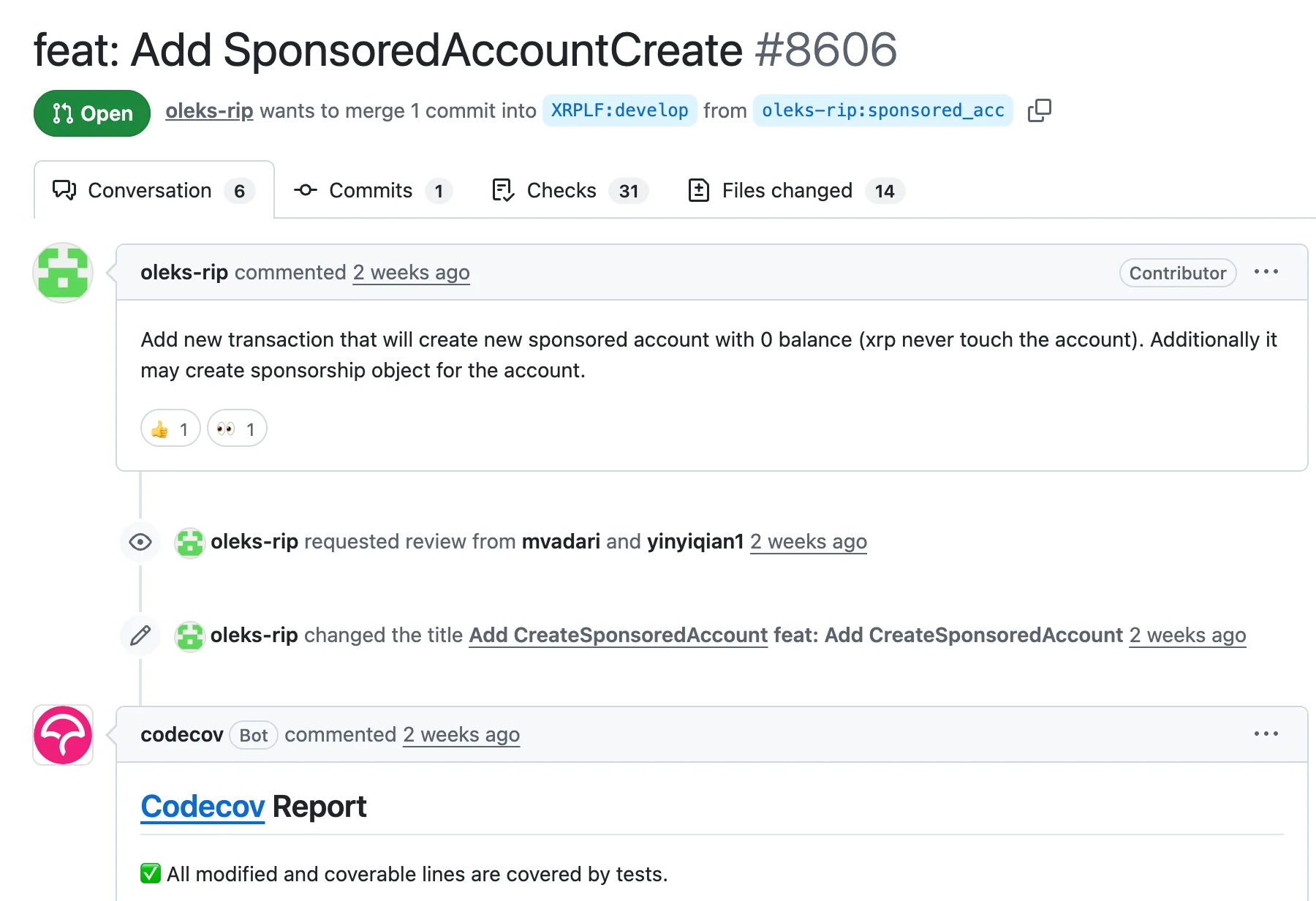
A proposal filed on October 15 adds a transaction called SponsoredAccountCreate. An existing account would be able to use it to create a wallet with a zero XRP balance and cover the reserve on that wallet's behalf, according to the change's listing on GitHub.
Today, every new XRP Ledger account must hold at least 1 XRP, and existing sponsorship designs still require a small XRP payment to open a new account. The reserve is designed to limit the mass creation of unused accounts and remains locked, unavailable for spending, while the account stays open.
The requirement scales with volume: a business opening 100,000 wallets currently needs 100,000 XRP to cover its basic reserves. Under the proposal, a single sponsoring account would carry that obligation instead of funding each new wallet separately. For consumer-facing apps, that reframes onboarding economics: the upfront cost of joining the ledger shifts from each new user to the platform inviting them, even though the locked reserve never functions as spendable money.
SponsoredAccountCreate sits within a broader Sponsored Fees and Reserves system that would also let sponsors pay transaction charges. Wallet owners would keep control of their private keys, while the network would continue to account for reserve costs.
In a separate development, an October 23 report said XRP Ledger stablecoin supply fell 13.19% in one week to about $999.9 million, with RLUSD accounting for most tokens on the network at the time.
Payment Services Add Wallet Support
Ripple's recent partnership with Stripe-owned Privy aims to bring wallet functionality directly into payment applications. Developers would be able to support XRP, the RLUSD stablecoin, and payments executed automatically by software agents. If the account-creation proposal advances, those embedded wallets could be spun up without an initial deposit, removing the first step a new user would otherwise have to fund.
Separately, Ripple and Robinhood expanded RLUSD services on October 27. Their agreement covers institutional settlement through Bitstamp and includes plans to make RLUSD available in Robinhood's main app later this year.
The account-creation code remains an open proposal. An automated review has identified two unresolved findings involving account validation and transaction cleanup, and developers must also rely on sponsorship rules that have not yet activated on the ledger's main network.
Recent ecosystem activity includes BNY's expanded XRP and RLUSD custody services, announced October 27. The bank now supports both assets for eligible institutional clients, while Ripple and BNY plan to explore trade finance on the ledger.
As of October 28, the Sponsor amendment held 10 votes from 35 trusted validators, down from 11 on October 19. Activation requires 29 votes to be maintained for two weeks before the change goes live — a threshold the current tally has not approached, making validator sentiment and the outcome of the code review the key signals to follow.

