XRP Eases Toward $1.40 as Strong US Jobs Data Outweighs BIS Testing of XRP Ledger
Key Takeaways
- •XRP slipped to approximately $1.40 despite the Bank for International Settlements testing the XRP Ledger.
- •Stronger-than-expected US jobs data increased expectations of further Federal Reserve rate hikes, pressuring crypto prices.
- •The BIS test is viewed as a longer-term utility signal, though testing does not imply adoption or endorsement.
- •The pullback appears driven by macro conditions rather than factors specific to XRP, and analysts consider it a temporary dip rather than a structural breakdown.
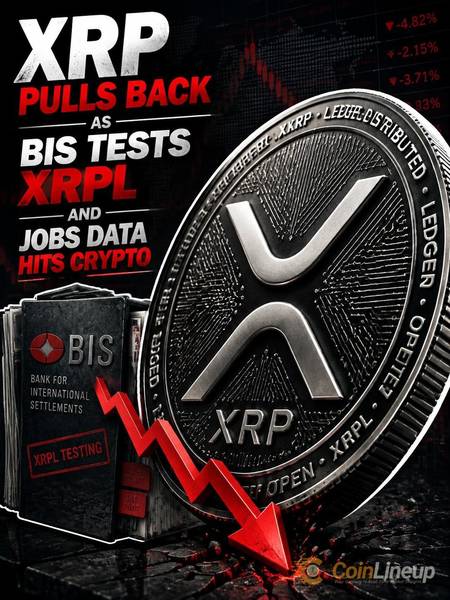
XRP slipped back to around $1.40 after stronger-than-expected US jobs data lifted expectations of further Federal Reserve rate hikes, even as the Bank for International Settlements (BIS) tested the XRP Ledger. The macro pressure outweighed the institutional testing signal, leaving traders cautious.
Why XRP slipped even as the BIS tested XRPL
XRP eased to roughly $1.40 in recent trading. The decline came despite news that the BIS — the global body often described as the "central bank for central banks" and whose members include more than 60 central banks — tested the XRP Ledger (XRPL), the blockchain network behind the token. Price data is sourced from CoinGecko.
Context matters here: XRPL was built primarily for fast, low-cost cross-border payments and settlement, and XRP is positioned as a bridge asset in that use case rather than as a general-purpose smart-contract platform like Ethereum. That payment-and-settlement focus is precisely why engagement from a central-bank institution such as the BIS — which in recent years has run multiple projects examining how tokenized and distributed-ledger systems could interoperate with traditional finance — carries weight as a signal, even though testing alone does not imply adoption or endorsement.
An institutional test of a blockchain network can matter for its long-term credibility, and the BIS's work with XRPL represents a longer-term utility signal for the technology. Yet it did not stop XRP from moving lower, illustrating how strongly macroeconomic conditions can override project-level news in the short term. That gap between adoption headlines and price action is a recurring theme in the market, as seen recently when a crypto project pulled its filing tied to a 10 trillion-token plan.
How stronger US jobs data changed Fed expectations
The trigger for the pullback was macroeconomic. Stronger-than-expected US jobs data increased the odds that the Federal Reserve keeps interest rates higher, or raises them further.
Nonfarm payrolls and related employment reports are among the most closely watched inputs the Fed uses to judge whether the labor market is cooling enough to allow easier policy, so upside surprises in jobs data tend to reset rate expectations quickly across markets.
Higher rate expectations typically pressure risk assets such as cryptocurrencies. When borrowing costs rise, investors tend to move money away from speculative positions, and XRP fell alongside that broader shift. The same dynamic recently saw Bitcoin's recovery hit a Fed ceiling as rate-cut hopes faded.
In plain terms, good news for the US economy translated into bad news for crypto prices, because it makes cheaper money less likely.
What to watch next for XRP
The move appears to be a pullback rather than a structural breakdown. Three factors stand out.
First is whether XRP holds around the $1.40 level or slips further under continued macro pressure.
Second is whether the BIS and XRPL testing story develops more concrete detail. Additional information could strengthen the longer-term utility case, much as regulatory clarity has benefited other tokens following moves such as the SEC withdrawing its planned crypto custody rule vote.
Third is the macro backdrop itself. If rate-hike expectations remain elevated on further data, that pressure on XRP and the broader market is likely to persist — a caution echoed across recent crypto policy shifts such as Nigeria's new tax withholding rules.
For holders, the practical takeaway is straightforward: XRP's latest move was driven more by the Federal Reserve and the US economy than by anything specific to the token, so monitoring macroeconomic data may be more informative than following XRP headlines alone.
Disclaimer: This article is for informational purposes only and does not constitute financial or investment advice. Cryptocurrency and digital asset markets carry significant risk. Always do your own research before making decisions.
